Eid al-Adha 2026: Global Traditions, Economic Impact and Cultural Bridges
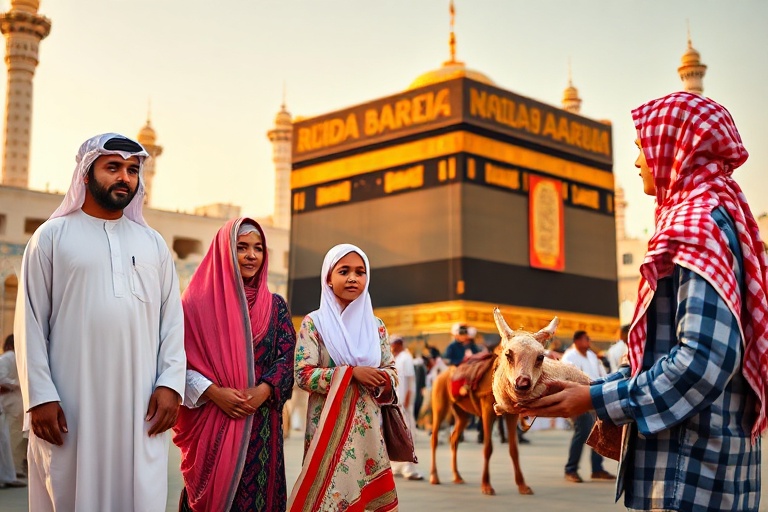
As the Islamic lunar calendar advances, Eid al-Adha 2026 approaches on the expected date of June 29, marking one of the most significant religious observances in the Muslim world. Unlike Eid al-Fitr, which celebrates the end of Ramadan, Eid al-Adha commemorates the willingness of Prophet Ibrahim (AS) to sacrifice his son as an act of obedience to God, before being replaced by a lamb provided by Allah. This story, shared across Abrahamic traditions, underscores themes of faith, sacrifice, and divine mercy that resonate globally.
The event is not merely a religious observance but a cultural touchstone that influences economies, social dynamics, and international relations. From the bustling livestock markets of South Asia to the quiet reflections of Muslim communities in North America and Europe, Eid al-Adha 2026 will once again reveal how faith shapes global interconnectedness. Its preparation and celebration also highlight enduring traditions in the face of modernization and climate challenges.
The Religious and Historical Significance of Eid al-Adha
Eid al-Adha, often called the “Greater Eid,” falls on the 10th day of Dhu al-Hijjah, the final month of the Islamic lunar calendar. It coincides with the conclusion of Hajj, the annual pilgrimage to Mecca, which is one of the Five Pillars of Islam. Pilgrims perform the symbolic stoning of the devil and sacrifice animals—typically sheep, goats, cows, or camels—as part of the ritual known as Qurbani. The meat from the sacrifice is divided into three parts: one for family, one for friends and neighbors, and one for the poor and needy.
This act of charity is central to the holiday. It ensures that even in times of economic hardship, the spirit of generosity permeates communities. In 2026, with global inflation still lingering in some regions, the redistributive power of Qurbani will be more relevant than ever. Organizations like Islamic Relief and local charities are already preparing campaigns to facilitate meat distribution across Africa, South Asia, and refugee communities in Europe.
Global Observance: From Mecca to Margate
The reach of Eid al-Adha extends far beyond the Arabian Peninsula. In Indonesia, the world’s most populous Muslim nation, the holiday is marked by communal prayers, family gatherings, and the distribution of sacrificial meat to over 20,000 orphanages and poor families. In Turkey, it is known as Kurban Bayramı, a four-day national holiday where families visit relatives, wear new clothes, and enjoy festive meals featuring dishes like etli pilav and kurban kebab.
In the United Kingdom, where over 3 million Muslims reside, local councils and mosques coordinate large-scale Qurbani programs. In 2023, the London-based charity Penny Appeal distributed meat to 10,000 families in the UK and abroad. For 2026, they aim to double that number, reflecting growing community engagement and philanthropic ambition.
The Economic Footprint of Eid al-Adha
The economic impact of Eid al-Adha is substantial, generating billions of dollars in trade, logistics, and tourism. The livestock sector, in particular, experiences a surge in demand. In Pakistan alone, over 10 million animals are sacrificed annually, with an estimated market value exceeding $3 billion. The trade routes stretch from Australia and New Zealand—major exporters of halal meat—to the Middle East and Africa, where demand peaks during the holiday.
This creates a complex supply chain vulnerable to price volatility, disease outbreaks, and logistical bottlenecks. In 2020, the COVID-19 pandemic disrupted markets, leading to delayed shipments and higher prices. By 2026, climate change may pose new challenges. Droughts in the Horn of Africa and rising temperatures in South Asia could reduce livestock availability, pushing prices upward and straining household budgets.
To mitigate these risks, some countries are investing in local breeding programs and cold storage infrastructure. Saudi Arabia, for instance, has expanded its domestic livestock production to reduce reliance on imports. Such strategies reflect a broader shift toward resilience in religious economies—where faith and fiscal prudence intersect.
Halal Meat Industry: Growth and Globalization
The halal meat industry is one of the fastest-growing sectors in global food trade, projected to reach $300 billion by 2027. Eid al-Adha serves as its most visible catalyst. Halal certification has become a passport to Muslim-majority and diaspora markets, with countries like Brazil, India, and Australia positioning themselves as key suppliers.
Yet, the industry faces scrutiny over animal welfare standards and ethical sourcing. Animal rights groups have called for more humane slaughter methods, particularly in large-scale abattoirs. In response, organizations like the World Halal Authority are promoting certified ethical Qurbani programs that ensure animals are treated with dignity and slaughter is conducted according to Islamic principles with minimal distress.
Eid al-Adha as a Bridge Across Cultures
In an era often defined by division, Eid al-Adha offers a counter-narrative of unity. Cities like London, Berlin, and Toronto host public Eid prayers in parks and stadiums, attended by Muslims and non-Muslims alike. Interfaith dialogues frequently cite the holiday as an example of shared values—compassion, sacrifice, and gratitude.
In 2026, these bridges may be tested. Rising Islamophobia in parts of Europe and North America could lead to heightened security at mosques and public events. Conversely, proactive community engagement by local governments and civil society groups may strengthen social cohesion. Initiatives like “Open Iftar” meals, where non-Muslims are invited to break fast during Ramadan and share in Eid celebrations, have gained traction in cities such as New York and Sydney.
Youth Engagement and Digital Transformation
Young Muslims are redefining how Eid al-Adha is experienced. Social media platforms like TikTok and Instagram are filled with Eid hauls, prayer guides, and charity challenges. In 2023, the hashtag #EidMubarak trended globally with over 12 billion views. For 2026, expect augmented reality prayer timers, virtual Qurbani tracking apps, and livestreams of Hajj and Eid from Mecca.
These digital adaptations are not superficial. They reflect a generation that values transparency, accessibility, and global connection. Apps like Qurbani Tracker allow donors to follow the journey of their sacrificial animal from farm to plate, ensuring ethical compliance and building trust in charitable practices.
What to Expect in 2026: Trends and Challenges
As Eid al-Adha 2026 approaches, several trends and challenges are emerging:
- Climate-Resilient Qurbani: More communities are opting for smaller, locally sourced animals or plant-based alternatives that replicate the symbolic act of sacrifice without the environmental footprint.
- Blockchain for Transparency: Pilot programs in Malaysia and the UAE are testing blockchain to trace the entire Qurbani supply chain, from animal origin to meat distribution.
- Economic Strain in Emerging Markets: Countries like Yemen and Sudan, already facing food insecurity, may struggle to afford livestock, prompting calls for international aid and coordinated relief efforts.
- Cultural Fusion in Food: Fusion dishes blending traditional Qurbani meats with local cuisines—such as biryani tacos or lamb shawarma pizzas—are gaining popularity among younger generations.
- Policy Shifts in Europe: France and Germany are reviewing regulations on public animal sacrifices, balancing religious freedom with animal welfare laws, potentially leading to new guidelines by 2026.
These developments suggest that Eid al-Adha is evolving from a strictly religious ritual into a multifaceted phenomenon—part spiritual observance, part economic engine, and part cultural dialogue.
Conclusion: A Holiday That Connects and Transforms
Eid al-Adha 2026 will unfold against a backdrop of economic uncertainty, climate change, and social transformation. Yet, its core message remains unchanged: faith inspires generosity, sacrifice fosters community, and shared humanity transcends borders. Whether through the quiet prayers of a family in Jakarta, the bustling livestock markets of Lahore, or the digital campaigns of a London mosque, the spirit of Eid will echo across continents.
As we look forward to June 29, 2026, it is worth remembering that this holiday is not just about meat or money—it is about the values they represent. In a world often divided by politics and prejudice, Eid al-Adha offers a reminder that compassion, when practiced collectively, can create ripples of change far greater than the sum of its parts.
For those seeking to participate, whether Muslim or not, the holiday invites reflection: What are we willing to give up for the sake of others? And what would the world look like if we asked that question more often?
Explore more on cultural traditions and celebrations on Dave’s Locker.
Read in-depth analysis on global events and societal trends.