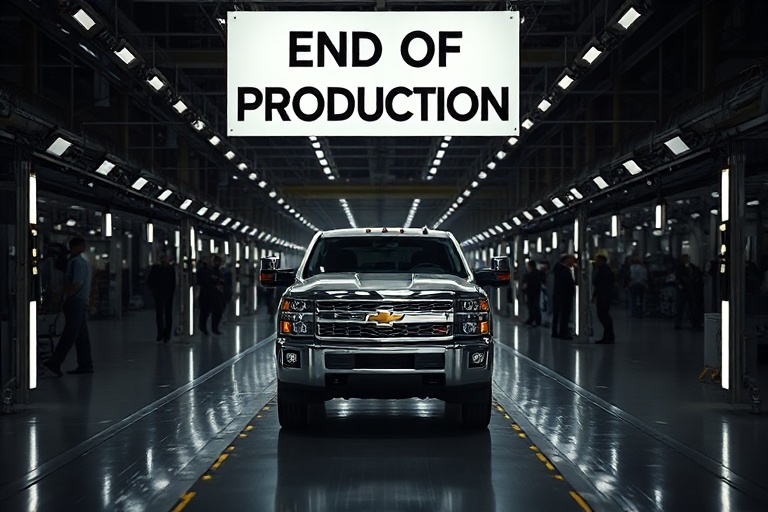
General Motors has made a decisive move by halting production of its heavy-duty Silverado HD lineup, signaling a significant pivot in the company’s manufacturing strategy. The announcement, delivered through internal communications and confirmed by industry insiders, underscores broader trends in automotive manufacturing, supply chain pressures, and evolving consumer demands. For truck enthusiasts and industry observers alike, this decision raises critical questions about the future of heavy-duty vehicles and GM’s long-term vision.
The Context Behind the Halt
GM’s decision to pause Silverado HD production comes amid a complex interplay of factors. The company has been grappling with semiconductor shortages that have disrupted production schedules across its portfolio. Additionally, shifting consumer preferences toward electric and hybrid vehicles have prompted GM to reallocate resources toward its electric vehicle (EV) initiatives, particularly the GMC Hummer EV and the upcoming electric Silverado.
This shift is not isolated. Ford, GM’s primary competitor in the heavy-duty truck segment, has also faced production delays, though its F-Series Super Duty line remains in high demand. The temporary halt in Silverado HD production allows GM to retool its factories, prioritize higher-margin models, and address supply chain bottlenecks that have plagued the industry for years.
Key Factors Influencing the Decision
- Supply Chain Disruptions: A global shortage of critical components, including semiconductors, has forced automakers to make tough choices about which models to prioritize.
- Electrification Strategy: GM’s aggressive push toward an all-electric future by 2035 means reallocating capital and manufacturing capacity to EV production.
- Changing Consumer Preferences: While heavy-duty trucks remain popular, younger buyers are increasingly drawn to electric and more fuel-efficient alternatives.
- Profit Margins: Heavy-duty trucks are expensive to produce and maintain, and GM may be focusing on models with higher profitability or lower production costs.
What This Means for Truck Buyers and the Industry
For consumers eyeing a new Silverado HD, the production halt could mean longer wait times or limited availability. Dealerships may see reduced inventory, pushing buyers toward competitors like the Ford F-250 or Ram 2500. However, GM has assured customers that existing orders will be fulfilled, and production is expected to resume once supply chain constraints ease.
The broader implications for the heavy-duty truck market are more profound. Automakers are at a crossroads, balancing traditional internal combustion engine (ICE) models with the rapid adoption of electric powertrains. GM’s decision to pause Silverado HD production highlights the tension between maintaining legacy revenue streams and investing in future technologies.
Potential Long-Term Consequences
- Increased Competition: With Ford and Ram dominating the heavy-duty segment, GM risks losing market share if it cannot quickly resume production or introduce compelling alternatives.
- Accelerated Electrification: The pause may accelerate GM’s timeline for an electric Silverado HD, which could redefine the segment if it delivers on performance and capability.
- Dealer Impact: Dealerships heavily invested in the Silverado HD may face short-term revenue declines, though GM’s long-term commitments could mitigate this.
- Regulatory Pressures: Stricter emissions standards could further complicate the viability of traditional heavy-duty trucks, pushing automakers toward electrification.
GM’s Strategic Moves and the Road Ahead
GM’s decision to pause Silverado HD production is not an admission of failure but a calculated strategic move. The company has been vocal about its commitment to an all-electric future, and the temporary halt aligns with this vision. By reallocating resources to EV production, GM is positioning itself to lead the next wave of automotive innovation.
However, the heavy-duty truck market remains a critical revenue stream, and GM cannot afford to neglect it entirely. Industry analysts expect the company to reintroduce the Silverado HD lineup with updated features, improved efficiency, or even an electric variant. The question is not whether GM will return to the heavy-duty segment but how it will adapt to meet the evolving demands of truck buyers.
For now, GM’s focus on electrification and supply chain resilience suggests that the Silverado HD hiatus may be longer than initially anticipated. Truck enthusiasts may need to temper their expectations or explore alternative options in the interim.
Conclusion: A Pivotal Moment for GM and the Truck Industry
GM’s decision to halt Silverado HD production is a microcosm of the challenges facing the automotive industry. Supply chain disruptions, the push toward electrification, and shifting consumer preferences are forcing automakers to adapt rapidly. While the pause may cause short-term inconvenience for truck buyers, it underscores GM’s commitment to long-term innovation.
As the industry evolves, the fate of traditional heavy-duty trucks hangs in the balance. GM’s strategic pivot could either solidify its leadership in the EV space or leave a void in the truck market that competitors are eager to fill. One thing is certain: the automotive landscape is changing, and GM’s Silverado HD hiatus is a clear signal of the road ahead.
For those interested in the broader implications of GM’s strategy, our Automotive section offers deeper insights into industry trends and innovations. Additionally, our News category keeps readers updated on the latest developments in the automotive world.