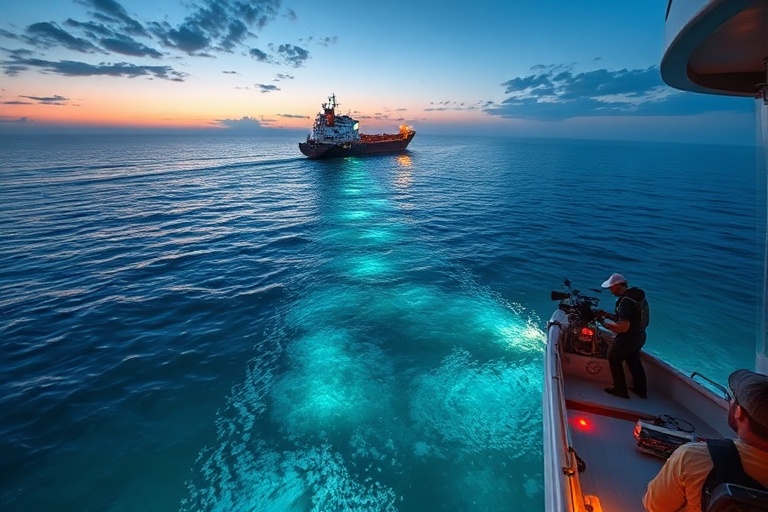
How the Strait of Hormuz Threatens Global Internet Cables
The Strait of Hormuz, a narrow waterway connecting the Persian Gulf to the Gulf of Oman, is one of the most geopolitically sensitive maritime routes in the world. Beyond its role in oil shipping lanes, it serves as a critical artery for global telecommunications infrastructure. Underneath its surface lie some of the most vital internet cables that power connectivity between Europe, Asia, and the Middle East. Disruptions here don’t just affect shipping—they can ripple across digital networks, influencing economies, governments, and daily life thousands of miles away.
Recent tensions in the region have brought renewed attention to the fragility of this infrastructure. With over 20% of the world’s seaborne oil passing through these waters, the stakes are already high. But when internet cables become a casualty of geopolitical maneuvering, the consequences extend far beyond fuel prices. This is the story of how a single strait holds the power to alter the flow of data—and why its protection matters to everyone online.
The Undersea Web: Mapping the Cables That Pass Through the Strait
The Strait of Hormuz is no accidental detour for internet cables. It is a deliberate choice made by telecommunications companies to minimize distance and latency between continents. Several high-capacity fiber-optic cables traverse this route, including:
- FLAG Europe-Asia (FEA): A 28,000-kilometer cable system linking the UK to Japan via the Middle East, with a critical segment running through the Strait of Hormuz.
- Gulf Bridge International (GBI): A regional cable system connecting countries in the Gulf to Europe and Asia, designed to reduce reliance on Western routes.
- MENA Undersea System: A newer network linking the Middle East and North Africa to Europe, with landing points in Oman and the UAE.
- Asia-Africa-Europe-1 (AAE-1): A 25,000-kilometer cable that links Southeast Asia to Europe, passing through the Red Sea and Strait of Hormuz.
These cables are not just bundles of fiber optics. They are the backbone of financial transactions, government communications, and cloud computing services. A single cable cut can delay trades on global markets, disrupt emergency services, or isolate entire nations digitally. The redundancy built into these networks is substantial—but not infinite. In 2021, a cable cut near Egypt slowed internet speeds in India and Pakistan for days. Had it occurred in the Strait of Hormuz, the impact would have been exponentially greater.
Unlike satellite communication, which can reroute signals through space, undersea cables offer unmatched speed and reliability—when they remain intact. The physical vulnerability of these cables makes them a potential target in times of conflict, whether through sabotage, anchoring accidents, or deliberate attacks.
Geopolitical Flashpoint: Why the Strait Remains a Target
The Strait of Hormuz is more than a shipping lane—it is a symbol of regional power and a flashpoint for international tensions. Iran, which borders the strait, has repeatedly threatened to disrupt maritime traffic in response to sanctions and military pressure. While most attention focuses on oil tankers, the presence of undersea cables adds another layer of strategic significance.
In 2019, a series of attacks on oil tankers near the strait raised global alarm. Though no cables were damaged, the incident highlighted how quickly maritime infrastructure could become a battleground. Analysts warn that future conflicts could target not just ships, but the cables themselves. A 2022 report by the Center for Strategic and International Studies (CSIS) noted that Iran has invested in naval capabilities capable of reaching the seabed, raising concerns about its ability to interfere with subsea infrastructure.
Such actions would not require advanced submarines. Fishing vessels, remotely operated vehicles (ROVs), or even divers could theoretically locate and damage cables. The shallow depth of parts of the Strait—down to just 20 meters in some areas—makes such operations even more feasible. Unlike oil platforms, which are heavily guarded, undersea cables are often left unprotected once installed.
This asymmetry creates a dangerous imbalance. Nations that rely on these cables for digital communication have limited means to physically secure them in international waters. Diplomacy and deterrence become the primary tools, but in an era of rising tensions, those tools are increasingly unreliable.
Digital Fallout: The Ripple Effects of a Cable Disruption
The consequences of a cable cut in the Strait of Hormuz would extend far beyond the immediate region. Consider the following potential impacts:
- Financial Markets: Stock exchanges in Europe, Asia, and the Middle East rely on low-latency connections for high-frequency trading. A disruption could delay transactions, increase volatility, and trigger automated sell-offs.
- Cloud Services: Major cloud providers like Amazon Web Services (AWS), Google Cloud, and Microsoft Azure route significant traffic through the Middle East. A cable failure could slow down services for businesses and consumers across South Asia and the Gulf.
- Government Communications: Diplomatic cables, intelligence sharing, and military coordination often depend on these undersea routes. A disruption could force a return to slower, less secure satellite communication.
- Everyday Connectivity: Countries like India, Pakistan, and the UAE could experience slower internet speeds, reduced access to streaming services, and disruptions to online banking and telemedicine.
In 2008, a cable cut in the Mediterranean disrupted internet access across the Middle East and South Asia for weeks. The incident cost businesses millions and underscored how interconnected—and fragile—global internet infrastructure truly is. A similar event in the Strait of Hormuz would dwarf that impact.
While redundancy exists in the form of alternative routes (such as cables passing through the Red Sea and Suez Canal), these paths are often longer and more congested. Latency—the delay in data transmission—would increase, affecting everything from video calls to financial transactions. In industries like finance, where milliseconds matter, such delays can have real economic consequences.
Protecting the Digital Lifeline: What Can Be Done?
The vulnerability of undersea cables is not a new problem, but it is one that has gained urgency in recent years. Governments and telecommunications companies are exploring several strategies to mitigate risks:
- Enhanced Monitoring: Using satellites and drones to patrol cable routes for suspicious activity. Companies like Subcom and NEC have developed systems to detect anomalies in real time.
- Improved Repair Protocols: Faster response teams with specialized ships can locate and repair cable cuts within days. However, in conflict zones, access may be restricted.
- Diversification of Routes: Expanding cable routes through less contested areas, such as the Arctic or Southeast Asia, could reduce reliance on the Strait of Hormuz. Projects like the Arctic Connect cable aim to do just that.
- International Agreements: Treaties protecting undersea infrastructure, similar to those governing submarine cables in wartime, could provide legal safeguards. However, geopolitical divisions make such agreements difficult to achieve.
- Public-Private Partnerships: Governments and tech companies are increasingly collaborating to fund and secure critical infrastructure. The U.S. Department of Defense has invested in protecting cables, recognizing their strategic importance.
Yet, these measures are not foolproof. The reality is that undersea cables remain one of the most exposed links in the global digital chain. The cost of protecting them is high, and the political will to do so consistently is often lacking. As nations race to expand their digital footprints, the need for resilience has never been more urgent.
For now, the world remains dependent on the fragile peace of the Strait of Hormuz. Each passing day without incident is a reminder of the system’s resilience—but also its vulnerability. The next cable cut may not come from an anchor or a storm. It may come from a deliberate act of war or sabotage. And when it does, the internet as we know it could change forever.
For those who depend on a stable, fast, and secure internet—whether for business, communication, or entertainment—the Strait of Hormuz is not just a geographic feature. It is a silent guardian of the modern world. And it is one that demands our attention before it’s too late.
To learn more about how global infrastructure impacts digital connectivity, explore the Technology section on Dave’s Locker. For deeper analysis on geopolitical risks in critical regions, visit our News category.
© 2024 Dave’s Locker. All rights reserved.