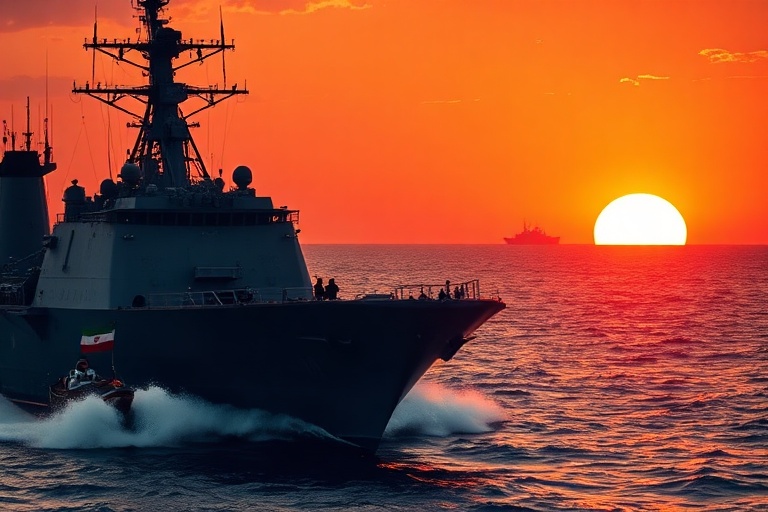
iran war hormuz
The Strait of Hormuz: A Chokepoint of Global Significance
The Strait of Hormuz, a narrow waterway between Iran and Oman, connects the Persian Gulf to the Gulf of Oman and the Arabian Sea. At its narrowest point, the strait is just 21 nautical miles wide, with shipping lanes only two miles wide in each direction. This geographic constraint makes it one of the most critical—and vulnerable—chokepoints in global trade.
Nearly 20% of the world’s oil supply passes through the strait each day, according to data from the U.S. Energy Information Administration. The sheer volume of crude oil, liquefied natural gas, and other commodities moving through these waters underscores its role as the lifeline of international energy markets. Disruptions here can send shockwaves through economies thousands of miles away, from Tokyo to New York.
Iran’s strategic position along the strait gives it significant leverage. The country has repeatedly threatened to close the waterway in response to sanctions or perceived threats, a move that could destabilize global oil prices and supply chains. Such warnings are not idle threats; in 2019, attacks on oil tankers near the strait raised concerns about regional security and drew international condemnation. The incident highlighted how quickly tensions can escalate in one of the world’s most volatile regions.
The Geopolitical Chessboard: Players and Interests
The Strait of Hormuz exists at the intersection of multiple geopolitical interests. For Iran, control over the strait is not just a military concern but a matter of national sovereignty and economic survival. The country’s Revolutionary Guard has invested heavily in asymmetric warfare capabilities, including fast-attack boats and anti-ship missiles, to deter potential adversaries.
The United States, which relies on the strait for its own energy needs and as a transit route for allies, maintains a strong naval presence in the region. The U.S. Fifth Fleet, based in Bahrain, is tasked with ensuring freedom of navigation and deterring Iranian aggression. However, this military posture has also fueled tensions, with Iran accusing the U.S. of encroaching on its territorial waters and undermining its regional influence.
Other global players also weigh in. China, the world’s largest oil importer, depends heavily on oil shipments from the Middle East. Its growing economic ties with Iran have led to a delicate balancing act, as it seeks to maintain trade relations while avoiding entanglement in regional conflicts. Meanwhile, European nations, though less directly dependent on Hormuz oil, have a vested interest in maintaining stability to prevent energy crises and humanitarian disasters.
This complex web of relationships creates a delicate balance of power. Diplomatic efforts to ease tensions often clash with military posturing, leaving the strait in a state of perpetual vulnerability. The 2015 nuclear deal, known as the Joint Comprehensive Plan of Action (JCPOA), briefly alleviated some concerns by easing sanctions on Iran. However, the U.S. withdrawal from the agreement in 2018 and the subsequent reimposition of sanctions have once again raised the stakes.
Historical Flashpoints: When Tensions Turned to Conflict
The Strait of Hormuz has been a flashpoint for decades. One of the most significant conflicts occurred during the Iran-Iraq War in the 1980s, when both sides targeted each other’s oil exports. Iran’s use of mines and attacks on tankers in the strait led to direct confrontations with the U.S., including the accidental downing of an Iranian passenger plane in 1988. The incident, which killed 290 civilians, remains a stark reminder of how quickly miscalculation can lead to tragedy.
In 2008, another confrontation unfolded when Iranian boats harassed U.S. Navy vessels in the strait. The incident, captured on video, showed Iranian sailors approaching the U.S. ships at high speed before abruptly stopping. The episode highlighted the risks of unintended escalation in a region where both sides operate with high levels of mistrust.
More recently, tensions escalated in 2019 when Iran’s Revolutionary Guard seized a British-flagged oil tanker, the Stena Impero, in retaliation for the detention of an Iranian oil tanker by British authorities in Gibraltar. The move was widely seen as an attempt by Iran to assert its control over the strait and send a message to Western powers. The tanker was eventually released after weeks of diplomatic wrangling, but the incident served as a stark warning of the strait’s volatility.
These historical examples illustrate a pattern: the Strait of Hormuz is not just a geographic feature but a stage for power struggles. Each crisis, whether military or diplomatic, reinforces the strait’s role as a barometer of global stability.
Economic Ripples: The Cost of Disruption
The economic impact of a closure or significant disruption in the Strait of Hormuz would be immediate and far-reaching. Oil prices would likely skyrocket, as buyers scramble to secure alternative supplies. Countries in Asia, which import the majority of their oil from the Middle East, would face severe shortages, leading to rationing or blackouts. In Europe, energy prices would climb, exacerbating inflation and straining household budgets.
A prolonged disruption could also trigger a global recession. The International Energy Agency has warned that even a temporary closure could remove millions of barrels of oil from the market daily, creating a supply shock. This, in turn, could lead to higher fuel prices for consumers, increased costs for businesses, and a slowdown in economic growth.
The shipping industry would also bear the brunt of any conflict. Insurance premiums for vessels passing through the strait would surge, and some insurers might refuse to cover routes altogether. This could force shipping companies to reroute their vessels around the Cape of Good Hope in South Africa, adding weeks to transit times and increasing costs. The ripple effects would be felt across industries, from manufacturing to retail, as supply chains grind to a halt.
For Iran, the economic stakes are equally high. The country’s economy is heavily dependent on oil exports, which account for a significant portion of its revenue. A prolonged closure of the strait would cut off Iran’s primary source of income, exacerbating domestic economic crises and fueling public discontent. This could, in turn, lead to further instability and even regime change.
The Path Forward: Diplomacy or Escalation?
The question of how to manage tensions in the Strait of Hormuz remains unresolved. Diplomacy offers one path, but it is fraught with challenges. The JCPOA, despite its flaws, demonstrated that even bitter adversaries can negotiate. However, the collapse of the agreement and the subsequent reimposition of sanctions have made future talks more difficult. The Biden administration has signaled a willingness to re-engage with Iran, but the path to a new deal is littered with obstacles, including Iran’s nuclear advancements and its support for regional proxies.
Military deterrence is another option. The U.S. and its allies continue to conduct joint naval exercises in the region, sending a clear message to Iran that any attempt to close the strait would be met with a swift response. However, military posturing carries its own risks. Accidents or miscalculations could quickly spiral into full-blown conflict, with catastrophic consequences for the region and the world.
One potential solution lies in confidence-building measures. For example, both sides could agree to a mutual withdrawal of military forces from the strait, or establish a hotline to prevent accidental escalations. Confidence-building measures have been used successfully in other regions, such as the Korean Peninsula, to reduce tensions and create a foundation for dialogue.
Another approach is to address the root causes of the conflict. Iran’s nuclear program, its ballistic missile development, and its support for regional militias are all sources of tension. A comprehensive deal that addresses these issues—while also providing economic relief to Iran—could pave the way for a more stable relationship between Iran and the international community.
Ultimately, the fate of the Strait of Hormuz will depend on the willingness of all parties to compromise. The strait is not just a chokepoint for oil tankers; it is a symbol of the broader struggle for power and influence in the Middle East. Until that struggle is resolved, the waters of the Strait of Hormuz will remain a flashpoint for global tensions.
The Role of International Law and Freedom of Navigation
The principle of freedom of navigation is enshrined in the United Nations Convention on the Law of the Sea (UNCLOS), which guarantees the right of ships to pass through international straits. However, Iran has frequently challenged this principle, arguing that its sovereignty extends to the strait and that it has the right to regulate or suspend traffic in response to perceived threats.
This legal ambiguity has created a gray area that both sides exploit. The U.S. and its allies argue that the strait is an international waterway and that Iran’s attempts to restrict navigation violate international law. Iran, on the other hand, contends that its actions are justified by its right to self-defense and its need to protect its national security.
The legal debate is not merely academic. It has real-world consequences, as evidenced by the 2019 attacks on oil tankers in the strait. The incident raised questions about the effectiveness of international law in preventing conflict and protecting global trade. It also highlighted the need for a clear framework to govern the use of straits and other chokepoints in times of crisis.
One possible solution is to establish a regional maritime security framework, similar to the Code for Unplanned Encounters at Sea (CUES) used in the South China Sea. Such a framework could include rules for safe navigation, protocols for handling disputes, and mechanisms for de-escalation. By providing a clear set of guidelines, this framework could reduce the risk of accidents and miscalculations, while also giving all parties a stake in maintaining stability.