Iran War Threat Over Hormuz Strait: Why It Could Shake Global Markets
The Strait of Hormuz, a narrow waterway connecting the Persian Gulf to the Gulf of Oman, has long been a geopolitical pressure point. But recent tensions between Iran and Western powers have elevated its status from regional concern to potential global crisis. With Iran threatening to block the strait in response to sanctions and military pressure, the world is watching closely.
This is not just about oil shipments or naval posturing. The Hormuz Strait is a critical artery for international trade, handling nearly a third of the world’s seaborne oil. Any disruption there could send shockwaves through energy markets, shipping routes, and geopolitical alliances. Understanding why this region matters—and what could happen next—is essential for grasping the stakes.
The Strategic Importance of the Strait of Hormuz
The Strait of Hormuz is one of the most strategically vital waterways on Earth. Just 21 miles wide at its narrowest point, it is the only route for oil tankers leaving or entering the Persian Gulf. In 2023 alone, nearly 21 million barrels of oil per day passed through its waters, according to the U.S. Energy Information Administration.
Beyond oil, the strait is a chokepoint for global trade. Disruptions here could lead to supply chain breakdowns, fuel price spikes, and economic instability. The region’s importance has made it a flashpoint for decades, with Iran repeatedly threatening to close it in response to perceived threats or sanctions.
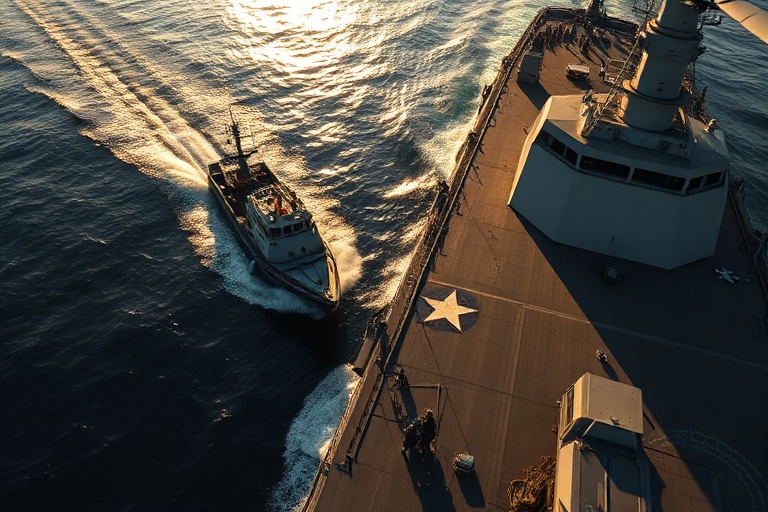
Militarily, the strait is a focal point for naval power projection. The U.S. Fifth Fleet is stationed nearby, and Iran has deployed anti-ship missiles, drones, and fast-attack boats in the area. This balance of power creates a precarious situation where miscalculation could lead to escalation.
Key Players in the Hormuz Crisis
The current tensions involve several key actors, each with their own interests and red lines:
- Iran: Views the strait as a strategic asset to deter foreign interference. Supreme Leader Ayatollah Ali Khamenei has repeatedly warned that Iran could block the strait if its nuclear program or regional influence is threatened.
- United States: Maintains a strong naval presence in the region to ensure free passage. The U.S. has conducted joint military exercises with Gulf allies and imposed heavy sanctions on Iran’s oil exports.
- Gulf States: Countries like Saudi Arabia and the UAE rely heavily on Hormuz for oil exports. They have strengthened ties with the U.S. and Israel to counter Iranian aggression.
- China and Russia: Both have sought to expand their influence in the region, often in opposition to U.S. interests. China, in particular, has invested heavily in Iranian oil infrastructure, complicating Western efforts to isolate Tehran.
What Would a War in the Hormuz Strait Look Like?
A military confrontation in the Hormuz Strait would be unlike any other naval conflict in modern history. The geography itself presents unique challenges: shallow waters, narrow channels, and proximity to Iranian territory make large-scale operations risky.
Iran’s strategy would likely involve asymmetric warfare—using fast boats, mines, and drones to harass and disable larger vessels. The Islamic Revolutionary Guard Corps (IRGC) has trained extensively for such scenarios, and its forces are well-equipped for swarming tactics. Meanwhile, the U.S. and its allies would rely on superior firepower, intelligence, and air superiority to maintain control.
However, even a limited conflict could have catastrophic consequences. Oil prices could skyrocket, global supply chains could fracture, and civilian shipping could grind to a halt. The risk of escalation—whether intentional or accidental—could draw in regional powers and even major global players.
Potential Scenarios for Escalation
Several pathways could lead to a wider conflict in the Hormuz Strait:
- Accidental Engagement: A miscommunication or miscalculation during a naval standoff could trigger a firefight. The 2019 attacks on oil tankers in the Gulf of Oman, which the U.S. blamed on Iran, are a stark reminder of how quickly tensions can spiral.
- Preemptive Strike: Israel or the U.S. might launch a preemptive strike to degrade Iran’s missile and drone capabilities before they can be used against shipping lanes. Such an attack could provoke a direct response from Iran.
- Proxy Conflict: Iran could escalate through its proxies in Yemen (the Houthis) or Iraq, targeting U.S. bases or Gulf oil facilities. This could draw the U.S. into a broader confrontation without a direct Iranian attack.
- Economic Warfare: Iran might attempt to disrupt shipping without outright war, using mines or sabotage to create uncertainty and drive up insurance costs for tankers.
Broader Implications for Global Security and Economy
The fallout from a Hormuz conflict would extend far beyond the Middle East. Energy markets would be the first to react, with oil prices potentially spiking to triple digits per barrel. This could trigger recessions, fuel inflation, and strain global supply chains already reeling from the pandemic and the Ukraine war.
Geopolitically, a conflict in the strait could redraw alliances. Gulf states might seek new security guarantees, while China and Russia could exploit the crisis to undermine U.S. influence in the region. The already fragile nuclear deal with Iran would likely collapse, further destabilizing the Middle East.
For the U.S., the challenge would be balancing deterrence with restraint. A full-scale war is unlikely, but even a limited conflict could have long-term consequences. The Biden administration has sought to revive diplomacy while maintaining a strong military posture, but the window for de-escalation is narrowing.
Could Diplomacy Still Prevent a Crisis?
Despite the escalating rhetoric, diplomacy remains a possible path—though an increasingly narrow one. Backchannel talks between Iran and the U.S. have occurred intermittently, often facilitated by third parties like Oman or Qatar. However, trust is at an all-time low, and Iran’s demands—including sanctions relief and recognition of its nuclear program—are seen as non-starters in Washington.
Meanwhile, regional talks between Gulf states and Iran have made little progress. Saudi Arabia, once a staunch opponent of Iran, has engaged in cautious dialogue, but fundamental differences remain. Without a breakthrough, the risk of miscalculation grows.
One potential avenue is the revival of the Joint Comprehensive Plan of Action (JCPOA), the 2015 nuclear deal that the U.S. abandoned in 2018. While the JCPOA is far from perfect, its collapse has removed a key constraint on Iran’s nuclear ambitions. A renewed deal could ease some tensions, but political obstacles in both Tehran and Washington make this unlikely in the near term.
What Comes Next? Preparing for the Worst, Hoping for the Best
The coming months will be critical in determining whether the Hormuz Strait remains a flashpoint or becomes the site of a wider conflict. For businesses, governments, and individuals alike, the stakes could not be higher.
Oil companies and shipping firms are already adjusting their risk assessments, rerouting vessels where possible and increasing security measures. Governments are reviewing contingency plans, from stockpiling oil to securing alternative trade routes. Meanwhile, ordinary citizens in the Gulf region remain caught in the crossfire, facing the prospect of economic hardship and instability.
Ultimately, the fate of the Hormuz Strait will be decided by the choices of a handful of leaders. Diplomacy, deterrence, and de-escalation are all possible—but so is escalation. The world must prepare for the worst while holding out hope for a peaceful resolution.
As the saying goes, the only thing necessary for the triumph of evil is for good men to do nothing. The same could be said for war: the only thing necessary for conflict to erupt is for diplomacy to fail. The question now is whether those in power will choose wisdom over brinkmanship—and whether the world will be ready if they don’t.
For more on Middle Eastern conflicts and their global implications, explore our News and Analysis sections.