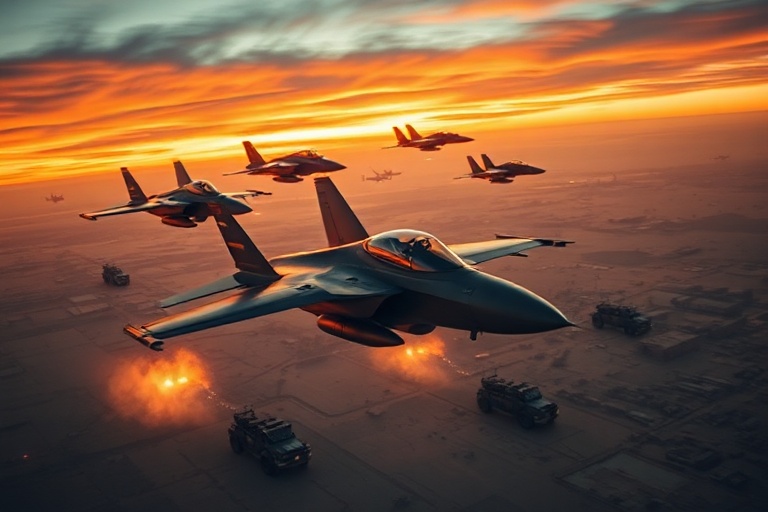
Israel-Iran Conflict: Escalating Tensions and Global Risks
Historical Context of Israel-Iran Hostilities
The Israel-Iran conflict is not a sudden eruption but a decades-long confrontation rooted in geopolitical, religious, and ideological divisions. Tensions trace back to the 1979 Iranian Revolution, when the Shah’s regime was overthrown and replaced by an Islamic Republic under Ayatollah Khomeini. The new government declared Israel an “enemy of Islam,” setting the stage for decades of hostility.
Iran’s support for militant groups like Hezbollah and Hamas has further strained relations. Israel, in turn, has conducted covert operations to disrupt Iran’s nuclear program, including the assassinations of nuclear scientists and cyberattacks like Stuxnet. The 2020 killing of Qasem Soleimani, Iran’s top military commander, marked a significant escalation in this shadow war.
The Role of Proxy Conflicts
Much of the Israel-Iran confrontation plays out indirectly through proxy wars in Syria, Lebanon, and Yemen. Iran has provided weapons, funding, and training to groups like Hezbollah, which has fought multiple wars with Israel. Meanwhile, Israel has conducted airstrikes in Syria to prevent Iran from establishing a permanent military presence.
These proxy conflicts have drawn in regional powers, turning local disputes into broader geopolitical struggles. Saudi Arabia and other Gulf states see Iran’s influence as a threat, while Russia and the U.S. have their own strategic interests at play. The result is a complex web of alliances and rivalries that makes de-escalation extremely difficult.
Recent Escalations and Direct Confrontations
The past few years have seen a dramatic increase in direct confrontations between Israel and Iran. In April 2024, Iran launched a massive missile and drone attack on Israel in retaliation for an Israeli strike on its consulate in Damascus. While Israel, with help from the U.S. and allies, intercepted most of the projectiles, the attack marked the first direct assault by Iran on Israeli soil.
Israel responded with a limited strike on Iranian military sites, avoiding civilian casualties to prevent further escalation. This tit-for-tat approach reflects the delicate balance both nations must maintain—enough aggression to deter the other, but not so much as to provoke an all-out war.
International Reactions and Diplomatic Maneuvering
The global response to these escalations has been mixed. The U.S. has reaffirmed its commitment to Israel’s security, while European nations have urged restraint. Meanwhile, China and Russia have called for dialogue, positioning themselves as mediators while also benefiting from the instability.
Diplomatic efforts have so far failed to produce meaningful results. The U.N. Security Council remains divided, with permanent members like the U.S. and Russia holding opposing views. Even attempts to broker ceasefires in Gaza have done little to ease tensions between Israel and Iran.
The Humanitarian and Economic Fallout
The Israel-Iran conflict has far-reaching consequences beyond the battlefield. Oil prices have surged in response to the instability, affecting economies worldwide. In the Middle East, civilians bear the brunt of the violence, with displacement, economic hardship, and loss of life becoming all too common.
Refugee crises have strained neighboring countries like Jordan and Lebanon, while sanctions on Iran have worsened poverty and political unrest. The humanitarian toll is staggering, with millions caught in the crossfire of a conflict they did not choose.
Impact on Global Security
The Israel-Iran conflict also poses a threat to global security. A wider war could disrupt shipping lanes in the Strait of Hormuz, a critical chokepoint for oil supplies. The use of nuclear-capable missiles, even in limited strikes, raises the specter of a catastrophic escalation.
Cyber warfare has emerged as another battleground, with both sides targeting each other’s infrastructure. The potential for miscalculation or accidental escalation looms large, making this one of the most dangerous geopolitical flashpoints today.
What Lies Ahead?
The future of Israel-Iran relations remains uncertain. Diplomacy has so far failed to break the cycle of violence, and military options carry enormous risks. The international community must find a way to mediate, but the deep-seated mistrust between the two nations makes this a daunting task.
For now, the conflict continues to simmer, with sporadic flare-ups threatening to boil over. The world watches nervously, aware that the stakes could not be higher. Whether through negotiation or further escalation, the Israel-Iran rivalry will continue to shape the Middle East—and the world—for years to come.
The situation is fluid, and developments could shift rapidly. Staying informed is crucial, as the consequences of this conflict extend far beyond the region. For more insights on global conflicts and their impact, check out our News and Analysis sections.