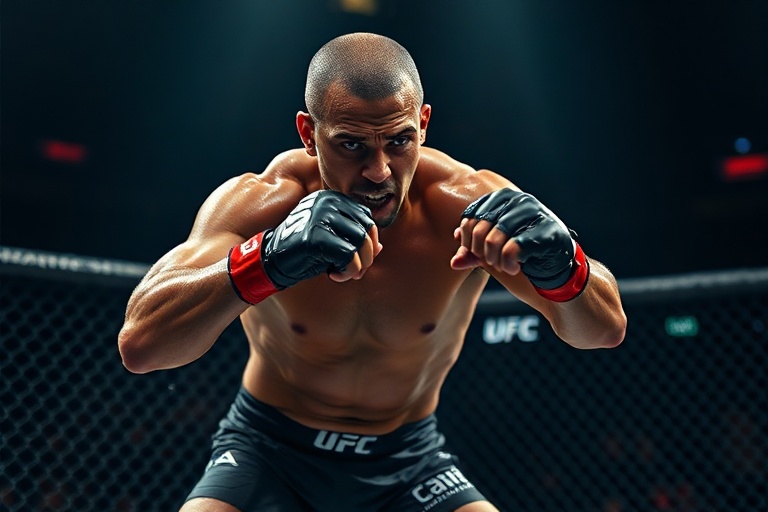
junior dos santos
Junior dos Santos: The Brazilian Powerhouse Who Redefined MMA
Few athletes rise to global prominence as decisively as Junior dos Santos, the Brazilian heavyweight mixed martial artist whose blend of knockout power and technical precision left an indelible mark on the sport. Born on January 30, 1984, in Caçador, Brazil, dos Santos began his MMA journey in the early 2000s, long before the UFC became a mainstream spectacle. His journey from regional circuits in Brazil to the pinnacle of the world’s premier fighting organization is a testament to discipline, adaptability, and an unrelenting fighting spirit.
Dos Santos’ fighting style—rooted in Muay Thai and Brazilian Jiu-Jitsu—mirrored his cultural upbringing. Brazil has a deep martial arts tradition, and dos Santos embodied the grit and flair of his homeland. Unlike many heavyweights who relied solely on sheer size, he combined explosive striking with strategic footwork, making him a nightmare for opponents. His rise coincided with a golden era of heavyweight MMA, where legends like Cain Velasquez and Stipe Miocic also left their mark, but dos Santos carved his niche through sheer dominance.
The UFC Dominance and Historic Title Reign
Dos Santos’ UFC debut in 2008 marked the beginning of a rapid ascent. By 2011, he had dismantled the division’s top contenders, culminating in a historic victory over Cain Velasquez at UFC on Fox 1. This win earned him the UFC Heavyweight Championship, a moment that resonated deeply in Brazil. The fight was broadcast across Latin America, and dos Santos’ triumph became a symbol of Brazilian excellence in combat sports. His reign, though relatively short-lived, solidified his legacy as one of the most technically gifted heavyweights in MMA history.
His first title defense against Frank Mir in 2012 showcased his striking mastery, as he dismantled the former champion with precision kicks and punches. However, his reign ended in dramatic fashion when Velasquez reclaimed the belt in a rematch later that year. The loss was a rare setback, but it did little to diminish his reputation. Dos Santos remained a top contender, proving his longevity in a sport where careers often fade quickly.
Cultural Impact: A Brazilian Icon in Global MMA
Dos Santos’ influence extended beyond the octagon. In Brazil, MMA was still gaining traction when he emerged, and his success helped legitimize the sport in a country dominated by football. He became a role model for aspiring fighters in Latin America, demonstrating that Brazilian athletes could excel in combat sports beyond Jiu-Jitsu and submission grappling. His fights were widely celebrated in Brazilian media, and he frequently expressed pride in representing his country on the global stage.
Globally, dos Santos’ rivalry with Velasquez and his battles against top-tier opponents like Alistair Overeem and Fabricio Werdum elevated his status. He was often praised for his sportsmanship, a rarity in a sport where trash talk and animosity are common. Dos Santos’ humility and professionalism made him a fan favorite, bridging cultural divides between Brazilian and international audiences.
Later Career and Legacy: Adapting in an Evolving Sport
As the UFC heavyweight division evolved, dos Santos faced new challenges. Younger fighters like Francis Ngannou and Daniel Cormier brought different skill sets, forcing dos Santos to adapt. While he no longer held a title, his ability to compete with elite fighters kept him relevant. His 2017 knockout of Oleksiy Oliynyk, a fight where he absorbed significant punishment before finishing his opponent, underscored his resilience.
Dos Santos’ later years also reflected the broader shifts in MMA. The sport became faster, more technical, and increasingly global. Fighters from Eastern Europe, Africa, and the Middle East rose to prominence, but dos Santos remained a bridge between eras. His final UFC fight in 2021, a submission loss to Ciryl Gane, marked the end of an era but not his legacy.
The Dos Santos Effect: Inspiring a New Generation
Today, dos Santos’ impact is visible in the fighters he inspired. Brazilian heavyweights like Francisco Trinaldo and Júnior Albini have cited him as a key influence. His career demonstrated that success in MMA requires more than just physicality—it demands mental fortitude, technical skill, and adaptability. Dos Santos’ ability to transition from a regional prospect to a global champion serves as a blueprint for aspiring fighters worldwide.
Beyond his in-cage achievements, dos Santos’ cultural contributions are equally significant. He helped popularize MMA in Brazil at a time when the sport was still finding its footing. His fights were broadcast in Portuguese, reaching millions of fans who saw him as a national hero. In a sport often criticized for its violence, dos Santos embodied the values of respect and perseverance.
Conclusion: A Heavyweight Legacy
Junior dos Santos’ career is a reminder that greatness in MMA is not just about winning titles—it’s about leaving a lasting mark. His combination of power, precision, and professionalism set him apart in a crowded division. While his reign as UFC Heavyweight Champion was relatively short, his influence on the sport is undeniable. He proved that Brazilian fighters could dominate the heavyweight division, and his legacy continues to inspire new generations.
As MMA evolves, dos Santos’ career serves as a benchmark for what it means to be a champion—not just in the octagon, but in the hearts of fans worldwide. His story is one of perseverance, adaptability, and cultural pride, making him a true icon of the sport.