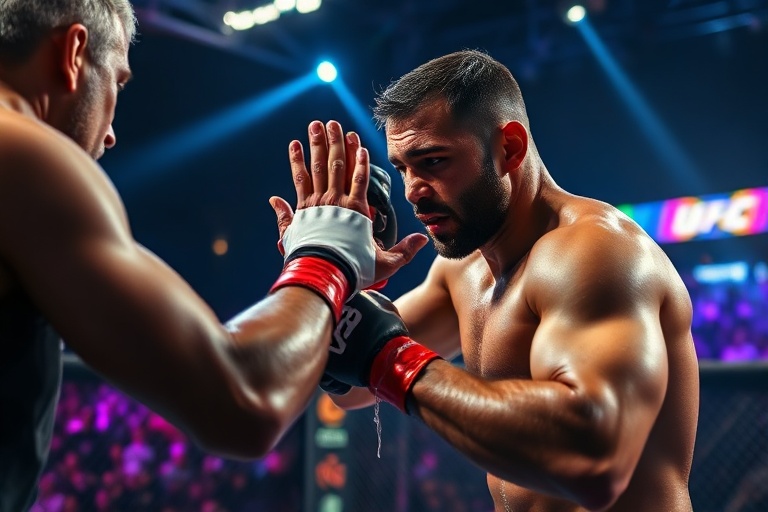
Junior dos Santos: Legacy of a Brazilian MMA Icon
In the annals of mixed martial arts, few names carry the weight of legacy and dominance like Junior dos Santos. The Brazilian fighter, known for his explosive striking, technical precision, and unshakable composure, carved out a career that transcended the octagon. His influence on the sport extended far beyond his victories, shaping the way modern MMA fighters approach combat sports.
Dos Santos rose from the gritty streets of Brazil to become one of the most recognizable figures in MMA history. His journey mirrored the globalization of the sport itself, a testament to how martial arts could bridge cultures and inspire generations. From the neon-lit stadiums of Las Vegas to the packed arenas of his homeland, his presence was felt across continents.
The Rise of a Brazilian Phenom
Born in Caçador, a small city in southern Brazil, dos Santos discovered martial arts at a young age. His early training in Muay Thai and Brazilian Jiu-Jitsu laid the foundation for what would become a storied career. By the time he transitioned into professional MMA, he carried with him the discipline of a martial artist and the fire of a competitor hungry for greatness.
His rise was meteoric. After compiling an undefeated record in regional promotions, dos Santos signed with the Ultimate Fighting Championship (UFC) in 2008. The stage was set for a fighter who would soon become synonymous with the heavyweight division. His UFC debut against Fabrício Werdum in 2009 ended in a first-round knockout, a statement that resonated with fans and critics alike.
Within three years, dos Santos had achieved what few fighters accomplish: he dethroned the long-reigning UFC heavyweight champion Cain Velasquez in 2011. The victory was not just a personal triumph but a cultural moment, as Brazilian fans celebrated their countryman’s dominance on the world stage. His reign as champion lasted until 2012, but his impact on the sport was far more enduring.
A Fighting Style That Redefined Heavyweight MMA
Dos Santos’ fighting style was a blend of precision and power. Standing at 6’4” with a reach of 77 inches, he possessed the physical tools to dominate opponents in the striking exchanges that define modern heavyweight MMA. His jab, a weapon often underrated in the heavyweight division, set the pace for his combinations. Opponents struggled to close the distance, and when they did, his overhand right became one of the most feared strikes in the sport.
Defensively, he was equally impressive. His footwork allowed him to evade strikes with ease, while his head movement made him a difficult target. This technical mastery was rare in an era where heavyweight fighters often relied on brute force over strategy. Dos Santos proved that technique could prevail, even against larger and more physically imposing opponents.
His fights were often a masterclass in striking. Whether against Velasquez, Alistair Overeem, or Stipe Miocic, dos Santos demonstrated an ability to adapt mid-fight, adjusting his game plan to exploit weaknesses. This adaptability became a hallmark of his career and a blueprint for aspiring fighters.
The Cultural Impact of a Global Champion
Dos Santos’ success transcended the sport of MMA. As one of Brazil’s most prominent athletes, he became a symbol of national pride and a bridge between Brazilian and American combat sports cultures. His fights were broadcast across Portuguese-speaking markets, and his interviews, often delivered in his native tongue with a warm smile, endeared him to fans worldwide.
In Brazil, where soccer dominates the sports landscape, dos Santos carved out a niche for himself in a country where combat sports had traditionally taken a backseat. His popularity helped elevate MMA’s profile in South America, inspiring a new generation of fighters to take up the sport. Promotions like Dana White’s Contender Series Brazil later capitalized on this growing interest, further cementing MMA’s place in Brazilian sports culture.
Globally, dos Santos’ rivalry with Velasquez became one of the defining narratives of the UFC’s heavyweight division during the early 2010s. Their trilogy of fights—each a war of attrition—drew massive pay-per-view numbers and solidified the UFC’s reputation as the premier MMA organization. Dos Santos’ ability to compete at the highest level, regardless of the stakes, reinforced his status as a global icon.
Legacy and Influence on Modern MMA
Dos Santos’ career spanned over a decade, a longevity that speaks to his dedication and resilience. Even as he entered the latter stages of his career, he remained a formidable opponent, defeating the likes of Ben Rothwell and Marcin Tybura long after his prime years. His ability to stay relevant in a sport known for its physical demands is a testament to his work ethic and adaptability.
Beyond his in-cage achievements, dos Santos became a mentor to younger fighters. His guidance and insights helped shape the careers of Brazilian fighters who followed in his footsteps, including the likes of Francis Ngannou and Amanda Nunes. Dos Santos’ influence extended to the next generation, ensuring that his impact would be felt for years to come.
In 2023, dos Santos announced his retirement from professional MMA, closing a chapter that had defined an era of heavyweight competition. His farewell was met with widespread acclaim, as fighters, promoters, and fans alike celebrated his contributions to the sport. The UFC honored him with a retirement ceremony, a rare tribute reserved for the sport’s legends.
Lessons from a Career of Excellence
Dos Santos’ career offers several lessons for aspiring fighters and athletes in any discipline. His journey underscores the importance of technical mastery in a sport often dominated by physicality. His ability to adapt and evolve with each fight highlights the necessity of continuous improvement.
Moreover, dos Santos’ global appeal demonstrates the power of sports as a cultural bridge. His success in the UFC helped popularize MMA in Brazil and beyond, proving that talent and charisma could transcend borders. For young athletes in developing sports markets, his story is a blueprint for achieving greatness on the world stage.
As MMA continues to grow, dos Santos’ legacy serves as a reminder of what it takes to succeed at the highest level. His combination of skill, discipline, and cultural influence set a standard that future generations will strive to meet. While the octagon may no longer host his battles, his impact on the sport—and the world of combat sports—remains indelible.
A Final Tribute to a Legend
Junior dos Santos’ career was more than a series of victories and defeats; it was a narrative of perseverance, innovation, and global influence. From the streets of Caçador to the pinnacle of MMA, his journey inspired millions. His fights were not just spectacles but masterclasses in technique and strategy, leaving an indelible mark on the sport.
As the UFC and MMA community reflect on his career, dos Santos’ legacy is secure. He is remembered not only for his accomplishments but for the way he carried himself—with humility, respect, and an unwavering commitment to excellence. In a sport often defined by its intensity, dos Santos stood out as a true gentleman of the game.
For fans of MMA, dos Santos’ fights will continue to be studied and revered. For aspiring fighters, his career serves as a roadmap to success. And for the sport itself, his legacy is a reminder of the heights that can be achieved through dedication, skill, and an unyielding passion for the fight game.