Keir Starmer Resignation: UK Political Crisis Explained
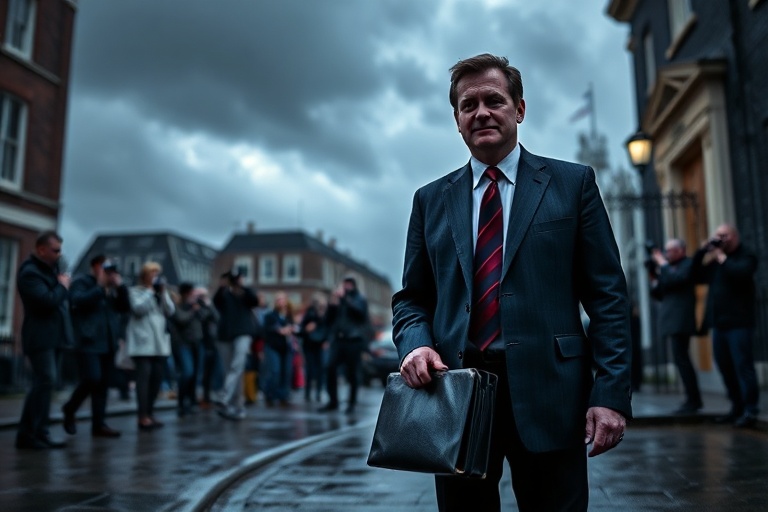
The British political landscape has shifted dramatically in recent weeks. Rumors of a resignation have swirled around 10 Downing Street, leaving analysts and citizens alike questioning the future of Keir Starmer’s leadership. While the prime minister has not formally announced his departure, the speculation itself reveals deeper tensions within the Labour Party and broader discontent across the electorate.
This isn’t just about one leader’s potential exit. It reflects a moment where global political winds are changing direction, where economic pressures are reshaping voter priorities, and where institutional trust is being tested like never before. To understand what’s really happening, we need to look beyond the headlines and examine the forces at play.
The Origins of the Resignation Rumors
The whispers began in Westminster corridors and spread through political chat shows. Sources close to the government cited unnamed advisors who described Starmer as “deeply frustrated” with the lack of progress on key manifesto promises. Economic stagnation, NHS pressures, and a growing sense of drift in domestic policy have created an atmosphere where ambition meets reality—and reality is winning.
Internally, Labour MPs have begun to fracture. Younger members, many who joined after Starmer’s 2020 leadership victory, are increasingly vocal about the need for fresh ideas. Meanwhile, traditional Labour voters in post-industrial towns feel abandoned as economic recovery stalls. This isn’t just a Westminster bubble phenomenon; it’s a cultural moment where political institutions are failing to meet the moment.
- Policy paralysis: Despite controlling Parliament, Labour has struggled to deliver transformative change.
- Media scrutiny: Right-leaning outlets have amplified criticism, while left-wing voices question Starmer’s ideological commitment.
- Global pressures: The UK’s position in a volatile world—from Ukraine to the Middle East—has complicated domestic priorities.
Global Context: When Leaders Resign in Turbulent Times
Starmer’s potential resignation must be understood within a broader pattern of political leadership in crisis. From Macron’s struggles in France to Scholz’s weakening grip in Germany, European leaders are facing unprecedented challenges. The UK is not alone in this struggle.
Historically, resignations often mark turning points in national narratives. Margaret Thatcher’s departure in 1990 followed years of economic upheaval and internal party rebellion. Tony Blair’s resignation in 2007 came as Iraq’s shadow loomed large. Each case represented not just personal failure but systemic exhaustion with a particular political era.
For Starmer, the question isn’t just about his survival but about what his potential departure would signal: a rejection of centrist pragmatism, a demand for more radical solutions, or simply exhaustion with the status quo. In a world where populist alternatives are gaining ground globally, the UK’s political class is being forced to confront its own irrelevance.
Comparative Perspectives
Consider the contrast with other Western democracies:
- France: Macron’s unpopularity stems from pension reforms and cost-of-living crises, showing how economic pain can erode even entrenched leadership.
- Germany: Scholz’s struggles reflect a broader European malaise where traditional parties are losing their grip on power.
- United States: While not facing resignation, Biden’s struggles with age and policy stagnation show similar dynamics at play in the Anglosphere.
These examples demonstrate that Starmer’s potential resignation isn’t an isolated incident but part of a larger reckoning with democratic institutions’ ability to deliver for their citizens.
The Cultural Impact: When Politics Fails to Inspire
Beyond the Westminster bubble, Starmer’s potential resignation reflects a deeper cultural shift. Trust in political institutions has collapsed across the developed world. From Brexit’s aftermath to the rise of protest movements, citizens are rejecting traditional channels of representation.
In the UK specifically, this manifests in several ways:
- The decline of local journalism, which once held leaders accountable.
- The rise of social media as the primary arena for political discourse.
- A generational divide where younger voters see politics as corrupt and ineffective.
Starmer’s leadership has been defined by caution rather than inspiration. Where Blair promised transformation and Cameron offered “big society,” Starmer has emphasized stability. But in an era where stability feels like stagnation, this approach may no longer suffice.
The cultural moment demands boldness, not caution. Whether Starmer can pivot—or whether his resignation becomes inevitable—will shape not just British politics but the global narrative about what democracy can still deliver.
What Happens Next: Scenarios and Consequences
If Starmer does resign, the consequences would ripple far beyond Westminster. The Labour Party would face an existential crisis: Can it reconcile its centrist pragmatism with the demands of a changing electorate? Would a leadership contest lead to a lurch leftward, or toward more technocratic solutions?
Externally, the UK’s international standing would be affected. Starmer’s cautious foreign policy approach has been a marked departure from the chaos of the Johnson era. A sudden leadership change could create uncertainty in diplomatic circles, particularly regarding relations with the EU and US.
Domestically, the power vacuum would be immediate. The Conservatives, despite their own struggles, would seize on Labour’s disarray. Meanwhile, smaller parties like the Liberal Democrats and Reform UK would position themselves as the only alternatives.
Most significantly, the resignation would signal a fundamental truth: The era of safe, competent leadership is over. In its place comes a demand for radical solutions to problems that have festered for decades.
Possible Outcomes
Several scenarios could unfold:
- Starmer survives but reshuffles: A dramatic cabinet overhaul could buy time, but would require fundamental policy shifts.
- Starmer resigns, Labour lurches left: Figures like Angela Rayner could emerge as standard-bearers for a more progressive agenda.
- Starmer resigns, centrist alternative emerges: Someone like Yvette Cooper might attempt to restore Labour’s electoral coalition.
- Snap election: The most unpredictable outcome, which could reshape British politics entirely.
Each path carries risks and opportunities. The only certainty is that the political landscape we’ve known since 2019 is about to change dramatically.
Conclusion: The End of an Era—or a New Beginning?
Keir Starmer’s potential resignation isn’t just about one man’s political future. It’s about the future of British democracy itself. The institutions that once provided stability are crumbling under the weight of unmet expectations, global instability, and cultural transformation.
Whether Starmer stays or goes, the moment demands honest reckoning. What does the Labour Party stand for? Can British politics deliver for those who feel left behind? These questions transcend personalities and speak to the soul of democracy in the 21st century.
The coming months will reveal whether this is the end of an era of cautious centrism—or the beginning of a new, more radical political chapter. One thing is certain: The status quo is no longer sustainable.
For more analysis on political shifts, visit our Politics section. To understand how economic pressures are reshaping global governance, explore our Analysis category.