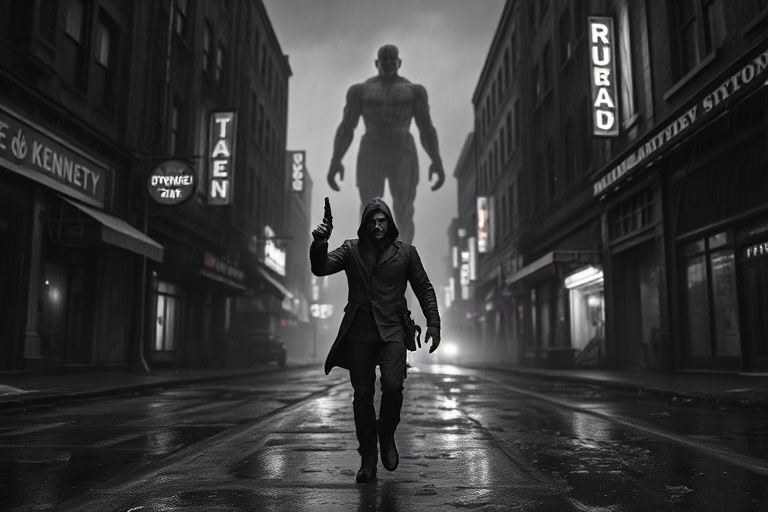
Tracing the rise and fall of a web oddity that became a cult sensation.
The Birth of a Viral Oddity
In 2015, a small Flash game titled Leon Must Die emerged from the depths of the internet, defying expectations at every turn. Created by an anonymous developer, the game presented players with a simple premise: survive as long as possible in a pixelated world where the only rule was perpetual death. Its brutality was matched only by its charm, a juxtaposition that quickly caught the attention of gamers and critics alike.
The game’s minimalist design and punishing difficulty resonated with a niche audience craving something raw and unfiltered. Unlike polished AAA titles or even most indie darlings, Leon Must Die thrived on its imperfections. Its glitches, awkward animations, and relentless difficulty became part of its identity. Players weren’t just tolerating its flaws—they were embracing them.
Within months, the game had spread across forums and social media, fueled by word-of-mouth and the viral nature of Flash games in the mid-2010s. It wasn’t long before speedrunners and challenge-seekers began documenting their attempts to “beat” the game, despite its intentionally unwinnable design. This paradox only deepened its mystique.
Why This Game Stood Out in a Sea of Flash Classics
Leon Must Die wasn’t the only Flash game to gain traction during this era, but it distinguished itself through sheer audacity. While titles like Pico’s School or Club Penguin games relied on humor or nostalgia, Leon leaned into frustration and perseverance. Its gameplay loop was simple: spawn in a room, die repeatedly, and try to survive just a little longer each time. Yet this simplicity belied a deeper psychological pull.
A Study in Contradiction
The game’s design played with expectations in ways few others dared. On one hand, it was undeniably frustrating—players would often die in seconds, with no clear path to improvement. On the other, the lack of traditional goals made it oddly freeing. There was no pressure to “win.” Instead, the game rewarded persistence, turning failure into a form of progress.
This duality sparked debates about what games should be. Was Leon Must Die a commentary on the futility of modern gaming? A satire of bullet-hell shooters? Or simply a product of its time, born from the wild west of early internet gaming? The answers remain as murky as the game’s origins.
Key Mechanics That Defined the Experience
The game’s core mechanics were stripped down to their essence:
- Permadeath: Every death resets progress, ensuring no two playthroughs feel the same.
- Unpredictable Enemies: Enemies spawn randomly, creating a chaotic environment where strategy is nearly impossible.
- Minimalist Aesthetic: The 16-bit visuals and chiptune soundtrack amplify the sense of isolation and dread.
- No Clear Goal: Unlike traditional games, there’s no victory condition—just the drive to outlast the previous attempt.
The Broader Implications of a Game That Refused to Be Played
Leon Must Die wasn’t just a game—it was a cultural artifact that reflected the internet’s appetite for the bizarre and the unpolished. In an era dominated by hyper-curated experiences, it offered something raw and unfiltered. Its existence challenged the notion that games had to be fun in a conventional sense to be meaningful.
This raises questions about the role of difficulty in gaming. Titles like Dark Souls or Celeste frame challenge as a pathway to mastery, but Leon Must Die flipped the script. Here, difficulty wasn’t a means to an end—it was the end itself. The game’s legacy lies in its refusal to conform, a middle finger to the idea that games must be balanced or fair.
Moreover, the game’s rise and eventual decline mirror the lifecycle of Flash itself. As Adobe phased out Flash in 2020, many classic games were lost to time. While Leon Must Die has been preserved through emulators and fan projects, its original home—the Flash ecosystem—is gone. This adds a layer of tragedy to its story, turning it into a relic of a bygone digital era.
Where Does Leon Go From Here?
With Flash gone, Leon Must Die exists in a liminal space between nostalgia and obscurity. Fans have worked to preserve the game, porting it to modern platforms like Dave’s Locker Gaming and creating fan-made sequels or spiritual successors. Yet these efforts raise their own questions: Can a game like this survive outside its original context? Or is its magic tied irrevocably to the era that birthed it?
There’s also the matter of its creator. The anonymous developer behind Leon Must Die has never stepped into the spotlight, leaving their identity—and their intentions—shrouded in mystery. This anonymity only deepens the game’s allure, turning it into a kind of digital ghost story. Was it a passion project? A joke? A cry for help? The internet may never know.
For now, Leon Must Die remains a cult classic, a testament to the internet’s ability to elevate the strange and the unexpected. It’s a reminder that not every game needs to be polished or perfect to leave a lasting impact. Sometimes, all it takes is a little chaos—and a whole lot of death.
Final Thoughts
Leon Must Die is more than just a game; it’s a phenomenon that encapsulates the spirit of early internet gaming. Its legacy lives on in the communities that still play it, the developers it inspired, and the endless debates it sparked about what games should—and shouldn’t—be.