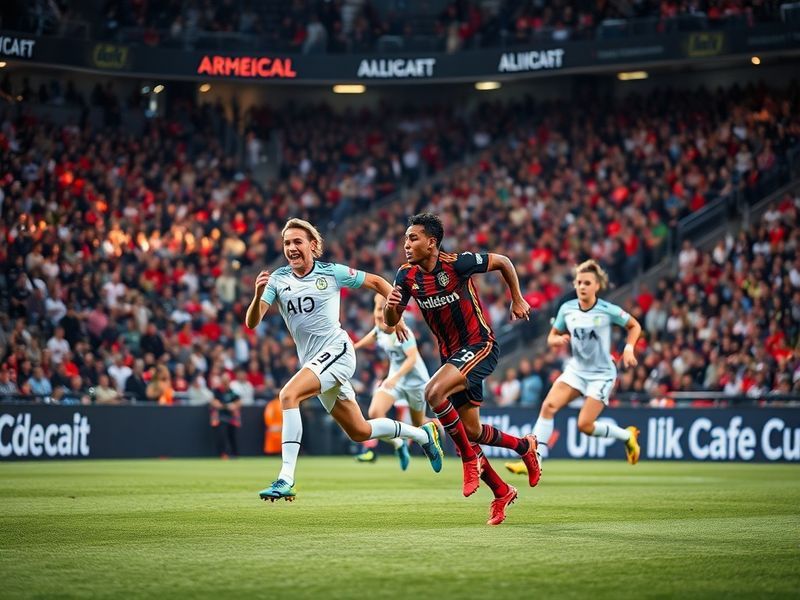
French football has seen many rivalries over the decades, but few match the intensity and history of the Lyon-Lens matchup. These two clubs represent distinct identities—Lyon, the glamorous, multi-sport powerhouse, and Lens, the working-class club that wears its grit on its sleeve. When they meet, the Stade de Gerland and Stade Bollaert-Delelis transform into cauldrons of emotion, where tactics, pride, and regional pride collide.
The Historical Roots of a Fiery Rivalry
The Lyon-Lens rivalry stretches back to the 1970s, though it was not always a marquee fixture. Lens, based in the coal-mining region of Nord-Pas-de-Calais, developed a reputation as a club of resilience and identity. The miners’ spirit became synonymous with the club’s ethos: fighting against the odds, even when resources were scarce. Lyon, on the other hand, grew into a modern football empire under the ownership of Jean-Michel Aulas in the 1990s and 2000s, transforming from a provincial side into a consistent Ligue 1 contender and Champions League regular.
The rivalry intensified in the early 2000s when both clubs were regulars in Europe. Lyon’s dominance in domestic football—seven consecutive Ligue 1 titles from 2002 to 2008—made them targets for ambitious rivals like Lens. The 2008 clash at Gerland, where Lens won 2-1 in a stunning upset, remains a defining moment. It was a rare moment of glory for a club that often lived in Lyon’s shadow, proving that passion could overcome financial disparity.
Key Moments in the Rivalry
- 1998: Lens defeat Lyon 4-1 in a Ligue 1 match that signaled their rise under manager Daniel Leclercq.
- 2002: Lyon edge out Lens in a tight 2-1 victory in the Coupe de la Ligue final, marking their first major trophy of the Aulas era.
- 2008: Lens shock Lyon 2-1 at home in a match that ended Lyon’s domestic unbeaten streak, a psychological blow to the title hopefuls.
- 2011: A 4-0 thrashing by Lyon in Lens, showcasing the growing gap in ambition and resources between the clubs.
Cultural and Social Contrasts
The contrast between Lyon and Lens extends beyond football. Lyon, often called the “Capital of the Gauls,” is a city of affluence, gastronomy, and silk production. It hosts the headquarters of Interpol and is a hub for biotech and digital innovation. The club, backed by corporate sponsorship and star-studded academies, reflects this cosmopolitan identity.
Lens, by contrast, is rooted in industrial heritage. The Stade Bollaert-Delelis sits in the heart of a region scarred by the decline of coal mining. The club’s fanbase is deeply working-class, with supporters known for their vocal, loyal, and sometimes fiery loyalty. The “Galeries Nord,” one of France’s most famous ultras sections, has become a symbol of resistance and identity in French football culture.
This cultural divide fuels the rivalry. Lyon fans often dismiss Lens as a “provincial club,” while Lens supporters see their adversaries as soulless corporate entities. When the two meet, it’s not just about three points—it’s about dignity, pride, and the soul of French football.
Recent Encounters: A Shift in Power
In recent years, the balance of power has shifted. Lyon, once the dominant force, has struggled with financial constraints and managerial instability. The departure of Nabil Fekir, Alexandre Lacazette, and others signaled a decline in their ability to retain talent. Meanwhile, Lens, under the leadership of manager Franck Haise, has re-emerged as a Ligue 1 force, finishing second in the 2022-23 season and qualifying for the Champions League for the first time in two decades.
Their most recent meeting in April 2024 at Stade Bollaert-Delelis ended 2-1 in favor of Lens, a result that sent shockwaves through the footballing world. Lyon, missing key players through injury and suspension, were outplayed in midfield. This result was not just a victory—it was a statement. It proved that Lens had arrived as a legitimate title contender, while Lyon’s era of dominance was firmly in the past.
Tactical Evolution in the Rivalry
The tactical approach in Lyon-Lens matches has evolved over time. Lyon, under Aulas, favored a possession-based, technical style under managers like Gérard Houllier and Alain Perrin. They relied on foreign imports and academy graduates to build dominance. Lens, however, has always been more pragmatic. Under Haise, they play with high pressing, physicality, and direct transitions—traits that reflect the club’s identity.
In modern encounters, Lens often sets the tempo, using their pressing to disrupt Lyon’s rhythm. Lyon, meanwhile, struggles to impose their style when faced with Lens’ intensity. This tactical contrast makes every match unpredictable and adds another layer to the rivalry’s intrigue.
Why This Rivalry Matters Beyond the Pitch
The Lyon-Lens rivalry transcends sport. It is a reflection of France’s social and economic divide. It challenges the narrative that football is purely about money and global brands. Lens, with its limited budget and working-class roots, represents the heart of traditional football culture. Lyon, for all its success, often struggles to connect emotionally with fans in the same way.
This rivalry also highlights the importance of identity in football. While clubs like Paris Saint-Germain have become global brands with transient fanbases, Lyon and Lens remain deeply tied to their regions. Their matches are not just fixtures—they are cultural events that bring communities together.
As French football navigates a period of financial uncertainty and global competition, the Lyon-Lens rivalry serves as a reminder of what makes the sport special. It is not about trophies or television deals—it is about passion, history, and the unbreakable bond between a club and its people.
Looking Ahead: What’s Next for Lyon and Lens?
For Lens, the future looks bright. With Champions League football on the horizon and a clear tactical identity, they are no longer the underdogs. Their challenge will be to maintain their momentum and avoid the burnout that has plagued smaller clubs in the past.
Lyon, meanwhile, faces a period of rebuilding. Their academy remains one of the best in France, and they continue to produce talent like Rayan Cherki and Castello Lukeba. The challenge will be to redefine their identity without relying solely on financial muscle. Can they rediscover their fighting spirit and reclaim their status as a Ligue 1 powerhouse?
One thing is certain: when Lyon and Lens meet again, the football will be intense, the stakes will be high, and the history will be written anew. This is more than a rivalry—it is a celebration of what makes football in France so compelling.
For fans of both clubs, and for football purists everywhere, the next chapter cannot come soon enough.
To explore more about French football’s cultural impact, visit our News section for the latest updates.
For deeper analysis on club rivalries in Ligue 1, check out our Analysis category.