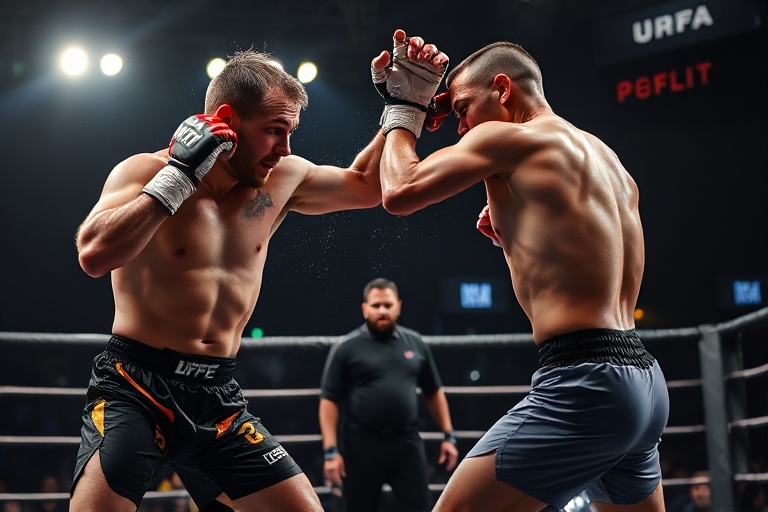
Mixed Martial Arts (MMA) has evolved from a fringe spectacle into one of the world’s fastest-growing combat sports. What began as a no-holds-barred contest to determine the most effective fighting style has transformed into a highly regulated, globally televised spectacle. The sport’s journey reflects broader shifts in athleticism, entertainment, and cultural exchange.
Unlike traditional martial arts, MMA allows fighters to blend techniques from boxing, wrestling, Brazilian jiu-jitsu, Muay Thai, and judo. This versatility demands extraordinary physical conditioning, mental resilience, and tactical intelligence. The sport’s appeal lies in its raw authenticity—each match is a test of both skill and endurance, with no single dominant style guaranteeing victory.
The Origins and Evolution of MMA Fighting
The roots of modern MMA can be traced to the early 1990s, when the Ultimate Fighting Championship (UFC) staged its first event in the United States. Initially marketed as a platform to compare different fighting disciplines, the early UFC events shocked audiences with their lack of rules and brutal knockouts. Governments in several countries initially banned the sport, citing safety concerns and a perceived lack of sporting legitimacy.
Over time, however, MMA underwent a dramatic transformation. Regulatory bodies such as the Nevada State Athletic Commission (NSAC) introduced unified rules in 2001, standardizing weight classes, fight durations, and legal techniques. This shift paved the way for mainstream acceptance. Today, MMA is sanctioned in most U.S. states and across Europe, Asia, and Latin America. Major promotions like the UFC, Bellator, and ONE Championship now operate globally, broadcasting events to millions of viewers in over 170 countries.
From Vale Tudo to the Modern Octagon
Long before the UFC, Brazil’s “Vale Tudo” (meaning “anything goes”) matches in the 1920s allowed fighters to test their skills without restrictions. These early contests often lasted for hours, with no time limits or weight classes. The Gracie family became synonymous with this style, using Brazilian jiu-jitsu to dominate larger opponents. This philosophy—technique over brute strength—remains central to MMA today.
The transition from underground Vale Tudo to regulated MMA was not seamless. In Japan, organizations like Pancrase and Pride FC emerged in the 1990s, blending martial arts with theatrical storytelling. Pride FC, in particular, became a cultural phenomenon, attracting celebrities and drawing massive pay-per-view audiences in Asia. Meanwhile, Europe’s early adoption of MMA faced resistance from traditional martial arts communities, but dedicated promoters gradually built grassroots support.
The Globalization of MMA: A Cultural Shift
MMA’s growth mirrors the rise of other global sports leagues. The UFC’s international expansion began in earnest in the 2010s, with events held in Canada, Europe, the Middle East, and Asia. Fighters from countries like Russia, Nigeria, and the Philippines have risen to prominence, bringing diverse fighting styles and cultural narratives to the sport.
In Asia, MMA has become a mainstream entertainment product. ONE Championship, based in Singapore, has positioned itself as a values-driven brand, emphasizing respect, honor, and community impact. The promotion’s events often feature pre-fight rituals inspired by local traditions, such as the Ram Muay in Thailand or the Arnis demonstration in the Philippines. This cultural integration has helped MMA resonate with audiences beyond traditional sports fans.
Europe, too, has embraced MMA with enthusiasm. Countries like France, the UK, and Germany now host major events, and fighters such as Islam Makhachev and Leon Edwards have become household names. The sport’s acceptance in these regions reflects a broader trend: the decline of martial arts purity in favor of a more inclusive, hybrid approach to combat sports.
MMA in the Digital Age
The rise of social media and streaming platforms has accelerated MMA’s global reach. Fighters now cultivate personal brands across Instagram, YouTube, and TikTok, sharing training footage, interviews, and behind-the-scenes content. This direct connection with fans has democratized the sport, allowing smaller promotions and independent fighters to gain visibility.
Platforms like ESPN and DAZN have invested heavily in MMA broadcasting, offering multi-year deals that bring events to millions of households. The UFC’s partnership with ESPN, for example, has expanded its audience beyond hardcore fans to casual viewers. Meanwhile, regional promotions like Russia’s Absolute Championship Akhmat (ACA) and Brazil’s Shooto Brasil have leveraged digital tools to grow their fan bases internationally.
The Business of MMA Fighting
MMA is no longer just a sport—it’s a multi-billion-dollar industry. The UFC, valued at over $7 billion following its merger with the WWE, dominates the market. Its roster includes superstars like Conor McGregor, Jon Jones, and Amanda Nunes, whose star power transcends the sport. Fights like McGregor vs. Cowboy Cerrone (2020), which drew 1.7 million pay-per-view buys, demonstrate the financial potential of a single event.
However, the business landscape is not without challenges. Fighter pay remains a contentious issue, with many athletes arguing that the revenue generated by promotions is not fairly distributed. Health concerns, particularly regarding long-term brain injuries, have also prompted calls for stricter safety regulations. The introduction of the UFC’s new fighter wellness program and the adoption of advanced concussion protocols reflect ongoing efforts to address these issues.
Sponsorships and Media Rights
Sponsorship deals in MMA have grown exponentially. Major brands like Reebok, Monster Energy, and Toyota have partnered with the UFC, while fighters secure lucrative endorsement contracts with companies in fitness, fashion, and technology. The rise of fighter-owned brands, such as Israel Adesanya’s “Bad Company” and Jorge Masvidal’s “Gamebred” clothing lines, highlights the entrepreneurial spirit within the sport.
Media rights have become a key revenue stream. The UFC’s deal with ESPN, reportedly worth $1.5 billion over five years, includes streaming rights on ESPN+ and linear TV. In Asia, ONE Championship’s partnership with Turner Sports has brought its events to millions of viewers across the region. These agreements underscore MMA’s status as a global media property.
The Future of MMA Fighting
As MMA continues to evolve, several trends are shaping its future. One of the most significant is the rise of women’s MMA. Fighters like Amanda Nunes, Zhang Weili, and Valentina Shevchenko have shattered records and redefined what it means to be a champion. The UFC’s women’s divisions, introduced in the 2010s, have become some of the most-watched fights on the promotion’s roster.
Another trend is the integration of technology. Wearable devices, video replay systems, and advanced medical monitoring are enhancing both performance and safety. The use of data analytics to scout opponents and optimize training regimens is becoming standard practice among top-tier teams.
Regional expansion will also play a crucial role. Promotions in Africa, the Middle East, and Southeast Asia are investing in local talent and infrastructure. Events like the UFC’s debut in Saudi Arabia and ONE Championship’s shows in Dubai reflect the sport’s ambition to reach new markets.
Challenges Ahead
Despite its growth, MMA faces challenges. Regulatory fragmentation in some countries complicates fighter mobility and event scheduling. The sport must also address concerns about its long-term health impacts, particularly chronic traumatic encephalopathy (CTE) in fighters. Advocacy groups and medical professionals are pushing for stricter oversight, including mandatory retirement ages and enhanced brain health monitoring.
Moreover, the sport’s image is still evolving. While MMA has shed its “human cockfighting” reputation, critics argue that its marketing often emphasizes violence over athleticism. Promoters are increasingly focusing on storytelling—highlighting fighters’ journeys, cultural backgrounds, and personal struggles—to humanize the sport and attract broader audiences.
Conclusion
MMA fighting has come a long way from its underground origins to become a global phenomenon. Its blend of athleticism, strategy, and cultural exchange has captivated millions, transcending traditional sporting boundaries. As the sport continues to grow, its ability to adapt—whether through technological innovation, athlete empowerment, or global expansion—will determine its longevity.
For fans, MMA offers more than just entertainment. It represents the pursuit of excellence, the breaking of barriers, and the celebration of human potential. Whether in the octagon or in local fight gyms, the spirit of MMA fighting endures—a testament to the universal appeal of combat sports.
As the world becomes more interconnected, MMA is poised to play an even larger role in shaping the future of sports. Its journey from fringe spectacle to global powerhouse is far from over.
For those looking to dive deeper into the world of MMA, Sports on Dave’s Locker offers comprehensive coverage of combat sports trends and events.