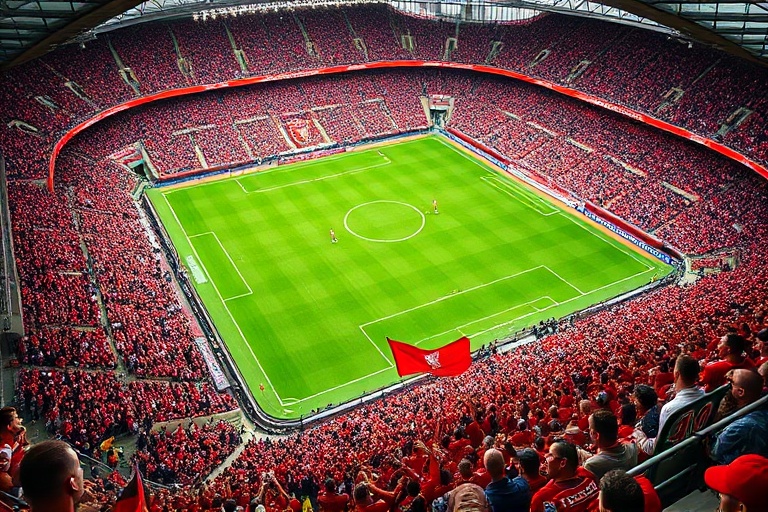
The clash between Panathinaikos and PAOK is more than just a football match; it’s a cultural divide, a historical confrontation, and a spectacle that transcends the pitch. When these two teams meet, the intensity is palpable, reflecting deeper tensions within Greek society itself. This fixture isn’t merely about three points—it’s about pride, legacy, and identity.
The Historical Roots of the Rivalry
The rivalry between Panathinaikos and PAOK dates back to the mid-20th century, rooted in geographical, social, and political contrasts. Panathinaikos, based in Athens, represents the capital’s elite and cosmopolitan identity. The club was founded in 1908 and quickly became a symbol of Greek football’s aristocracy, winning multiple league titles and establishing itself as a powerhouse in domestic and European competitions.
PAOK, on the other hand, was founded in 1926 in Thessaloniki, Greece’s second-largest city, by Greek refugees from Pontus (modern-day Turkey). This origin story gave PAOK a distinct identity—one tied to resilience, working-class values, and a defiant spirit. The club’s fanbase, known for its unwavering loyalty, sees itself as the underdog fighting against the centralized power of Athens-based institutions.
The first official match between the two teams took place in 1959, and since then, the rivalry has grown into one of the fiercest in Greek football. Matches between them are often marred by controversy, passionate fan displays, and a level of intensity that few other fixtures in Greek football can match.
The Cultural Divide Behind the Pitch
The Panathinaikos vs PAOK rivalry is a microcosm of Greece’s broader cultural and political divisions. Athens, as the nation’s capital, has long been the center of economic, political, and cultural power. Panathinaikos, with its wealthy fanbase and historic success, embodies this dominance. The club’s stadium, the Apostolos Nikolaidis Stadium, is located in the heart of Athens, reinforcing its connection to the city’s elite.
PAOK, however, represents the periphery—the regions outside Athens that often feel marginalized by the central government. Thessaloniki, Greece’s cultural hub in the north, has its own identity, and PAOK’s success is seen as a triumph for the region. This dynamic is reflected in the fanbases: Panathinaikos supporters are often associated with affluence, while PAOK fans are celebrated for their passion and loyalty, even in the face of adversity.
- Panathinaikos: Symbol of Athens’ power and prestige. Known for its historic achievements in European competitions, including a run to the European Cup final in 1971.
- PAOK: Symbol of resilience and regional pride. The club’s underdog status has earned it a devoted following across Greece and beyond.
Key Matches and Memorable Moments
Over the decades, Panathinaikos vs PAOK has produced some of the most dramatic and controversial moments in Greek football. These matches are rarely just about football; they’re about pride, revenge, and bragging rights for an entire city or region.
One of the most infamous encounters took place in the 2000s, during a period when PAOK was struggling financially but still managed to challenge Panathinaikos’ dominance. In a 2003 match, PAOK secured a dramatic 3-2 victory in Athens, sparking wild celebrations among their fans and frustration among Panathinaikos supporters. The match was marred by crowd trouble, with flares and clashes between rival fans—a common occurrence in this fixture.
Another standout moment came in the 2018-19 season, when PAOK won the league title for the first time in 34 years. Their victory was seen as a direct challenge to Panathinaikos’ historical dominance. The celebrations in Thessaloniki were euphoric, while in Athens, the defeat was met with disbelief and anger. The match that sealed the title for PAOK was a 5-1 thrashing of Panathinaikos, a result that sent shockwaves through Greek football.
The Global Perspective: How Greek Football Fits Into the World Stage
While Panathinaikos vs PAOK is a uniquely Greek rivalry, its significance extends beyond the country’s borders. Greek football, as a whole, has struggled to maintain its prominence on the global stage since the early 2000s. The decline of clubs like Panathinaikos and Olympiacos in European competitions has left a void that PAOK’s recent successes have only partially filled.
From a global perspective, the Panathinaikos vs PAOK rivalry offers a fascinating case study in how football can reflect and amplify cultural and political tensions. Similar rivalries exist worldwide, such as the Old Firm derby in Scotland (Celtic vs Rangers) or the Rome derby in Italy (Roma vs Lazio), where football becomes a battleground for identity and ideology. What sets the Panathinaikos vs PAOK clash apart is the depth of its historical and cultural roots, making it one of the most passionate rivalries in European football.
For fans outside Greece, this rivalry provides a glimpse into the country’s complex social fabric. It’s a reminder that football is never just about the game—it’s about who we are, where we come from, and what we stand for. In a sport increasingly dominated by commercial interests and globalized fanbases, the Panathinaikos vs PAOK match remains a rare and powerful reminder of football’s ability to unite and divide in equal measure.
A Look at the Fan Culture
The fan culture surrounding Panathinaikos and PAOK is as much a part of the rivalry as the matches themselves. Panathinaikos fans, known as the “Gate 13” ultras, are renowned for their elaborate choreographies and unwavering support. Their tifos (elaborate fan displays) are legendary, often featuring political or historical themes that reflect the club’s identity.
PAOK’s fanbase, particularly the “Loutraki” group, is equally passionate. Their chants and banners often celebrate the club’s refugee roots and working-class identity. The atmosphere at PAOK’s home stadium, the Toumba Stadium, is electric, with fans creating a cauldron of noise that intimidates visiting teams.
Both sets of fans are known for their loyalty, even in the face of adversity. Whether it’s PAOK’s struggles with financial instability or Panathinaikos’ recent decline in domestic competitions, the fans remain steadfast. This loyalty is a testament to the deep emotional connection between the clubs and their supporters.
The Future of the Rivalry
As Greek football continues to evolve, the Panathinaikos vs PAOK rivalry remains as relevant as ever. With PAOK’s recent successes and Panathinaikos’ efforts to regain its former glory, the stage is set for more dramatic encounters. The rivalry is no longer just about Athens vs Thessaloniki; it’s about tradition vs modernity, underdog vs establishment, and passion vs prestige.
For fans of both clubs, the matches are a chance to assert their identity and celebrate what makes their club unique. For neutrals, the rivalry offers a glimpse into the heart of Greek culture—a country where football is more than just a sport; it’s a way of life.
As long as Panathinaikos and PAOK continue to compete, this rivalry will endure, fueled by the passion of their fans and the rich history that binds them. In a world where football is increasingly commercialized, the Panathinaikos vs PAOK clash stands as a reminder of what makes the sport truly special.
For more on Greek football and its cultural significance, explore our Sports section. You can also dive deeper into the history of European football rivalries by visiting our Analysis page.