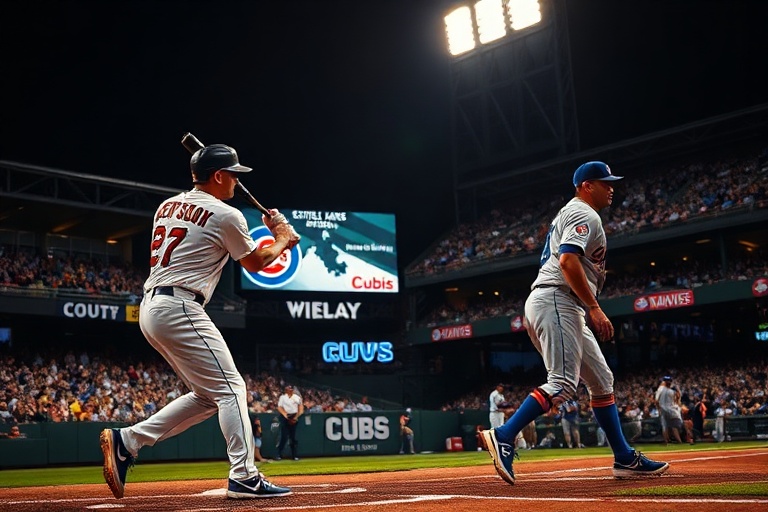
Red Sox vs. Cubs: A Historic Rivalry Revisited
The rivalry between the Boston Red Sox and the Chicago Cubs transcends mere baseball. It’s a clash of cultures, cities, and championship legacies that has captivated fans for over a century. While the teams haven’t met in the World Series since 1918, their histories remain deeply intertwined with the fabric of Major League Baseball. Understanding this rivalry means examining not just the games, but the cities they represent and the fans who live and die with every pitch.
The Red Sox, born in 1901 as part of the American League, quickly became a powerhouse with Fenway Park as their fortress. The Cubs, meanwhile, were already a National League mainstay by the time the Red Sox took the field, their home at Wrigley Field becoming a cathedral of baseball. These two franchises didn’t just play the same sport—they embodied different Americas. Boston, with its rich history and blue-collar ethos, contrasted sharply with Chicago’s gritty, industrial identity. Their occasional postseason meetings have always felt like a collision of worlds.
The 1918 World Series: A Century-Old Grudge
The most famous chapter in this rivalry is the 1918 World Series, where the Red Sox defeated the Cubs in six games. It was a rare moment of direct competition between the leagues, a precursor to the modern interleague play we know today. For Cubs fans, the loss was a bitter pill, one that lingered for decades. The team wouldn’t return to the Fall Classic for another 20 years, while the Red Sox won their next World Series in 1912 and then again in 2004, 2007, 2013, and 2018. The Cubs, after a 108-year drought, finally broke through in 2016, adding a new layer to this old rivalry.
Some historians argue that the 1918 World Series was more than just a championship—it was a symbolic passing of the torch. The Red Sox were at the peak of their dominance, while the Cubs were already in decline. The victory cemented Boston’s reputation as a baseball powerhouse, while Chicago’s struggles reinforced their underdog status. Today, that dynamic has shifted. The Cubs are perennial contenders, while the Red Sox have faced more recent struggles, including a last-place finish in 2023. The rivalry has evolved, but the history remains.
Cultural Clash: Boston vs. Chicago
Beyond the field, the Red Sox and Cubs represent two distinctly different baseball cities. Boston fans are known for their loyalty and passion, often filling Fenway Park even in losing seasons. The team’s historic ballpark, with its Green Monster and quirky dimensions, is a museum of baseball nostalgia. Cubs fans, on the other hand, are famous for their resilience. Wrigley Field, the second-oldest ballpark in MLB, is a living relic, and its rooftop spectators add a unique flavor to the experience. Chicago’s baseball culture is as much about the neighborhood as it is about the team.
These cities also reflect broader cultural differences. Boston is a city of tradition, education, and old-money prestige. Chicago is a city of industry, diversity, and raw energy. When the Red Sox and Cubs meet—whether in spring training, interleague play, or the rare postseason clash—it’s not just a game. It’s a clash of philosophies. The Red Sox play a brand of baseball that values analytics and precision, while the Cubs have embraced a more free-spirited, homegrown approach under Theo Epstein’s leadership. These contrasting styles are visible in every pitch, swing, and defensive play.
What’s at Stake in a Potential Matchup?
While the Red Sox and Cubs haven’t faced each other in the playoffs since the early 20th century, the possibility of a future postseason clash is tantalizing. MLB has experimented with expanded playoffs and realignment, which could increase the chances of interleague matchups in October. If the two teams were to meet in the World Series again, it would be a spectacle unlike any other. The contrast between Fenway Park’s intimate charm and Wrigley Field’s ivy-covered nostalgia would create a visual and emotional spectacle. The storyline writes itself: two historic franchises, two iconic ballparks, two cities with deep baseball roots.
For the players, a Red Sox-Cubs matchup would be a career-defining moment. Pitchers would have to navigate the unique challenges of both ballparks—Fenway’s Pesky’s Pole and the Green Monster, Wrigley’s wind and rooftop distractions. Hitters would face the pressure of playing in front of two of baseball’s most knowledgeable and passionate fan bases. The media narrative would be inescapable, with every move dissected and debated. It’s the kind of matchup that could redefine a player’s legacy.
Key Takeaways from the Red Sox-Cubs Rivalry
To fully grasp the significance of this rivalry, consider these key points:
- Historic dominance vs. historic struggle: The Red Sox have won nine World Series titles, while the Cubs endured a 108-year championship drought before breaking through in 2016.
- Iconic ballparks: Fenway Park and Wrigley Field are two of the most recognizable and beloved stadiums in baseball, each with its own quirks and charms.
- Cultural contrasts: Boston and Chicago represent different sides of America—tradition vs. grit, old money vs. blue-collar resilience.
- Analytics vs. instinct: The Red Sox have long been associated with a data-driven approach, while the Cubs have embraced a more organic, player-development-focused strategy.
- Rare postseason meetings: The teams haven’t faced each other in the playoffs since 1918, making any future matchup a potential historic event.
The Broader Implications
The Red Sox-Cubs rivalry isn’t just about baseball—it’s about the evolution of the sport itself. The teams represent different eras of baseball, from the dead-ball era to the modern age of analytics and global talent. Their histories reflect the changes in how the game is played, marketed, and consumed. The rivalry also highlights the importance of ballpark culture in an era where many stadiums are built with corporate luxury suites in mind. Fenway and Wrigley remain bastions of authenticity, where fans feel a direct connection to the game’s history.
For younger fans, the rivalry is a reminder of baseball’s deep roots. While the sport has expanded globally, with teams like the Dodgers and Yankees dominating headlines, the Red Sox and Cubs offer a connection to the game’s past. They remind us that baseball isn’t just about wins and losses—it’s about cities, communities, and the people who keep the sport alive.
As MLB continues to evolve, the possibility of a Red Sox-Cubs playoff matchup grows more plausible. When—or if—it happens, it will be more than a game. It will be a celebration of baseball’s history, a clash of cultures, and a moment that transcends the sport itself. Until then, fans can look back on the 1918 World Series and wonder: What if?
Looking Ahead
The Red Sox and Cubs may not be traditional rivals, but their histories and cultures collide in ways that make any potential matchup compelling. Whether it’s in the regular season or the postseason, the opportunity for a new chapter in this old rivalry is always there. For now, fans can enjoy the occasional interleague series, where the contrast between the two teams becomes immediately apparent. The next time the Red Sox and Cubs take the field against each other, it won’t just be a game—it will be a collision of baseball’s past and present.
Until then, the rivalry lives on in the memories of fans, the pages of history books, and the occasional spring training or interleague game. Baseball is a sport that thrives on nostalgia, and the Red Sox-Cubs rivalry is a perfect example of that. It’s a reminder that the game is bigger than any single player, team, or era. It’s about the cities, the fans, and the stories that unfold over decades.