Roland Garros 2026: Key Players, Changes, and What to Watch
As the countdown to Roland Garros 2026 begins, tennis fans around the world are already speculating about what the next edition of the French Open will bring. Scheduled for late May to early June, the tournament at Stade Roland-Garros promises to deliver another unforgettable chapter in one of tennis’ most storied events. With the clay season in full swing, anticipation is building not just for the established stars but also for the emerging talents who could make a significant impact.
The 2026 edition arrives during a transitional period for the sport. Novak Djokovic and Iga Świątek, two of the most dominant forces in recent years, continue to set the standard, but younger players are rapidly closing the gap. Meanwhile, the tournament’s organizers have introduced subtle yet meaningful changes to enhance the fan experience and ensure the event remains at the forefront of global sports entertainment.
Venue and Infrastructure: Preparing for the Next Generation
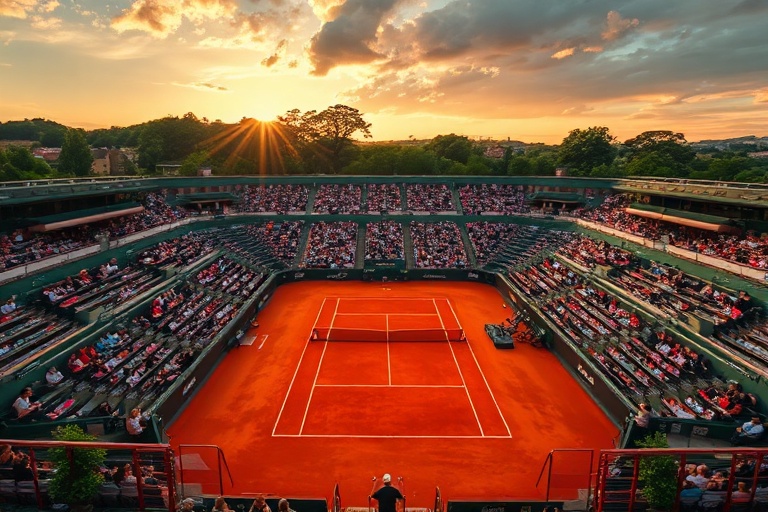
Stade Roland-Garros has undergone continuous evolution since its inception in 1925, and 2026 will be no exception. The most anticipated development is the completion of the new Grand Stadium, a 5,000-seat venue designed to host night sessions and accommodate growing demand. This expansion reflects the tournament’s commitment to modernizing while preserving its historic ambiance.
Beyond the courts, the infrastructure surrounding the event is also advancing. The Philippe-Chatrier Court, the tournament’s iconic centerpiece, will feature an upgraded retractable roof, ensuring play can continue uninterrupted regardless of weather. Sustainability remains a priority, with organizers emphasizing waste reduction and energy efficiency across all facilities. These improvements aim to set a new benchmark for large-scale sporting events.
Technology and Fan Engagement
The integration of technology into the fan experience has become a cornerstone of modern tennis tournaments. Roland Garros 2026 will introduce an enhanced augmented reality (AR) app, allowing spectators to access real-time statistics, player insights, and even virtual replays from their mobile devices. This tool is expected to deepen engagement, particularly for younger audiences who crave interactive content.
Broadcast innovations will also play a critical role. With global viewership continuing to rise, the tournament is collaborating with major networks to deliver 8K resolution coverage and immersive audio experiences. These advancements ensure that fans at home feel as immersed in the action as those seated in the stands.
The Field: Rising Stars and Established Names
The 2026 draw will feature a blend of seasoned champions and rising talents eager to leave their mark. On the men’s side, Carlos Alcaraz and Jannik Sinner are poised to challenge Djokovic for supremacy, while Carlos Alcaraz’s backhand and Sinner’s precision could define key matches. Meanwhile, the women’s field remains highly competitive, with Coco Gauff and Aryna Sabalenka continuing to push the boundaries of their games.
A new generation of players is also on the rise. Keep an eye on players like Mirra Andreeva, who made waves at the 2024 US Open, and 19-year-old Ben Shelton, whose powerful serve has already drawn comparisons to past champions. These athletes represent the future of tennis, and Roland Garros 2026 could serve as their breakthrough moment.
Wildcards and Potential Surprises
Organizers typically reserve a handful of wildcards for promising players who may not yet have secured direct entry. In 2026, wildcards could go to French qualifiers or athletes returning from injury, adding an element of unpredictability to the tournament. Past winners like Gaël Monfils and Kristina Mladenovic have leveraged wildcards to make deep runs, proving that the clay courts remain a stage for the unexpected.
Another wildcard contender could be a veteran player aiming to defy expectations. Roger Federer’s brief comeback in 2022 demonstrated that even legends can still captivate audiences. While his participation in 2026 remains speculative, the possibility alone would generate immense excitement.
Cultural and Economic Impact
Roland Garros is more than just a tennis tournament; it is a cultural institution that transcends the sport. The event attracts over 500,000 spectators annually, contributing significantly to Paris’s economy. In 2026, the tournament is expected to generate approximately €200 million in revenue, with a substantial portion benefiting local businesses, hotels, and transportation services.
The tournament also plays a pivotal role in France’s global image. As tennis’s only clay-court Grand Slam, Roland Garros offers a unique aesthetic and competitive challenge that no other event can replicate. The vibrant atmosphere, highlighted by the red clay and the passionate French crowd, creates an unmistakable identity that resonates worldwide.
Global Reach and Sponsorships
Roland Garros 2026 will further expand its international footprint, with broadcast deals covering over 200 territories. Major sponsors like Lacoste and BNP Paribas continue to invest heavily, reinforcing the tournament’s status as a premier sporting spectacle. These partnerships not only fund operational costs but also support grassroots tennis initiatives across France.
The tournament’s influence extends beyond the court. Initiatives like the Roland Garros Foundation promote inclusion and accessibility, ensuring that tennis remains a sport for all. These efforts align with broader societal goals, reinforcing the event’s role as a force for positive change.
Key Matches to Watch
Every Grand Slam has its marquee matchups, and Roland Garros 2026 is no different. Below are the top five potential clashes that could define the tournament:
- Novak Djokovic vs. Carlos Alcaraz – A rematch of their 2023 final, this matchup could signal the passing of the torch or Djokovic’s continued dominance.
- Iga Świątek vs. Coco Gauff – A battle between two of the WTA’s brightest stars, with both vying for the top ranking and a second French Open title.
- Jannik Sinner vs. Stefanos Tsitsipas – A clash of playing styles, with Sinner’s aggression testing Tsitsipas’ defensive prowess.
- Aryna Sabalenka vs. Elena Rybakina – Power meets precision in a high-stakes encounter that could shape the women’s draw.
- Felix Auger-Aliassime vs. Holger Rune – A potential quarterfinal duel between two of the ATP’s most electrifying players.
These matchups are not just about results; they represent the evolving narrative of tennis. Each player brings a unique story to the court, whether it’s a quest for redemption, a bid for history, or the pursuit of consistency.
Conclusion: Why Roland Garros 2026 Matters
Roland Garros 2026 stands at the intersection of tradition and innovation. As the only clay-court Grand Slam, it remains a unique challenge for players and a beloved spectacle for fans. The tournament’s ability to adapt—through technology, infrastructure, and player development—ensures its relevance in an ever-changing sports landscape.
For aspiring players, the event offers a chance to etch their names into history. For established stars, it’s an opportunity to cement legacies. And for the global audience, Roland Garros delivers a week of drama, athleticism, and unparalleled entertainment. Whether you’re a lifelong fan or a casual observer, the 2026 edition promises to be one for the books.
As the clay dust settles and the final points are played, one thing is certain: Roland Garros will once again remind the world why it is tennis’s most revered tournament.