Scuderia Ferrari: The History and Legacy of F1’s Iconic Team
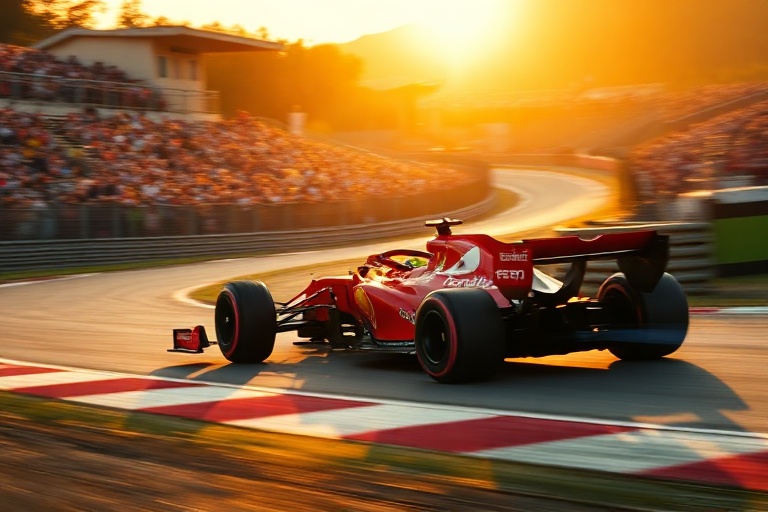
Few names in motorsport carry the weight of history, prestige, and sheer passion as Scuderia Ferrari. Founded in 1929 by Enzo Ferrari, the team didn’t begin as a constructor but as a racing team that fielded Alfa Romeo cars before evolving into one of Formula 1’s most enduring and revered outfits. Over nearly a century, Ferrari has become synonymous with speed, drama, and an unyielding pursuit of excellence. The prancing horse emblem, emblazoned on the red cars that streak around circuits worldwide, is more than a logo—it’s a symbol of racing’s soul.
The Origins: From Racing Dreams to Racing Legacy
Enzo Ferrari’s journey began not in the cockpit of a race car but in the workshops of Alfa Romeo, where he honed his skills as a driver and engineer. By the late 1920s, Ferrari was already a respected figure in Italian motorsport, but he harbored a dream to create his own team. In 1929, he founded Scuderia Ferrari in Modena, Italy, initially as an Alfa Romeo racing squad. The team’s first major success came in the 1930s, but it wasn’t until after World War II that Ferrari fully realized his vision of building his own cars.
The post-war era marked a turning point. The first true Ferrari race car, the 125 S, debuted in 1947, and by 1950, the team joined the newly formed Formula 1 World Championship. The early years were rocky, but Ferrari’s persistence paid off. In 1951, José Froilán González delivered the team’s first F1 victory at the British Grand Prix, a moment that etched Ferrari’s name into the history books. This victory was more than a win; it was the beginning of a legacy that would span generations.
A Timeline of Ferrari’s Greatest Achievements
Ferrari’s contributions to Formula 1 extend far beyond mere wins—they shaped the sport itself. Below are some of the team’s most defining moments:
- 1952-1953: Alberto Ascari’s Dominance – The first back-to-back World Championships for Ferrari, with Ascari winning nine consecutive races.
- 1961: Phil Hill’s Title and the 156 F1 – Ferrari’s first Constructors’ Championship, powered by the iconic shark-nosed 156 F1 car.
- 1975-1977: Niki Lauda’s Reign – Lauda’s three World Championships in the mid-1970s solidified Ferrari’s reputation as a team of champions.
- 1999-2004: The Schumacher Era – Michael Schumacher’s five consecutive titles and Ferrari’s six consecutive Constructors’ Championships (1999-2004) redefined dominance in F1.
- 2007: Kimi Räikkönen’s Unlikely Triumph – A nail-biting final race in Brazil saw Räikkönen claim the title by a single point, delivering Ferrari’s first championship in five years.
The Ferrari Philosophy: Racing as Art and Science
What sets Ferrari apart from other teams is not just its record of success but its approach to racing. Enzo Ferrari famously said, “I build engines and attach wheels to them.” While simplistic, the quote underscores Ferrari’s belief in engineering as the foundation of victory. The team’s technical innovations—from aerodynamics to hybrid power units—have often pushed the boundaries of what’s possible in F1.
But Ferrari’s philosophy extends beyond the technical. The team’s identity is deeply tied to its Italian heritage and the passion of its tifosi—Ferrari’s global fanbase. The tifosi’s unwavering support, whether at Monza or in front of screens worldwide, creates an atmosphere unlike any other in sports. This emotional connection is a testament to Ferrari’s ability to transcend motorsport, becoming a cultural institution.
Ferrari’s commitment to racing also reflects in its driver lineup. The team has a history of nurturing talent, from Gilles Villeneuve’s fearless driving in the 1970s to Charles Leclerc’s modern-day heroics. Each driver who wears the prancing horse emblem carries the weight of expectation, knowing they are part of something bigger than themselves.
The Challenges and Triumphs of the Modern Era
The 2010s and early 2020s have been a rollercoaster for Scuderia Ferrari. After the Schumacher era, the team struggled to regain its competitive edge, facing criticism from fans and media alike. The introduction of hybrid power units in 2014 marked a new chapter, but Ferrari’s early struggles with the new regulations left many questioning the team’s future.
Yet, Ferrari’s resilience shone through. In 2019, the team introduced the SF90, a car that marked the beginning of a resurgence. While victories remained elusive, the SF90’s performance hinted at a return to form. The 2022 season brought further optimism with the F1-75, a car that delivered multiple podiums and a victory at the Hungarian Grand Prix. Though the championship remained out of reach, the progress was undeniable.
Ferrari’s challenges in the modern era are not just technical but financial. The cost cap introduced in 2021 has leveled the playing field, forcing Ferrari to adapt its spending and development strategies. The team’s ability to navigate these changes while maintaining its competitive edge speaks volumes about its adaptability and long-term vision.
The Broader Implications of Ferrari’s Legacy
Ferrari’s impact on Formula 1 extends beyond the track. The team’s success has influenced how other constructors approach racing, from their emphasis on driver development to their investment in cutting-edge technology. Ferrari’s struggles and triumphs serve as a case study in resilience, innovation, and the complexities of motorsport.
Moreover, Ferrari’s global appeal highlights the universal language of racing. The team’s fanbase spans continents, cultures, and generations, proving that passion for motorsport transcends borders. This global reach has also made Ferrari a marketing powerhouse, with partnerships that extend far beyond the world of F1.
For automotive enthusiasts, Ferrari represents the pinnacle of engineering and design. The road-going Ferraris—from the classic 250 GTO to the modern SF90 Stradale—are as much works of art as they are machines. These cars embody the same principles that drive the F1 team: performance, elegance, and innovation.
Conclusion: The Future of Ferrari’s Racing Heart
As Scuderia Ferrari looks ahead, the challenges and opportunities are as vast as the team’s history. The 2023 season and beyond will test Ferrari’s ability to innovate, adapt, and reclaim its position at the top of Formula 1. With a new generation of talent in Charles Leclerc and Carlos Sainz, alongside a renewed focus on technical excellence, the prancing horse is poised for a resurgence.
Yet, Ferrari’s true strength lies not in its victories or trophies but in its soul. It is a team that has weathered storms, celebrated triumphs, and inspired millions. In an era where motorsport is increasingly driven by data and technology, Ferrari reminds us that racing is also about passion, heart, and the pursuit of greatness. As long as the red cars take to the track, the world will watch, knowing they are witnessing something extraordinary.
For fans old and new, Ferrari is more than a team—it’s a legacy. And as long as that legacy endures, the roar of the engines will continue to echo through the annals of history.