Scuderia Ferrari: The Legacy of Italy’s Racing Giant
Few names in motorsport carry the weight of history, prestige, and passion as Scuderia Ferrari. Born in 1929 under the vision of Enzo Ferrari, the team didn’t begin as a constructor but as a racing squad managing Alfa Romeo cars for privateers. It wasn’t until 1947 that Ferrari built its first car under its own name—the 125 S—and soon after, the world witnessed the birth of one of the most iconic brands in racing.
The prancing horse emblem, originally the insignia of World War I pilot Francesco Baracca, became a symbol of speed, power, and Italian excellence. Over nine decades, Scuderia Ferrari has grown into more than a team; it’s a cultural institution, a symbol of national pride, and a benchmark of technological innovation in Formula 1. Despite decades of triumphs and tribulations, Ferrari remains the only team to have competed in every Formula 1 season since the championship’s inception in 1950.
The Rise to Dominance: Champions and Innovators
Ferrari’s early years were defined by relentless ambition. The team claimed its first Formula 1 victory in 1951 at the British Grand Prix with José Froilán González behind the wheel. This was the spark that ignited a legacy of dominance. By the mid-1950s, under the leadership of Alberto Ascari and Juan Manuel Fangio, Ferrari became a dominant force, securing back-to-back World Championships in 1952 and 1953.
Innovation was always at the core of Ferrari’s philosophy. The team pioneered mid-engine layouts in F1, a design that would become the standard for decades. The Ferrari 156, introduced in 1961, featured a V6 engine and a compact chassis that set new benchmarks for performance and handling. This era also saw the emergence of legends like Phil Hill and John Surtees, who delivered Ferrari’s first Drivers’ Championship in 1961.
Ferrari’s success wasn’t limited to the track. The team’s road cars, like the 250 GTO and the 275 GTB, became benchmarks of automotive artistry, blending racing pedigree with luxury. The prancing horse had transcended the racetrack, becoming a global emblem of Italian craftsmanship and speed.
The Maranello Heart: A Home for Racing Passion
At the heart of Scuderia Ferrari is the historic headquarters in Maranello, Italy. This sprawling complex is more than a factory; it’s a temple to motorsport. The Ferrari Museum, the wind tunnel, and the assembly lines are all housed here, where every car and engine is crafted with meticulous precision. The “Maranello Rosso” is a pilgrimage site for fans, a place where the soul of Ferrari is palpable.
The team’s fanbase, known as the “tifosi,” is one of the most passionate in sports. Ferrari’s Italian heritage is a key part of its identity. The tifosi’s loyalty is unmatched, with millions around the world draped in the team’s signature red. The Scuderia’s home races at Monza, the “Temple of Speed,” are legendary for their electrifying atmosphere, where the roar of engines blends with chants of “Ferrari, Ferrari!” echoing through the grandstands.
This deep connection to Italy is both a strength and a challenge. While it fuels the team’s spirit, it also amplifies the pressure to succeed. Ferrari’s every race is scrutinized through the lens of national pride, making victories even sweeter and defeats more painful.
Challenges and Redemption: The Modern Era
The 21st century has been a rollercoaster for Scuderia Ferrari. After a golden era in the early 2000s, where Michael Schumacher delivered five consecutive Drivers’ Championships and Ferrari secured six Constructors’ titles, the team faced a prolonged period of struggle. From 2009 to 2019, Ferrari endured one of its darkest phases, failing to win a single race for multiple seasons.
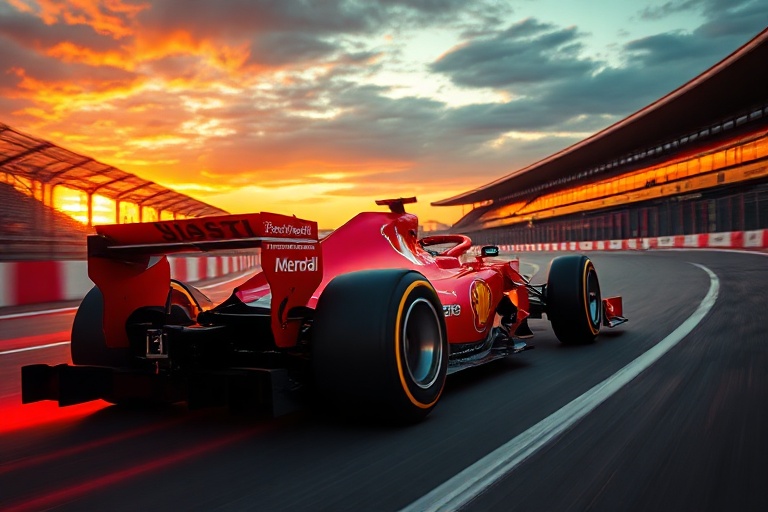
The team’s resurgence came under the leadership of team principal Mattia Binotto and the arrival of Charles Leclerc and Carlos Sainz. The 2022 season marked a turning point, with Ferrari’s SF22 car showcasing remarkable speed and competitiveness. Leclerc’s near-title challenge in 2022 reignited hope, though a mix of strategic errors and reliability issues ultimately cost the team.
Ferrari’s journey in the hybrid era has been defined by technological innovation. The team’s SF-23 car for 2023 emphasized aerodynamics and energy efficiency, a reflection of Formula 1’s evolving regulations. While results have been inconsistent, the potential for future success remains high, with a new generation of talent and a renewed focus on performance.
Key Milestones in Scuderia Ferrari’s History
- 1929: Enzo Ferrari founds Scuderia Ferrari as a racing team for Alfa Romeo.
- 1947: Ferrari builds its first car, the 125 S, marking the birth of the Ferrari brand.
- 1952: Alberto Ascari wins Ferrari’s first Drivers’ Championship.
- 1961: Phil Hill secures Ferrari’s first World Championship with the 156.
- 1979: Jody Scheckter wins the title in the iconic Ferrari 312T, capping a dominant era.
- 2000-2004: Michael Schumacher and Ferrari dominate F1, winning five consecutive titles.
- 2022: Charles Leclerc narrowly misses the title, marking Ferrari’s resurgence.
The Broader Implications: Ferrari’s Role in F1 and Beyond
Scuderia Ferrari’s influence extends far beyond its wins and losses. As the only team to compete in every Formula 1 season, Ferrari is the heartbeat of the sport. Its presence ensures a level of prestige and tradition that no other team can match. The team’s struggles and triumphs shape narratives that resonate with fans worldwide, making Ferrari a constant topic of discussion and debate.
Ferrari’s technological innovations often set the standard for the entire sport. From pioneering aerodynamics to advancing hybrid powertrains, the team’s engineering prowess pushes the boundaries of what’s possible in F1. This innovation trickles down to road cars, where Ferrari’s advancements in aerodynamics, materials, and performance find their way into production models, influencing the broader automotive industry.
The team’s global appeal is a testament to its cultural significance. Ferrari is more than a racing team; it’s a brand that embodies passion, excellence, and Italian identity. The prancing horse emblem is recognized worldwide, a symbol of aspiration and achievement. This global recognition has turned Ferrari into a cultural phenomenon, with collaborations spanning fashion, art, and entertainment.
Despite its challenges, Ferrari’s ability to reinvent itself keeps it relevant. The team’s focus on sustainability, including plans for hybrid and electric road cars, reflects a broader shift in the automotive industry. As Formula 1 embraces sustainability with carbon-neutral targets, Ferrari’s role as a leader in innovation becomes even more critical.
Conclusion: A Legacy Built on Passion and Perseverance
Scuderia Ferrari’s story is one of passion, perseverance, and unyielding ambition. From its humble beginnings to its status as a global icon, Ferrari has remained a symbol of excellence in motorsport. The team’s ability to rise from setbacks, innovate, and inspire has cemented its place in history.
As Ferrari continues to evolve, its legacy remains a guiding force. The team’s future is bright, with a new generation of talent and a renewed focus on performance. For the tifosi and racing fans worldwide, Ferrari is more than a team—it’s a dream, a challenge, and a testament to the enduring power of passion.
In the world of Formula 1, where dynasties rise and fall, Scuderia Ferrari stands as a constant. Its story is a reminder that success is not just about winning, but about the journey, the struggle, and the unbreakable spirit that defines greatness.
Explore more about Ferrari’s engineering and racing innovations on Dave’s Locker Automotive section.
For deeper analysis of Formula 1 trends and team dynamics, visit Dave’s Locker Sports section.