Subnautica 2 Leviathans: The Evolution of Deep-Sea Horror in Gaming
Since its release in 2018, Subnautica has stood as a benchmark for survival games, blending exploration, storytelling, and psychological tension in an alien ocean. Its sequel, Subnautica 2, expands this universe with larger environments, deeper lore, and—most notably—more terrifying leviathans. These colossal creatures are not just enemies; they are living nightmares that redefine player immersion in underwater survival horror.
Leviathans have always been central to Subnautica’s identity. They are the game’s apex predators, each with distinct behaviors, habitats, and threat levels. In Subnautica 2, developer Unknown Worlds Entertainment has refined these creatures to be more dynamic, intelligent, and horrifying. Their presence isn’t just about combat; it’s about survival, strategy, and the constant dread of being watched by something far larger than yourself.
The Role of Leviathans in Subnautica 2’s Narrative
Leviathans in Subnautica 2 are more than environmental hazards—they are key players in the game’s unfolding story. The sequel delves deeper into the mysteries of planet 4546B, revealing that leviathans are not mindless beasts but integral to the planet’s ecosystem. Some serve as guardians of ancient secrets, while others are mere opportunists, drawn to the player’s activities.
This evolution reflects a broader trend in gaming: the anthropomorphizing of antagonists. Unlike traditional survival games where enemies are faceless obstacles, Subnautica 2’s leviathans feel alive. They hunt in packs, communicate through eerie vocalizations, and even exhibit territorial behavior. This level of detail elevates the game from a simple survival experience to a psychological thriller.
Culturally, this approach resonates with modern audiences who crave depth in storytelling. Games like The Last of Us Part II and Death Stranding have similarly blurred the line between enemy and character, making players question their own morality. Subnautica 2 continues this trend, but with a unique twist—its antagonists are entirely alien, forcing players to adapt to an environment where they are the intruders.
The Design Philosophy Behind Subnautica 2’s Leviathans
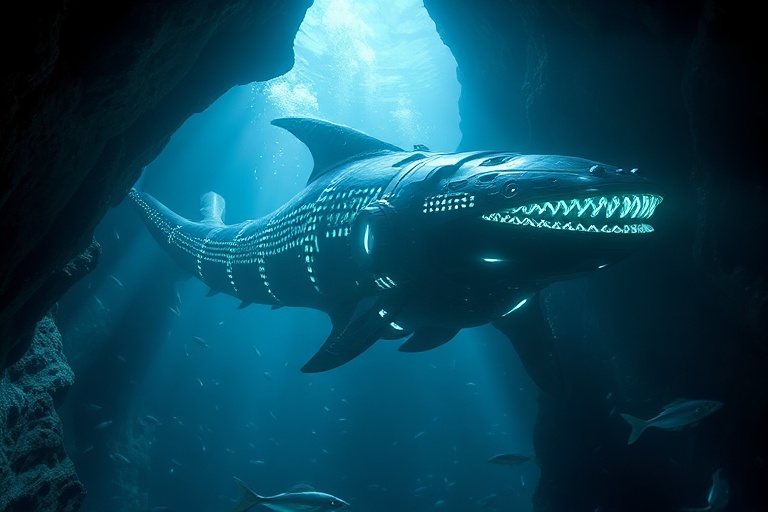
Unknown Worlds Entertainment has always prioritized realism in Subnautica, and the leviathans in the sequel are no exception. Each creature is designed with biomechanical precision, from the bioluminescent patterns that serve as warning signals to the way their bodies move through water. The result is a sense of authenticity that makes encounters feel visceral.
One of the most striking innovations in Subnautica 2 is the introduction of leviathan AI. Unlike static enemies, these creatures react to the player’s actions. If you’re reckless with noise or light, they become more aggressive. If you’re stealthy, they may ignore you entirely—unless you pose a direct threat. This dynamic AI system ensures that no two playthroughs are the same, adding replayability to an already rich experience.
The game’s art direction also plays a crucial role in shaping the leviathans’ terror. Inspired by deep-sea creatures like the giant squid and anglerfish, the designs are both beautiful and unsettling. The Leviathan-class creatures, in particular, evoke a primal fear of the unknown. Their sheer size—some exceeding 100 meters in length—makes them feel like mythical sea monsters, a callback to global folklore where leviathans symbolize the uncontrollable forces of nature.
A Global Perspective on Survival Horror
Subnautica 2 isn’t just a game; it’s a cultural artifact that reflects humanity’s fascination with the deep sea. For centuries, sailors and explorers have told stories of monstrous creatures lurking in the abyss. From the kraken of Norse mythology to Japan’s Umi-bozu, the idea of a hidden, hostile world beneath the waves is deeply ingrained in global consciousness.
In this context, Subnautica 2 taps into a universal fear—the fear of the unknown. The ocean covers over 70% of the Earth’s surface, yet we’ve explored less than 20% of it. Games like Subnautica exploit this gap in human knowledge, presenting the deep sea as a place of wonder and terror. This theme transcends borders, resonating with players worldwide who share a curiosity about the unexplored.
Moreover, Subnautica 2 aligns with a growing trend in gaming: the rise of “eco-horror.” Games like Soma and Call of Cthulhu: Dark Waters explore environmental themes through horror, using the setting to critique humanity’s impact on nature. Subnautica 2 continues this tradition, framing the leviathans as victims of an ecosystem disrupted by human intervention. This layer of narrative depth adds moral complexity to the game, encouraging players to reflect on their own actions within the virtual world.
How Subnautica 2 Elevates the Survival Genre
Survival games often rely on repetitive mechanics—gather resources, craft items, repeat. Subnautica 2 avoids this trap by focusing on atmosphere and tension. The leviathans are a major reason why. They force players to think strategically, adapt to their surroundings, and sometimes flee rather than fight. This emphasis on survival over combat is a refreshing take on the genre, appealing to players who prefer immersion over twitch reflexes.
Another standout feature is the game’s seamless integration of storytelling and gameplay. Unlike many open-world games where lore is buried in collectibles, Subnautica 2 weaves its narrative into the environment. Players uncover the planet’s secrets organically, whether by observing leviathan behavior or exploring derelict structures. This approach ensures that the world feels alive, not just a backdrop for gameplay.
For players who enjoy gaming experiences that challenge both their reflexes and their intellect, Subnautica 2 is a masterclass. It’s a game that respects its audience’s intelligence, offering depth without hand-holding. The leviathans, in particular, serve as a reminder that survival isn’t just about staying alive—it’s about understanding the world around you.
Conclusion: Why Subnautica 2’s Leviathans Matter
Subnautica 2 represents a new frontier in survival horror, where the real enemy isn’t just the environment but the creatures that inhabit it. The leviathans are more than obstacles; they are the heart of the game’s tension, its lore, and its emotional impact. By blending scientific realism with primal fear, Unknown Worlds Entertainment has created something truly special.
As gaming continues to evolve, titles like Subnautica 2 prove that the medium is capable of delivering experiences that are as thought-provoking as they are thrilling. The leviathans, with their haunting designs and dynamic behaviors, are a testament to the power of environmental storytelling. They remind us that the deepest fears aren’t always the ones we face head-on—but the ones we sense lurking just beyond the edge of the map.
For fans of the genre, Subnautica 2 is a must-play. For newcomers, it’s an invitation to dive into one of gaming’s most immersive worlds. Either way, the leviathans will be waiting—and they won’t be happy to see you.