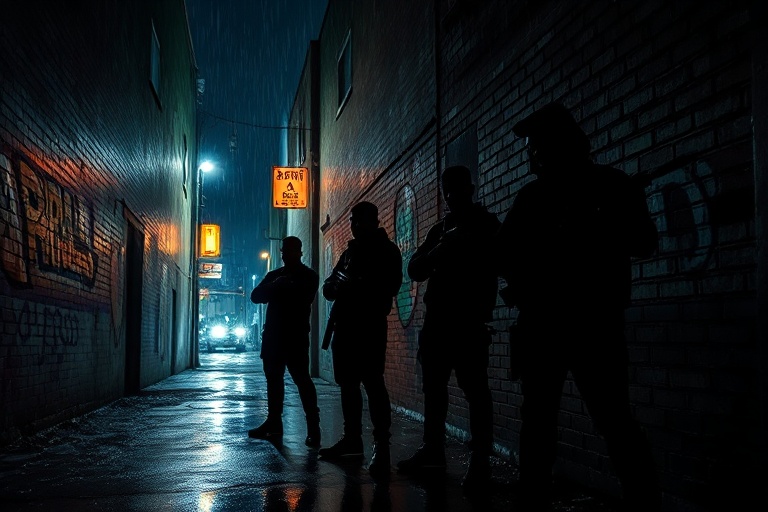
The Boys Season 5 Episode 8 Review: A Brutal Clash of Ideologies
The eighth episode of The Boys Season 5, titled “The Last Stand,” delivers a high-stakes confrontation that tests the limits of power, morality, and survival. As the season builds toward its climax, this installment pushes characters to their breaking points while leaving critical questions unanswered. The episode balances explosive action with quieter, character-driven moments, reinforcing why the series remains one of the most provocative shows on television.
Director Nelson McCormick, known for his work on Better Call Saul and Dexter, crafts a tense narrative that oscillates between brutal violence and psychological depth. The episode’s pacing ensures that neither the spectacle nor the substance is sacrificed, a rare achievement in modern serialized storytelling. With only two episodes remaining, the stakes have never been higher, and the episode’s title suggests this might be the final confrontation for some of its central figures.
The Power Struggle Intensifies: Homelander’s Descent into Paranoia
Homelander’s arc in “The Last Stand” is one of the episode’s most compelling threads. Once the unassailable symbol of American heroism, he now grapples with the erosion of his control. The episode opens with him in a state of near-delirium, his once-unshakable confidence replaced by paranoia and rage. His interactions with Madelyn Stillwell’s AI reconstruction are particularly chilling, blurring the line between grief and madness.
The visual contrast between Homelander’s pristine, sterile environments and the chaotic, blood-soaked streets outside mirrors his internal collapse. His confrontation with Soldier Boy in the episode’s climax is less a battle of strength and more a collision of ideologies—one rooted in fascistic control, the other in anarchic defiance. The fight is brutal, but it’s Homelander’s psychological unraveling that lingers long after the credits roll.
- Psychological breakdown: Homelander’s hallucinations of Stillwell highlight his inability to reconcile his public persona with his private monstrosity.
- Loss of control: His attempts to assert dominance over Soldier Boy and the Boys backfire, demonstrating that power, once absolute, is now fleeting.
- Symbolic imagery: The episode’s use of mirrors and reflections underscores Homelander’s fractured identity.
Soldier Boy’s Last Stand: A Reluctant Hero’s Redemption
Soldier Boy, the season’s wildcard, takes center stage in a way that feels both triumphant and tragic. Played with grizzled gravitas by Jensen Ackles, the character’s evolution from a war criminal to a reluctant savior is one of the show’s most surprising turns. In “The Last Stand,” he’s no longer the reckless, self-serving figure we met in Season 4. Instead, he’s a man burdened by his past, fighting for something greater than himself.
His alliance with Hugh “Butcher” Campbell remains one of the season’s most unpredictable dynamics. While their partnership is fraught with tension, there’s an undeniable chemistry—a shared understanding of power’s corrupting nature. Soldier Boy’s decision to stand against Homelander isn’t just a strategic move; it’s a moral reckoning. The episode’s title takes on new meaning when viewed through his lens: this truly is his last stand, not just in battle, but in redemption.
The fight choreography in this episode is some of the best in the series, blending the raw brutality of Soldier Boy’s WWII-era combat skills with the high-tech savagery of the modern superhero. The clash between his vintage vibranium shield and Homelander’s energy blasts is a visual and thematic triumph, symbolizing the collision of old and new forms of power.
The Boys’ Dilemma: Sacrifice and Survival
The Boys—Butcher, Hughie, Mother’s Milk, and Frenchie—face their most gut-wrenching choice yet in this episode. With Compound V supplies dwindling and Homelander’s forces closing in, they must decide whether to flee or fight. Butcher, ever the pragmatist, advocates for retreat, arguing that survival is the only victory they can realistically achieve. Hughie, however, is torn between self-preservation and the moral imperative to stop Homelander, no matter the cost.
Their debate is one of the episode’s most emotionally charged scenes. It’s a microcosm of the show’s central theme: how far is too far in the name of justice? The Boys’ dynamic has always been defined by their flawed humanity, and this episode strips away any remaining illusions of heroism. They are, at their core, antiheroes, and their choices reflect that reality.
Frenchie and Mother’s Milk’s roles in this episode are particularly noteworthy. Frenchie’s quiet resolve and Mother’s Milk’s unwavering moral compass provide a counterbalance to Butcher and Hughie’s extremes. Their presence reminds us that the show’s heart lies in its ensemble, not just its headline-grabbing stars.
Unanswered Questions and the Road Ahead
“The Last Stand” is as much about what it doesn’t answer as what it does. The episode ends with several critical questions hanging in the balance:
- Will Soldier Boy survive his final confrontation? His injuries suggest a heroic (or tragic) end is near.
- What’s Homelander’s next move? With his empire crumbling, his desperation could lead to catastrophic decisions.
- Can the Boys truly stop him? Their resources are depleted, and their unity is fragile.
- What’s the fate of Compound V? The episode hints at a possible supply, but nothing is confirmed.
These unanswered questions aren’t shortcomings; they’re the lifeblood of The Boys. The show thrives on ambiguity, forcing viewers to sit with discomfort and uncertainty. The final two episodes will need to thread a razor’s edge between payoff and ambiguity, delivering closure without sacrificing the show’s signature unpredictability.
The episode also leaves room for deeper thematic exploration. The clash between Soldier Boy and Homelander isn’t just a physical battle—it’s a referendum on the nature of power itself. Soldier Boy represents the old guard: power earned through sacrifice, discipline, and a code of honor. Homelander embodies the new order: power seized through manipulation, fear, and unchecked ego. Their conflict asks whether heroism can exist in a world where power is inherently corrupting.
Final Thoughts: A Season Worth the Wait
Season 5 of The Boys has been a slow burn, but “The Last Stand” proves that patience has its rewards. The episode’s strengths lie in its character work, thematic depth, and willingness to embrace discomfort. It’s a reminder that great storytelling isn’t just about spectacle—it’s about the choices characters make when the world is on fire.
As the season hurtles toward its conclusion, one thing is clear: The Boys isn’t interested in easy answers. Whether you’re a longtime fan or a newcomer, the show demands your attention—and rewards it with some of the most thought-provoking television of the year. The final two episodes have a monumental task ahead, but if they deliver even half the impact of “The Last Stand,” they’ll be worth the wait.
For more on The Boys and its themes, check out our analysis of the show’s cultural impact and our breakdown of seasonal storytelling trends.
The journey of The Boys has always been a messy, morally complex one—and that’s precisely why it works. In a genre often defined by clear-cut heroes and villains, The Boys dares to ask: what if the heroes are the monsters? Season 5’s eighth episode doesn’t just raise that question—it forces us to confront the answer.