The Pentagon: History, Architecture, and Global Impact Explained
The Pentagon: A Symbol of Power and Secrecy
The Pentagon stands as one of the most recognizable—and controversial—buildings in the world. Its five-sided structure, designed to minimize the distance between any two points, was completed in 1943, just sixteen months after groundbreaking. More than a mere office complex, it serves as the headquarters of the United States Department of Defense, coordinating military operations across the globe. Yet beyond its functional role, the Pentagon embodies the dual forces of transparency and secrecy that define modern power.
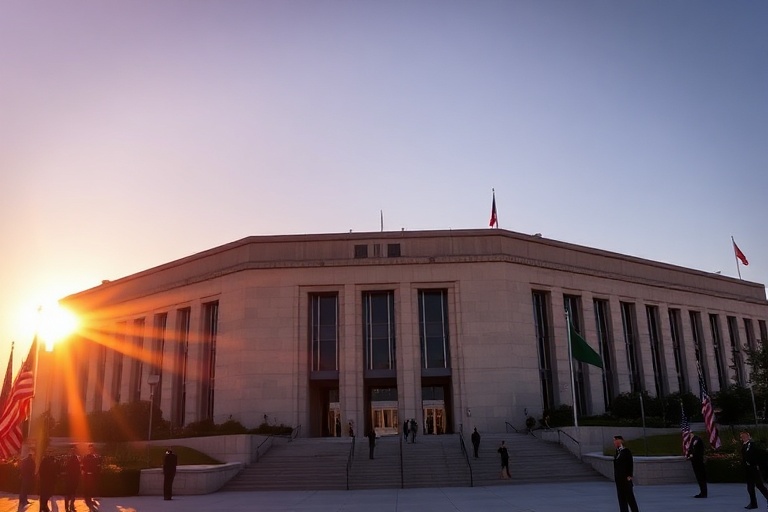
Located in Arlington, Virginia, across the Potomac River from Washington, D.C., the Pentagon occupies 29 acres of land. Despite its massive size—each of its five sides measures 921 feet—its design prioritizes efficiency. The building’s concentric rings and 17.5 miles of corridors were intended to facilitate rapid communication during World War II. Today, it remains a hub of decision-making, influencing global security, military strategy, and even pop culture.
A Brief History: From War to Symbol
The Pentagon’s origins trace back to the early 20th century, when the U.S. War Department outgrew its aging headquarters in Washington. In 1941, President Franklin D. Roosevelt approved the construction of a new facility to consolidate military operations. Architect George Bergstrom and engineer Colonel Leslie Groves—later the director of the Manhattan Project—oversaw the project, which employed 14,000 workers and used innovative construction techniques.
The building was completed in January 1943, just 16 months after groundbreaking, a feat of wartime efficiency. Its design was shaped by the need for rapid communication and protection against potential aerial attacks. The five-sided layout, often attributed to the shape of a pentagon, was actually chosen to minimize the distance between offices, reducing the time required for meetings and decision-making.
During the Cold War, the Pentagon became a symbol of American military might and technological ambition. It was the target of a notable 2001 terrorist attack, when American Airlines Flight 77 crashed into its western side, killing 184 people. The attack reshaped security protocols and reinforced the building’s status as a target of global hostility.
Architecture and Design: More Than Meets the Eye
The Pentagon’s architecture reflects both practicality and symbolism. Its five concentric rings—labeled A through E—create a maze-like interior that was designed to confuse potential intruders. The building’s facade is clad in Indiana limestone, giving it a stark, imposing appearance. Inside, the Hall of Heroes honors recipients of the Medal of Honor, while the 9/11 Memorial Chapel serves as a somber reminder of the 2001 attack.
The Pentagon’s design also incorporates green building principles, including energy-efficient systems and water conservation measures. In 2011, it became the largest federal building to achieve LEED Silver certification, a testament to its adaptability in the face of evolving environmental standards.
Despite its utilitarian purpose, the Pentagon has inspired art, literature, and film. It appears in movies like Iron Man and Man of Steel, often as a symbol of bureaucratic power or military might. Its iconic shape has been replicated in everything from corporate logos to video game environments, cementing its place in global iconography.
Global Influence: Power, Secrecy, and Controversy
The Pentagon’s reach extends far beyond its physical walls. As the command center for the world’s largest military, its decisions shape global politics, economic policies, and even cultural narratives. The Department of Defense oversees a budget exceeding $700 billion annually, making it one of the largest employers and consumers of resources in the world.
Yet the Pentagon’s influence is not without controversy. Its operations have been linked to human rights abuses, covert operations, and environmental damage. The use of drones, for example, has sparked debates about accountability and collateral damage. Similarly, the Pentagon’s role in cyber warfare and space militarization raises questions about the future of global security.
Culturally, the Pentagon embodies the tension between power and secrecy. Whistleblowers like Daniel Ellsberg and Edward Snowden have exposed its hidden activities, challenging the notion of transparency in governance. At the same time, the building’s imposing presence serves as a reminder of the state’s monopoly on violence and coercion.
The Pentagon in Popular Culture
The Pentagon’s cultural footprint is as vast as its physical one. It has been depicted in films, television shows, and video games, often as a symbol of authority or intrigue. In the Call of Duty franchise, the Pentagon appears as a battleground in Call of Duty: Modern Warfare, while in Metal Gear Solid, it serves as a setting for espionage and deception.
Literature has also explored the Pentagon’s symbolic power. In Thomas Pynchon’s Gravity’s Rainbow, the building becomes a metaphor for the bureaucratic and technological forces shaping the modern world. Meanwhile, in The Pentagon Wars by James G. Burton, the building is critiqued for its role in military procurement scandals.
Even fashion has been influenced by the Pentagon’s aesthetic. Its geometric lines and stark symmetry have inspired designers in everything from haute couture to streetwear. Brands like Balenciaga and Supreme have incorporated Pentagon-inspired motifs into their collections, blurring the line between military symbolism and civilian fashion.
The Pentagon remains a paradox—a building designed for transparency that also thrives on secrecy. It is a symbol of American power, yet its influence extends far beyond national borders. As technology evolves and global conflicts shift, the Pentagon’s role in shaping the future of warfare, governance, and culture will only grow more complex.
Whether viewed as a marvel of engineering, a bastion of secrecy, or a target of global discontent, the Pentagon endures as a defining structure of the modern world. Its legacy is not just in the decisions made within its walls, but in the debates it inspires about power, responsibility, and the human cost of security.