The Pentagon: Inside America’s Most Powerful Military HQ
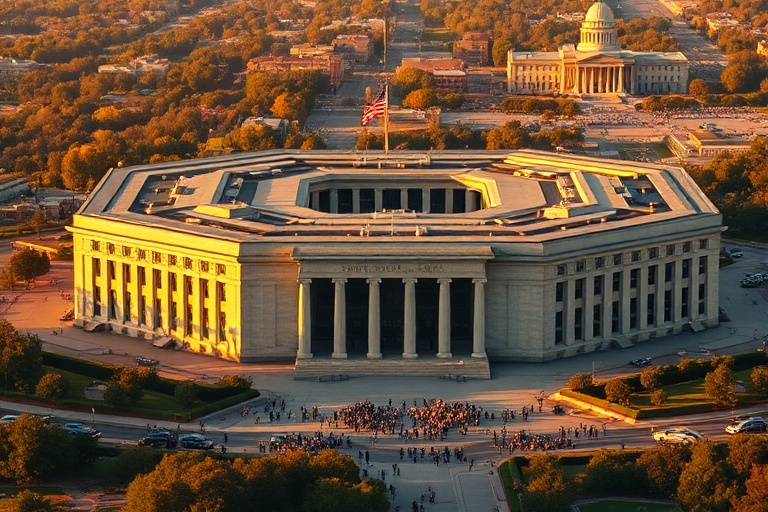
The Pentagon is more than a building. It is a symbol of military might, a hub of strategic planning, and a frequent subject of conspiracy theories. Located in Arlington, Virginia, just across the Potomac River from Washington, D.C., this five-sided structure serves as the headquarters of the United States Department of Defense. Its design and purpose have made it one of the most recognizable—and debated—institutions in the world.
Constructed during World War II in just 16 months, the Pentagon’s rapid construction was a testament to wartime urgency. The building’s unique shape was reportedly chosen to minimize the distance between offices, optimizing efficiency in a time of national crisis. Today, it houses over 23,000 military and civilian employees, making it one of the largest office buildings in the world by floor area. Yet, despite its scale, the Pentagon remains shrouded in layers of secrecy, from classified briefings to restricted access zones.
The Building’s Origins and Design
The Pentagon’s construction began in September 1941, just months before the attack on Pearl Harbor. The U.S. War Department urgently needed a centralized headquarters to coordinate military operations during wartime. Architect George Bergstrom and engineer Colonel Leslie Groves—who would later oversee the Manhattan Project—led the effort. The site in Arlington was selected for its proximity to Washington while maintaining strategic isolation.
The building’s pentagonal shape was not arbitrary. Early sketches by Bergstrom suggested a more conventional design, but a series of constraints—including limited land and budget—led to the five-sided layout. The final structure spans 11 acres and includes five concentric rings, 17.5 miles of corridors, and 7,754 windows. Despite its massive size, the Pentagon was designed to be functional, with offices arranged to minimize travel time between departments.
One of the Pentagon’s most striking features is its lack of formal entrances. Unlike traditional government buildings, access points are decentralized, blending into the surrounding landscape. This design choice reflects its dual role as both a workplace and a fortress. The building’s outer walls are reinforced with steel and concrete, capable of withstanding bomb blasts—a precaution that proved necessary after the September 11 attacks, when American Airlines Flight 77 crashed into the western side, killing 184 people.
Inside the Pentagon: Structure and Function
The Pentagon operates as the nerve center of the U.S. military, overseeing operations across all branches—Army, Navy, Air Force, Marine Corps, and Space Force. Its organizational structure is divided into five wedges, each corresponding to a military department or defense agency. The building’s interior is a labyrinth of offices, briefing rooms, and secure communication hubs, where decisions with global implications are made daily.
Key components of the Pentagon’s operations include:
- The Joint Chiefs of Staff: A council of senior military leaders who advise the President and Secretary of Defense on strategic matters.
- The Office of the Secretary of Defense: The civilian leadership that oversees military policy and budget allocations.
- Defense Agencies: Organizations like the NSA and DIA, which handle intelligence, cybersecurity, and special operations.
- The National Military Command Center: A 24/7 operations hub that monitors global threats and coordinates responses.
The Pentagon’s bureaucracy is legendary, with layers of hierarchy designed to prevent errors but often criticized for inefficiency. Proposals for reform have surfaced repeatedly, including calls to decentralize decision-making or modernize IT systems. Yet, the building’s rigid structure persists, a relic of Cold War-era defense strategies that prioritized control over adaptability.
Security at the Pentagon is a paradox. While it is one of the most heavily guarded buildings in the world, its inner workings remain opaque to the public. Classified briefings, redacted reports, and restricted access create a culture of secrecy that fuels speculation. Some argue this opacity is necessary for national security; others claim it enables unchecked power and wasteful spending.
Controversies and Conspiracy Theories
The Pentagon’s role in global conflicts has made it a lightning rod for criticism. From the Vietnam War to the Iraq invasion, decisions made within its walls have sparked protests, investigations, and conspiracy theories. One of the most enduring controversies involves the building’s role in the lead-up to the 2003 Iraq War. Critics argue that intelligence was cherry-picked to justify invasion, while defenders claim the Pentagon acted on legitimate threats.
Conspiracy theories about the Pentagon are plentiful. Some claim the building is a hub for secret space programs or that its corridors hide underground facilities. Others point to the 9/11 attacks as evidence of a controlled demolition, despite investigations confirming the crash site’s damage. While these theories often lack evidence, they reflect broader distrust in government institutions—a sentiment the Pentagon itself has done little to dispel.
The 9/11 attacks also exposed vulnerabilities in the Pentagon’s security. The crash of Flight 77 highlighted gaps in air defense protocols, leading to reforms like the creation of the U.S. Northern Command. Yet, questions linger about whether the Pentagon’s response was adequate. The building’s resilience in the face of disaster became a symbol of American fortitude, but the tragedy also underscored the risks of centralized power.
The Pentagon’s Global Influence and Future
The Pentagon’s reach extends far beyond its Arlington headquarters. Through military bases, alliances, and technological advancements, it shapes global security in ways both visible and hidden. The rise of cyber warfare, drone strikes, and AI-driven defense systems has expanded the Pentagon’s role, blurring the lines between traditional combat and digital conflict. Meanwhile, its budget—over $800 billion in 2024—dwarfs that of most nations, reinforcing America’s status as the world’s preeminent military power.
Yet, this dominance comes at a cost. Critics argue that the Pentagon’s influence stifles diplomacy, fuels arms races, and diverts resources from domestic needs. The building’s association with imperialism and covert operations has made it a target for adversaries and activists alike. As geopolitical tensions rise—from China’s military expansion to Russia’s war in Ukraine—the Pentagon’s role will only grow more complex.
Looking ahead, the Pentagon faces calls for modernization. Proposals include shifting focus from traditional warfare to cybersecurity, investing in renewable energy for bases, and increasing transparency to rebuild public trust. However, entrenched interests and bureaucratic inertia may slow these changes. The building’s legacy is a mix of innovation and controversy, a reflection of the nation it serves.
For those interested in the intersection of military power and public policy, the Pentagon remains a compelling subject. Its history is a microcosm of America’s rise as a superpower—and the challenges that come with it. Whether viewed as a necessary guardian of security or a symbol of unchecked authority, the Pentagon’s story is far from over.
To explore more on defense and security topics, visit our News and Analysis sections.