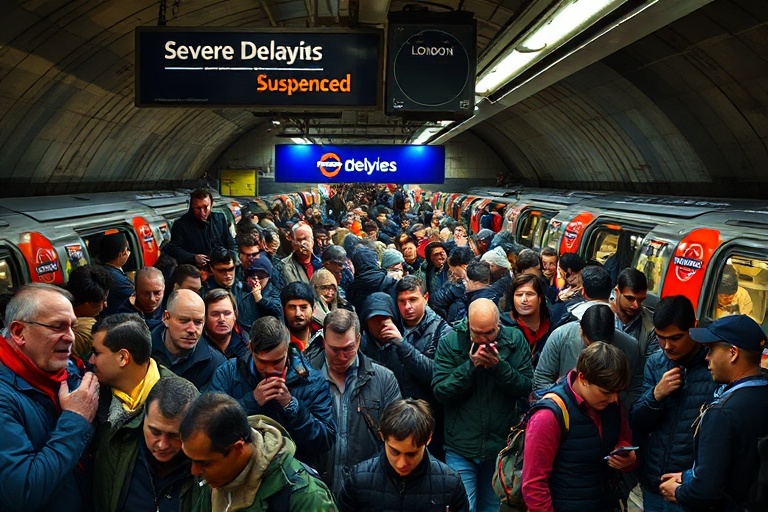
Tube Strikes 2026: Dates, Impact, and How to Prepare
As the new year begins, London commuters are already bracing for disruption. Transport for London (TfL) has announced a series of planned strikes for early 2026, raising concerns about the impact on daily travel, local businesses, and the city’s economy. These strikes are not just about pay disputes or working conditions—they reflect deeper issues within the transport sector that could reshape how Londoners move through the city.
The Timeline and Key Details of the Strikes
The first wave of strikes is scheduled for February 2026, with additional walkouts planned for March and April. The strikes are expected to affect all 11 Tube lines, with the Piccadilly, Central, and Victoria lines likely to experience the most severe disruptions. According to TfL’s official statement, the strikes will occur over three consecutive days in each month, with workers walking out at 6:00 AM and remaining off the job until midnight.
The primary issue driving the strikes is a dispute over pay and pensions, with unions arguing that current offers do not adequately reflect inflation and the rising cost of living. The Rail, Maritime and Transport Workers’ Union (RMT) has been particularly vocal, calling for a 7% pay rise and improved pension terms. TfL, however, has cited financial constraints, pointing to a £1.2 billion deficit projected for the current financial year.
Strike Dates and Affected Lines
- February 2026: February 3–5
- March 2026: March 2–4
- April 2026: April 6–8
These dates coincide with some of the busiest periods for London, including the start of the financial quarter and the lead-up to Easter. Commuters who rely on the Tube for their daily commute are advised to plan ahead, with TfL warning that some services may operate at reduced capacity or not at all during strike days.
The Ripple Effect on London’s Economy
The economic impact of the Tube strikes could extend far beyond delayed commutes. London’s economy, which relies heavily on its transport infrastructure, is particularly vulnerable to disruptions. A report by the Centre for Economics and Business Research (CEBR) estimates that each day of Tube strikes costs the city’s economy around £50 million in lost productivity and revenue.
Small businesses, in particular, are likely to feel the pinch. Retailers in central London, many of which depend on foot traffic from commuters, could see a significant drop in sales. The hospitality sector may also suffer, as fewer workers travel into the city for lunch or after-work drinks. Even larger employers, such as financial firms in the City of London, may face challenges in maintaining operations if their employees are unable to reach their offices.
Historically, Tube strikes have also led to increased absenteeism in other sectors. A 2014 study by the University of Westminster found that during a 48-hour strike, absenteeism in London’s office-based workforce rose by 12%. This suggests that the upcoming strikes could have a broader impact on productivity across industries.
For those looking to mitigate the effects, flexible working arrangements and remote work options may become more critical than ever. Companies that have already invested in digital infrastructure could have an advantage in maintaining business continuity.
Alternative Transport Options and Public Response
With the Tube likely to be unreliable during strike periods, commuters are exploring alternative ways to get around. Buses, which are expected to run at reduced capacity, may not be a viable solution for everyone. Cycling and walking are gaining traction, but infrastructure limitations in some areas could pose challenges. Ride-sharing services and electric scooters are also being considered, though their availability varies across the city.
The public response to the strikes has been mixed. While some commuters express frustration over the inconvenience, others sympathize with the workers’ demands. Social media has become a platform for both outrage and solidarity, with hashtags like #TubeStrike2026 and #LondonTravel trending as people share their experiences and frustrations.
Commuting Alternatives During Strikes
- Overground and DLR: These services may experience less disruption, making them a potential alternative for some routes.
- Thames Clippers: River buses offer a scenic but often more expensive option, with services running from east to west London.
- Bike-sharing schemes: Santander Cycles (Boris Bikes) could see increased demand, though availability may be limited during peak times.
- Carpooling and ride-sharing: Apps like Uber and BlaBlaCar may see higher usage, though costs could rise due to demand.
- Working from home: Employers are increasingly offering remote work options to minimize disruption.
Local councils and transport authorities are urging commuters to check for real-time updates via TfL’s website or apps like Citymapper. However, even with these tools, navigating London without the Tube will require significant adjustments for many residents.
Long-Term Implications for London’s Transport System
The 2026 strikes could serve as a catalyst for broader discussions about London’s transport infrastructure. The strikes highlight long-standing issues such as underinvestment in public transport, staffing shortages, and the need for modernized systems. With London’s population expected to grow to 10 million by 2030, the pressure on the Tube network will only increase.
One potential solution being discussed is the expansion of Crossrail 2, a proposed rail line that would connect south-west and north-east London. However, funding and political will remain significant hurdles. In the meantime, TfL is exploring short-term measures, such as temporary bus lanes and increased staffing at stations, to alleviate some of the strain during strike periods.
The strikes also raise questions about the future of work in London. As remote work becomes more normalized, some employers may reconsider their office-centric models. This shift could reduce peak-time congestion on the Tube, but it also risks exacerbating inequality, as not all jobs can be performed remotely.
Ultimately, the 2026 strikes may force London to confront difficult choices about its transport future. Will the city double down on traditional infrastructure, or will it embrace innovation and flexibility? The answer could define the next decade of urban mobility in London.
Conclusion: Preparing for What’s Ahead
The Tube strikes of 2026 are more than just a temporary inconvenience—they are a symptom of deeper challenges facing London’s transport system and economy. While the immediate focus is on navigating the disruptions, the long-term implications could reshape how the city operates. Commuters, businesses, and policymakers alike must consider how to adapt, whether through flexible working arrangements, investment in alternative transport, or advocacy for systemic change.
For now, Londoners are advised to stay informed, explore alternative routes, and support one another during what promises to be a challenging few months. The strikes may disrupt daily life, but they also present an opportunity to rethink the future of urban mobility in one of the world’s most dynamic cities.