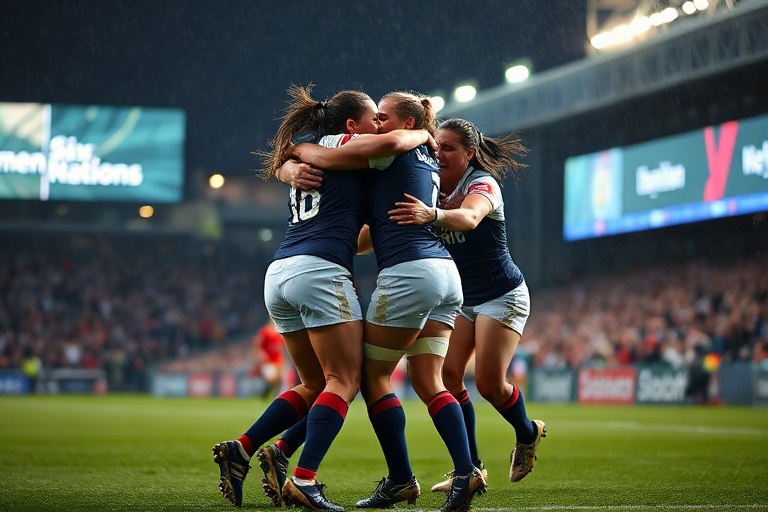
Women’s Six Nations: The Rise of Rugby’s Premier Women’s Tournament
The Women’s Six Nations Championship stands as a testament to the rapid evolution of women’s rugby, transforming from a niche competition into one of the sport’s most compelling spectacles. Since its inception in 1996, the tournament has grown in stature, skill, and popularity, challenging long-held perceptions about women’s rugby while establishing itself as a cornerstone of the sport’s calendar.
Unlike its male counterpart, which dates back to 1883, the Women’s Six Nations took decades to gain official recognition. It wasn’t until 1996 that the International Rugby Board (now World Rugby) formally sanctioned the tournament, initially involving just England, France, Ireland, Scotland, and Wales. Italy joined in 2007, completing the current lineup. This delayed formalization has only added to the tournament’s resilience, proving that women’s rugby could thrive independently of male-led structures.
The Evolution of a Tournament: From Humble Beginnings to Global Stage
The Women’s Six Nations began as a modest competition played across amateur clubs and university teams. Early matches were often played under harsh conditions, with minimal resources compared to men’s rugby. Yet, the passion driving these players remained undiminished. By the late 2000s, the tournament had gained significant traction, thanks in part to increased media coverage and the rise of social media platforms that amplified women’s sports.
One pivotal moment arrived in 2017 when World Rugby announced a landmark deal with major broadcasters to televise all Women’s Six Nations matches. This decision marked a turning point, ensuring that fans no longer had to rely solely on grainy YouTube clips or word-of-mouth to follow the tournament. The increased visibility translated into greater sponsorship deals and higher participation rates at grassroots levels.
Today, the Women’s Six Nations enjoys a broadcast reach that spans multiple continents, with games aired in over 100 countries. The 2023 edition drew an average of 1.5 million viewers per match in the UK alone, a figure that continues to climb. This growth reflects broader trends in women’s sports, where audiences are increasingly seeking high-quality, competitive action regardless of gender.
Key Milestones in the Women’s Six Nations Timeline
- 1996: The inaugural Women’s Five Nations Championship begins with England, France, Ireland, Scotland, and Wales.
- 2007: Italy joins the tournament, expanding it to a Six Nations format.
- 2014: The first Women’s Six Nations match is played at Twickenham, England, drawing a record crowd of 14,500.
- 2017: World Rugby secures a landmark broadcast deal, ensuring global coverage for the first time.
- 2022: England defeats France in a thrilling final, drawing 13.6 million viewers across Europe and the Americas.
The Rise of Star Players and Tactical Brilliance
The Women’s Six Nations has become a proving ground for some of rugby’s most gifted athletes. Players like England’s Marlie Packer, France’s Laure Sansus, and Ireland’s Claire Molloy have transcended their positions, becoming household names in rugby circles. Their performances highlight a level of skill that rivals—and often surpasses—that of their male counterparts in terms of technical precision and strategic awareness.
One standout figure is England’s Emily Scarratt, who has consistently delivered match-winning performances. Her ability to read the game, combined with a powerful kicking game and relentless work rate, has earned her comparisons to some of rugby’s greatest players, regardless of gender. Scarratt’s 2020 Grand Slam performance, where she scored 58 points across five matches, underscored her dominance and the high stakes of the tournament.
Tactically, the Women’s Six Nations has also pushed boundaries. Teams now employ a mix of expansive, attacking rugby and disciplined defensive structures, mirroring the sophistication seen in top-tier men’s competitions. The 2023 tournament saw France adopt a high-tempo style that overwhelmed opponents, while England relied on structured phases and clinical set-piece execution to secure their title.
The growth in tactical diversity reflects a maturing competition where coaches are given the freedom to innovate. This has not only elevated the standard of play but has also attracted a new generation of players who see the Women’s Six Nations as a viable pathway to professional rugby.
Challenges and Opportunities: The Road Ahead for Women’s Rugby
Despite its progress, the Women’s Six Nations still faces challenges. One of the most pressing is the disparity in resources between nations. While England and France boast professional setups with full-time contracts, other teams rely on part-time players juggling rugby with full-time jobs. This imbalance affects training quality, player development, and ultimately, on-field results.
Another hurdle is the lack of consistent investment from national governing bodies. While some unions, like the RFU (England) and FFR (France), have made strides in closing the funding gap, others lag behind. The recent announcement of a centralised funding model by World Rugby aims to address this, but implementation remains a work in progress.
Yet, these challenges present opportunities for growth. The increasing commercial appeal of the Women’s Six Nations has caught the attention of sponsors like TikTok, Mastercard, and Guinness, all of whom have invested in long-term partnerships. These deals provide much-needed financial stability and help elevate the tournament’s profile.
Grassroots initiatives are also playing a crucial role. Programs like England Rugby’s “Girls’ Rugby” campaign and France’s “Féminisation du Rugby” aim to increase participation rates among young girls, ensuring a steady pipeline of talent for the future. These efforts are slowly changing the culture around women’s rugby, making it more inclusive and accessible.
The Cultural Impact: More Than Just a Game
The Women’s Six Nations is more than a rugby tournament; it’s a cultural movement. It challenges stereotypes about women in sport, proving that female athletes can command the same level of skill, passion, and dedication as their male counterparts. The tournament has also become a platform for advocacy, with players using their voices to highlight issues such as pay equity, media representation, and societal expectations.
Social media has amplified this cultural shift. Players like Ireland’s Hannah Tyrrell and Scotland’s Lisa Thomson have amassed large followings, using their platforms to share behind-the-scenes glimpses of their lives as professional athletes. This transparency humanises the players, making them relatable to fans who may never have considered rugby a sport for women.
The tournament’s influence extends beyond the pitch. It has inspired a new wave of female coaches, referees, and administrators, breaking down barriers in a traditionally male-dominated sport. The appointment of prominent figures like England’s Simon Middleton as head coach—who has publicly advocated for women’s rugby—sends a strong message about the sport’s commitment to equality.
How the Women’s Six Nations is Shaping the Future of Rugby
- Increased Visibility: Broadcast deals and streaming platforms ensure that the tournament reaches a global audience, breaking down geographic barriers.
- Professional Pathways: More nations are investing in professional contracts, allowing players to focus solely on their sport without financial strain.
- Youth Engagement: Initiatives aimed at young girls are fostering a new generation of players, ensuring long-term growth for the sport.
- Cultural Shift: The tournament is challenging gender norms, inspiring more women to take up rugby and pursue leadership roles within the sport.
Conclusion: A Bright Future for Women’s Rugby
The Women’s Six Nations Championship has come a long way since its modest beginnings. What started as a small-scale competition has grown into a globally celebrated event, showcasing the very best of women’s rugby. The tournament’s success is a testament to the resilience, skill, and determination of the players who have fought for recognition in a sport that has long overlooked them.
As the Women’s Six Nations continues to evolve, its impact will extend far beyond the rugby pitch. It serves as a model for how women’s sports can grow, innovate, and thrive when given the opportunity. With increasing investment, growing fan bases, and a new generation of players ready to take the reins, the future of the Women’s Six Nations looks brighter than ever.
For fans of rugby, the Women’s Six Nations is no longer a secondary competition but a must-watch event. For players, it represents a pathway to professionalism and a chance to inspire the next generation. And for the sport itself, it is a reminder that talent knows no gender—only opportunity does.
As we look ahead to the next decade, one thing is clear: the Women’s Six Nations is not just a tournament. It’s a movement, and its best days are still to come.
To stay updated on the latest news and analysis from the Women’s Six Nations and other rugby events, visit Dave’s Locker Sports.