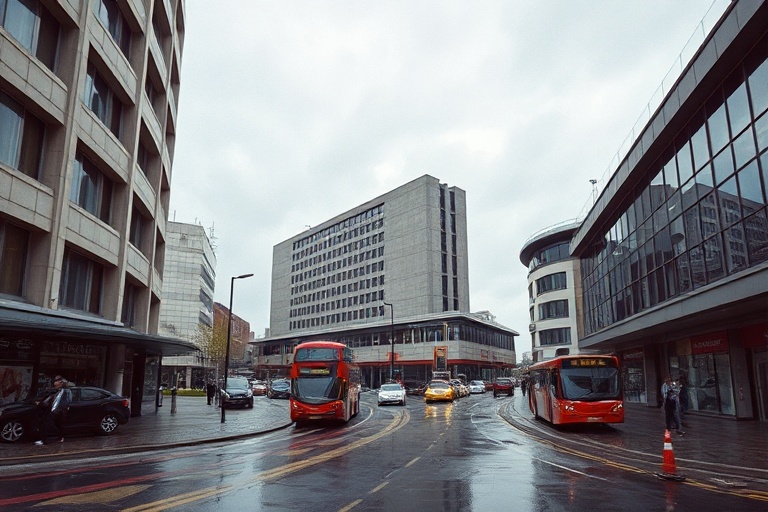
From Market Town to New Town: The Evolution of Basildon
Basildon, located in Essex, England, began as a modest market town in the medieval period, its name first recorded in the 12th century. Over centuries, it remained a quiet agricultural and trading hub until the mid-20th century, when it was designated as one of Britain’s New Towns in 1949. This transformation was part of a post-war vision to decentralize London’s population and revitalize the region.
The New Town designation brought rapid development. Architects and planners envisioned a modern urban center with self-sufficient communities, green spaces, and efficient infrastructure. By the 1960s and 1970s, Basildon had grown into a symbol of post-war British ambition, with tower blocks, shopping centers, and industrial zones reshaping the landscape. Today, Basildon blends its historical roots with a contemporary identity, standing as a testament to urban planning’s ideals and challenges.
A Cultural Crossroads: Arts, Music, and Local Identity
Basildon’s cultural scene has evolved from its working-class roots into a diverse tapestry of artistic expression. The town gained unexpected cultural notoriety in the 1980s when it became associated with the emerging electronic music scene. Bands like Depeche Mode, whose members grew up in Basildon, drew global attention to the town’s creative energy. Their synth-pop sound, rooted in local clubs and DIY venues, became a defining feature of 1980s music.
Beyond music, Basildon has nurtured visual arts and literature. Local galleries and community workshops provide platforms for emerging artists, while literary festivals celebrate the written word. The town’s multicultural population—shaped by waves of immigration from South Asia, Eastern Europe, and beyond—has enriched its cultural fabric, introducing festivals, cuisines, and traditions that reflect a global community.
- Music Legacy: Home to Depeche Mode and other influential acts, Basildon’s influence extends far beyond its borders.
- Visual Arts: Local galleries and street art projects showcase both traditional and contemporary works.
- Multicultural Festivals: Events like Basildon Mela and Diwali celebrations highlight the town’s diverse communities.
Economic Growth and Challenges: A Town in Transition
Basildon’s economy has shifted from its industrial past to a more service-oriented and technological future. The Basildon Enterprise Corridor, a business park housing tech firms and startups, reflects the town’s growing reputation as a hub for innovation. Companies in logistics, engineering, and digital services have established a presence, contributing to economic resilience.
However, challenges remain. Like many post-industrial towns, Basildon faces issues of inequality and urban decay in certain areas. Efforts to regenerate the town center, including the redevelopment of the Eastgate shopping mall and the introduction of new housing projects, aim to revitalize the urban core. These initiatives seek to attract investment while preserving the town’s community spirit.
Basildon in the Global Context: Lessons from New Towns
Basildon’s story is part of a broader global movement of New Towns, from America’s Levittowns to India’s Chandigarh. Each of these planned communities reflects the aspirations and limitations of their eras. Basildon, in particular, offers lessons in balancing modernity with social cohesion. Its multicultural makeup and economic diversification provide a model for towns adapting to globalization.
Globally, New Towns have often struggled with issues of identity and isolation. Basildon’s ability to reinvent itself—from a planned community to a cultural and economic player—demonstrates the importance of adaptability. The town’s ongoing regeneration projects, combined with its rich cultural heritage, position it as a case study in urban evolution.
Why Basildon Matters Today
Basildon’s significance extends beyond its borders. It represents the enduring legacy of post-war planning, the power of local creativity, and the challenges of urban renewal. For visitors, it offers a glimpse into Britain’s social history and contemporary diversity. For residents, it remains a place of opportunity and belonging.
The town’s future will likely be shaped by its ability to embrace change while honoring its past. With ongoing investments in infrastructure, education, and the arts, Basildon is poised to write the next chapter of its story—a story of resilience, innovation, and community.
For those interested in exploring similar urban transformations, travel features on planned cities worldwide offer fascinating comparisons. Meanwhile, cultural analyses of post-industrial towns provide deeper insights into the forces shaping communities like Basildon.
As the town continues to evolve, one thing is clear: Basildon’s journey from market town to New Town to a modern, multicultural hub is far from over. It remains a work in progress, a living experiment in what it means to build—and rebuild—a community.