Duchy of Cornwall: History, Purpose, and Modern Role Explained
“`html
The Duchy of Cornwall: A Unique Institution with Ancient Roots
The Duchy of Cornwall stands as one of the most distinctive and enduring institutions in the United Kingdom. Established in 1337 by royal charter, it was created to provide financial independence to the heir apparent to the British throne. Today, the duchy remains a private estate held in trust for the Prince of Wales—currently Prince William—though its influence extends far beyond personal finance.
Unlike typical estates, the duchy operates under a constitutional framework that blends medieval tradition with modern governance. Its origins trace back to King Edward III, who endowed his son, Edward, the Black Prince, with lands to support his future role as king. This model has persisted for nearly seven centuries, evolving from a feudal structure into a sophisticated portfolio of assets.
A Global Perspective: How the Duchy Compares to Other Royal Estates
From a global standpoint, the Duchy of Cornwall is not alone in its kind. Similar hereditary estates exist in other monarchies, such as the Duchy of Lancaster, which is held by the British monarch in a personal capacity. In Denmark, the Danish Royal Family manages the Dannebrog estate, while in Spain, the Patrimonio Nacional oversees royal properties. These institutions share a common purpose: to sustain the monarchy financially while preserving historical and cultural heritage.
However, the Duchy of Cornwall distinguishes itself through its legal autonomy. Since 1982, it has operated under its own parliamentary act, granting it a degree of independence from direct royal control. This has allowed it to develop into a diversified business enterprise, managing not just rural estates but also urban properties, financial investments, and even renewable energy projects.
The Duchy’s Portfolio: Land, Investments, and Economic Impact
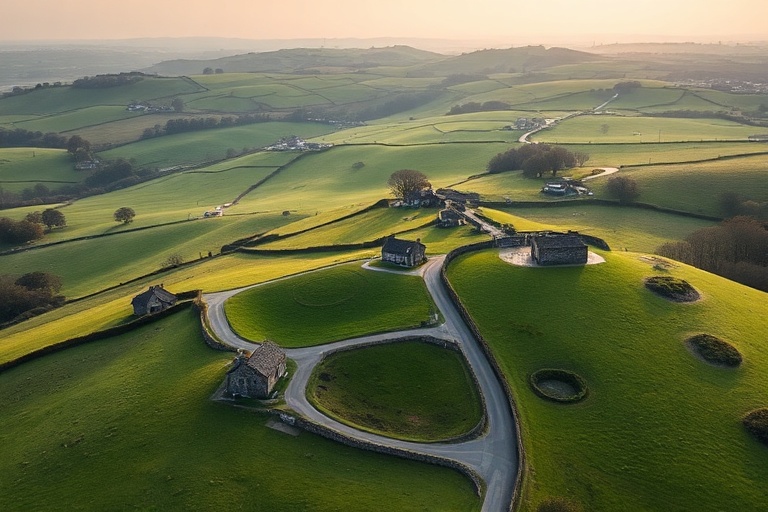
The duchy’s holdings span approximately 53,000 hectares across 23 counties in England and Wales. This includes farmland, residential and commercial properties, and even the Isles of Scilly. But its value lies not only in physical assets but in strategic investments. The duchy’s financial arm, the Duchy of Cornwall Management Limited, oversees a portfolio that includes:
- Agricultural and residential land: Managed for long-term sustainability, with a focus on regenerative farming and conservation.
- Commercial properties: Including prime real estate in cities like London, Oxford, and Bristol.
- Financial investments: Diversified across equities, bonds, and private equity to ensure long-term growth.
- Renewable energy: Wind farms, solar projects, and hydroelectric schemes that align with modern sustainability goals.
In the fiscal year 2022-2023, the duchy reported a revenue of over £24 million, with profits reinvested into its holdings or donated to charitable causes. This economic model reflects a blend of tradition and innovation, ensuring the institution remains relevant in the 21st century.
The Prince of Wales and the Duchy: A Modern Trusteeship
The current Prince of Wales, Prince William, assumed control of the duchy in 2022 upon the death of his grandmother, Queen Elizabeth II. Unlike his predecessors, William has shown a keen interest in sustainable development and social impact. Under his stewardship, the duchy has committed to achieving net-zero carbon emissions by 2030 and has prioritized affordable housing initiatives.
This modern approach contrasts with historical perceptions of royal estates as symbols of privilege. Today, the duchy’s trustees emphasize transparency and accountability. Annual reports are publicly available, and the estate’s financial performance is scrutinized by independent auditors. This openness has helped mitigate criticisms that such institutions are relics of a bygone era.
Cultural and Historical Significance Beyond Finance
The Duchy of Cornwall is more than a financial entity; it is a custodian of cultural heritage. Its lands include sites of historical importance, such as Tintagel Castle in Cornwall, which is linked to the legends of King Arthur. The duchy also plays a role in preserving local traditions, from Cornish language initiatives to supporting regional festivals and arts programs.
Globally, the duchy serves as a case study in how hereditary institutions can adapt to contemporary challenges. Its success in balancing tradition with modernity offers lessons for other royal estates facing similar pressures. For scholars of constitutional history, the duchy provides a living example of how feudal structures can evolve into modern governance models.
Controversies and Criticisms: A Balancing Act
Despite its successes, the Duchy of Cornwall has not been without controversy. Critics argue that the institution perpetuates anachronistic privileges, particularly in an era where public scrutiny of royal finances is intense. Questions have been raised about the duchy’s tax status, though it voluntarily pays income tax on its profits since 1993—a move that has helped dispel some of the skepticism.
Another point of contention is the duchy’s role in housing affordability. While it has committed to building affordable homes, some activists argue that its vast landholdings could do more to address the housing crisis in Cornwall and beyond. The duchy counters that its development projects are constrained by planning laws and conservation priorities, highlighting the complexities of balancing economic, social, and environmental goals.
Conclusion: A Living Legacy with Global Relevance
The Duchy of Cornwall endures as a testament to the enduring power of tradition in a rapidly changing world. Its ability to adapt—from medieval feudalism to modern sustainable investment—demonstrates how institutions can evolve without losing their core identity. For the British monarchy, the duchy remains a vital link to its past while serving as a model for responsible stewardship in the future.
As Prince William continues to shape its direction, the Duchy of Cornwall will likely remain a subject of fascination, not just for historians and royal watchers, but for anyone interested in how institutions can balance heritage with progress. In an age where transparency and sustainability are paramount, the duchy’s journey offers a compelling narrative of resilience and reinvention.