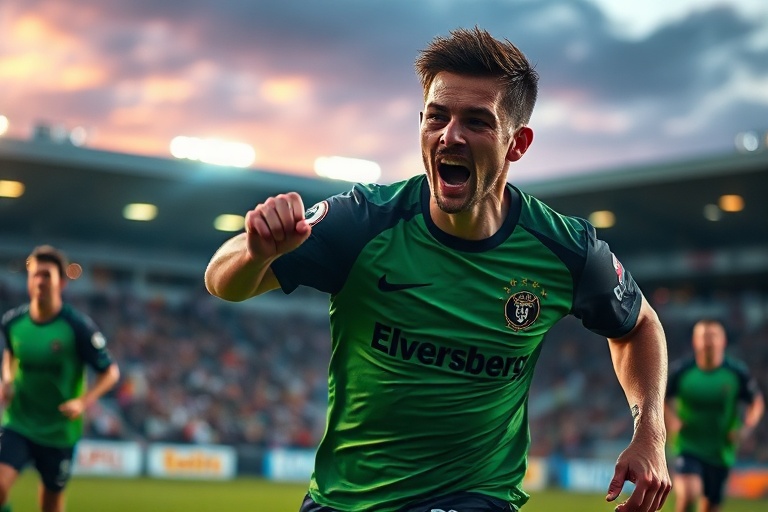
Few football clubs have climbed the German football pyramid as rapidly as SV Elversberg. Based in the small town of Spiesen-Elversberg in the Saarland region, this club has transformed from a modest seventh-tier side to a Bundesliga 2 competitor in less than a decade. Their journey is a testament to modern football’s unpredictability and the power of strategic development.
The club’s rise began in earnest in 2013 when they were promoted to the Regionalliga Südwest, the fourth tier of German football. From there, they steadily climbed through the divisions, earning promotion to 3. Liga in 2020. Their most significant milestone came in 2023 when they secured promotion to the 2. Bundesliga—the second-highest tier in German football—after finishing second in the 3. Liga table.
The Philosophy Behind Elversberg’s Rapid Ascent
Elversberg’s success is not merely a result of luck or financial muscle. Instead, it stems from a carefully constructed philosophy centered on youth development and smart recruitment. The club has invested heavily in its academy, producing several players who have become key figures in the first team. This focus on homegrown talent has allowed Elversberg to maintain financial stability while developing marketable players.
Their recruitment strategy is equally deliberate. Elversberg targets promising young players from lower divisions and gives them the platform to develop. Many of these players are later sold for significant profits, funding further transfers and infrastructure improvements. This model has drawn comparisons to clubs like Union Berlin and Darmstadt, which have similarly leveraged smart transfers and youth development to climb the football ladder.
One standout example is goalkeeper Daniel Batz, who joined Elversberg in 2020 from Bundesliga side Werder Bremen. After establishing himself as a reliable shot-stopper, he was sold to 2. Bundesliga club Hansa Rostock in 2023, fetching a reported fee that helped fund further investments. Players like Batz embody the club’s ability to identify talent, nurture it, and monetize it strategically.
A Model for Sustainable Growth in Lower-Leagues
Elversberg’s rise offers a blueprint for other smaller clubs aiming to compete beyond their traditional means. Their approach contrasts sharply with the financial excesses seen in leagues like the English Championship, where clubs often overspend in pursuit of promotion. Instead, Elversberg has proven that sustainable growth is possible through smart decision-making and long-term planning.
The club’s home ground, the Ursapharm-Arena, has also played a role in their success. With a capacity of just over 10,000, the stadium provides an intimate atmosphere that has become a fortress for the team. The passionate local support has created a winning culture that has been instrumental in their climb through the divisions.
The Challenges of Competing in the 2. Bundesliga
While Elversberg’s promotion to the 2. Bundesliga is a remarkable achievement, the challenges ahead are substantial. The second tier is far more competitive than the 3. Liga, with clubs boasting significantly larger budgets and fanbases. Elversberg’s first season in the 2. Bundesliga in 2023-24 saw them struggle to replicate their previous form, finishing in the lower half of the table.
One of the biggest challenges has been adapting to the physicality and intensity of the league. Many players who excelled in the 3. Liga found the step up daunting, particularly in terms of pace and physicality. Injuries to key players, including several academy graduates, also disrupted their rhythm and forced the coaching staff to adapt their tactics.
Financial constraints remain another hurdle. While Elversberg’s model has been sustainable thus far, the increased revenue from 2. Bundesliga broadcasting rights and sponsorship deals has not yet translated into significant spending power. The club must continue to rely on smart recruitment and player sales to balance the books while competing at this level.
Comparing Elversberg to Other German Football Success Stories
Elversberg’s story is not unique in German football, but it is one of the most impressive in recent years. Clubs like Union Berlin and Darmstadt 98 have similarly risen from lower-league obscurity to compete in the Bundesliga, proving that the German football pyramid remains one of the most open and competitive in the world.
Union Berlin’s rise, in particular, has been well-documented. Like Elversberg, Union Berlin built their success on a foundation of strong local identity and a commitment to youth development. Their promotion to the Bundesliga in 2019 was followed by a remarkable fifth-place finish in the 2022-23 season, demonstrating the potential of this model.
Darmstadt 98’s journey is another case study in sustainable growth. After years in the lower leagues, Darmstadt secured promotion to the Bundesliga in 2015 and again in 2023. Their ability to bounce back and forth between the top two tiers highlights the importance of resilience and adaptability in modern football.
What sets Elversberg apart, however, is the speed of their ascent. While Union Berlin and Darmstadt took decades to reach the top flight, Elversberg achieved the same feat in less than ten years. Their story serves as an inspiration for other ambitious clubs with limited resources.
The Future of Elversberg: Ambitions and Realities
Looking ahead, Elversberg’s immediate goal is clear: secure their place in the 2. Bundesliga and continue their development as a competitive force. The long-term ambition, however, is likely to be a push for Bundesliga promotion. Given the club’s financial constraints and the competitiveness of the league, this will not be an easy task.
To achieve this, Elversberg will need to refine their recruitment strategy further. This could involve targeting players with Bundesliga experience who are looking for a fresh start or investing in data analytics to identify undervalued talent. Strengthening their youth academy pipeline will also be crucial, as producing more first-team-ready players will reduce reliance on transfers and sales.
The club’s ownership has shown a willingness to invest in infrastructure, and further upgrades to their training facilities and stadium could help attract better talent. However, balancing ambition with financial prudence will remain a key challenge.
What’s Next for the Saarland Club?
For now, Elversberg’s focus is on consolidating their position in the 2. Bundesliga. The club’s ability to retain key players and attract new talent will be critical in the coming seasons. If they can establish themselves as a mid-table side, they will have achieved a remarkable feat for a club of their size.
Beyond football, Elversberg’s rise has had a broader impact on the local community. The club has become a source of pride for the Saarland region, inspiring other small-town clubs to dream big. Their story also highlights the importance of community support, as local fans have played a vital role in their journey.
As Elversberg continues to write their story, one thing is certain: their rise has already left a mark on German football. Whether they can sustain their momentum and reach the Bundesliga remains to be seen, but their journey thus far is a testament to what can be achieved with the right mix of ambition, strategy, and community backing.
For football fans, Elversberg’s story is a reminder that in the world of football, anything is possible. The beautiful game’s unpredictability ensures that no club, no matter how small, is truly out of reach.
For those interested in exploring more about clubs that have defied expectations, check out our News and Sports categories for further reading.