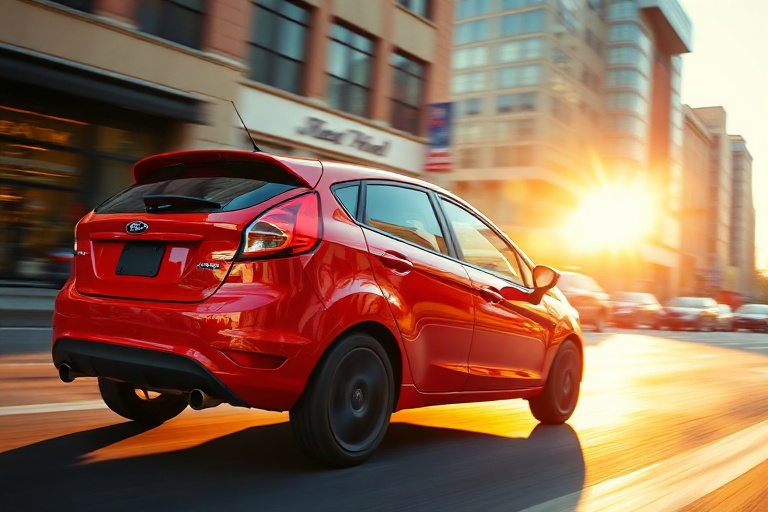
The Ford Fiesta arrived in 1976 as a bold experiment—a subcompact hatchback designed to conquer European roads while offering American-style comfort. Nearly five decades later, it stands as one of the most influential cars in automotive history, selling over 16 million units across seven generations. Its journey reflects broader shifts in car design, consumer preferences, and the global automotive market.
The Origins: A European Response to Rising Fuel Prices
In the mid-1970s, the oil crisis reshaped consumer priorities. Drivers sought fuel-efficient, affordable vehicles that didn’t compromise on practicality. Ford’s European division responded with the Fiesta, a front-wheel-drive hatchback built in Dagenham, England, and Cologne, Germany. Unlike its contemporaries—many of which were boxy sedans—the Fiesta embraced a rounded, aerodynamic shape that reduced drag and improved efficiency.
The first-generation model (1976–1983) debuted with a 957cc Kent engine, producing just 40 horsepower. Yet its lightweight design and nimble handling made it a favorite in congested cities. Critics praised its ride comfort, calling it “the first European car built to American standards of comfort and convenience.” This blend of efficiency and usability set the tone for the Fiesta’s legacy.
Key Innovations of the First Generation
- Front-wheel drive: A rarity in affordable cars at the time, improving traction and interior space.
- Five-door option: One of the first subcompacts to offer practicality without sacrificing style.
- Fuel injection debut: The 1980 XR2 introduced a 1.6L engine with electronic fuel injection, a technological leap for the segment.
The Rise to Global Prominence
By the late 1980s, the Fiesta had evolved into a global player. The third generation (1989–1997) introduced a more refined chassis, improved safety features, and a wider range of engines—including the first turbocharged diesel option. Ford’s decision to assemble the car in multiple markets, from Brazil to South Africa, cemented its status as a truly international vehicle.
Performance variants like the RS Turbo and RS 1800 became cult favorites among enthusiasts. The RS 1800, with its 136 horsepower 1.8L engine, delivered hot hatch thrills decades before the segment exploded in popularity. These models proved that a small car could be both practical and exciting—a philosophy that would define later hot hatches like the Volkswagen Golf GTI and Honda Civic Type R.
A Cultural Touchstone
The Fiesta’s influence extended beyond engineering. It became a staple in motorsport, dominating the World Rally Championship in the 1980s with the Ford RS 1700T. Its victories on dirt and tarmac elevated its reputation, turning it into a symbol of reliability and performance. Meanwhile, in pop culture, the Fiesta appeared in films like Ferris Bueller’s Day Off and countless music videos, embedding itself in the public consciousness.
The Modern Era: Adaptation and Decline
The sixth generation (2008–2017) marked a turning point. Ford repositioned the Fiesta as a tech-forward compact, introducing features like Ford SYNC, adaptive cruise control, and a touchscreen infotainment system. The 2013 refresh brought a sleeker design, improved fuel economy, and a new 1.0L EcoBoost engine that delivered 125 horsepower while sipping fuel.
Yet the Fiesta’s decline was already underway. By 2023, Ford announced the end of Fiesta production in Europe, citing shifting consumer preferences toward SUVs and electric vehicles. The final sixth-generation model rolled off the line in Cologne in July 2023, ending a 47-year run. The decision reflected broader industry trends: car buyers now prioritize SUVs for their commanding ride height and perceived safety, while EVs dominate headlines.
Why the Fiesta Matters Today
The Fiesta’s legacy offers lessons for the automotive industry. It demonstrated that a small car could be both affordable and technologically advanced, a blueprint that modern automakers still follow. Its success also highlights the challenges faced by traditional hatchbacks in an era dominated by larger, pricier vehicles. As automakers pivot to electrification, the Fiesta’s story serves as a reminder of the importance of adaptability.
For enthusiasts, the Fiesta remains a symbol of accessible performance. Clubs and private owners continue to modify and race these cars, ensuring their spirit lives on. Meanwhile, Ford’s decision to discontinue the Fiesta in Europe has sparked debates about the future of affordable, driver-focused cars.
What’s Next for the Fiesta’s Successor?
Ford has not confirmed a direct replacement for the Fiesta in Europe. However, rumors suggest the brand will focus on electric models, including a potential electric Puma—a crossover that already shares some DNA with the Fiesta. The shift aligns with Ford’s $50 billion investment in EVs by 2026, signaling a new chapter for the brand.
Yet some purists worry that the loss of the Fiesta could leave a gap in the market. For decades, it offered a unique combination of affordability, efficiency, and driving pleasure—qualities that are harder to find in today’s SUV-heavy lineup. The question remains: Will electric vehicles ever replicate the Fiesta’s magic?
Conclusion: A Legacy That Endures
The Ford Fiesta’s story is one of adaptation, innovation, and cultural impact. From its humble beginnings as a fuel-efficient runabout to its final days as a tech-packed compact, it remained true to its core values: practicality, performance, and value. While the automotive landscape continues to evolve, the Fiesta’s legacy endures in the countless cars it inspired and the drivers it delighted.
As Ford shifts toward an electric future, the lessons of the Fiesta—its balance of form and function, its ability to connect with consumers across generations—will remain relevant. For now, the Fiesta lives on in garages, racetracks, and the memories of those who drove it. Its story is far from over.
For more on the evolution of compact cars, explore Dave’s Locker Automotive section, where we track how small cars continue to shape the industry. To see how modern hot hatches compare, check out our Technology coverage, which examines the latest advancements in automotive tech.