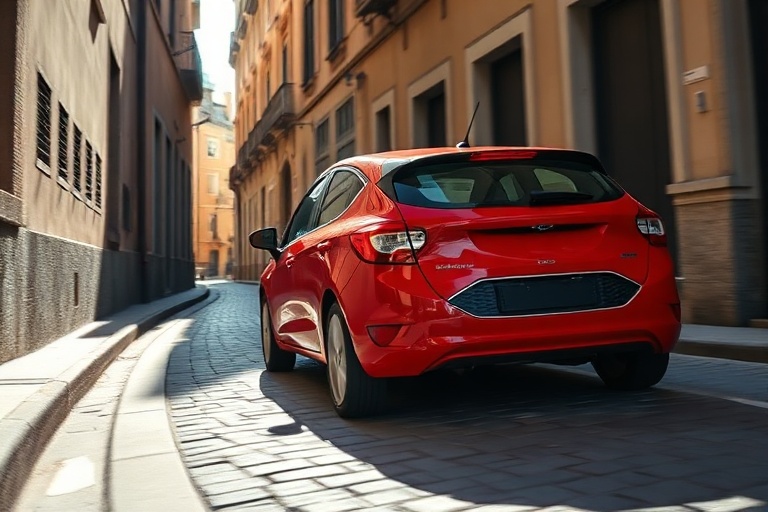
Ford Fiesta: The Compact Car That Shaped Generations
“`html
The Ford Fiesta: A Compact Car That Defined an Era
Published on
The Ford Fiesta is more than just a car. For millions of drivers across five continents, it represented reliability, affordability, and a touch of European flair in an era dominated by larger, gas-guzzling vehicles. Launched in 1976, the Fiesta quickly became a global icon, selling over 16 million units across seven generations before its discontinuation in 2023. Its journey reflects broader shifts in automotive design, consumer preferences, and the evolving role of small cars in urban mobility.
A Brief History: From European Roots to Global Reach
The Fiesta’s origins trace back to Ford’s European operations in the mid-1970s. As fuel crises and urban congestion intensified, automakers sought smaller, more efficient models. The first-generation Fiesta debuted in 1976, designed as a front-wheel-drive supermini to compete with the likes of the Volkswagen Polo and Fiat 127. Its boxy yet aerodynamic shape, combined with practical hatchback styling, made it an instant hit in markets like the UK and Germany, where tight streets demanded nimble vehicles.
By the 1980s, the Fiesta had expanded beyond Europe. Ford adapted the model for emerging markets, including Brazil and Mexico, where it became a staple for first-time car buyers. The third generation (1989–1997) introduced fuel injection and a more refined interior, cementing its reputation as a modern, low-maintenance vehicle. During this period, the Fiesta also gained traction in Asia, particularly in markets where small cars were favored for their maneuverability and cost efficiency.
The late 1990s and early 2000s saw the Fiesta evolve into a global platform. Ford’s adoption of a “world car” strategy meant the same basic architecture underpinned models sold in Europe, North America, and Asia. This approach reduced production costs and simplified supply chains, allowing the Fiesta to reach economies of scale that few competitors could match.
Design and Engineering: What Made the Fiesta Stand Out
One of the Fiesta’s enduring strengths was its adaptability. Unlike many compact cars of its era, which prioritized either sportiness or practicality, the Fiesta balanced both. Early models featured sharp handling and responsive steering, appealing to enthusiasts, while later iterations focused on comfort and technology for everyday drivers.
Engineering innovations played a key role in the Fiesta’s success. The introduction of the Zetec engine in the 1990s marked a turning point, offering better performance and fuel efficiency without sacrificing reliability. Ford also experimented with alternative fuels, launching an electric version of the Fiesta in 2012 as part of its early push into green technology. While the EV model never achieved mass-market adoption, it foreshadowed the industry’s eventual shift toward electrification.
Interior design evolved alongside mechanical improvements. Early Fiestas had utilitarian cabins with basic features, but by the 2010s, higher trim levels included touchscreen infotainment, leather upholstery, and advanced driver-assistance systems. This progression reflected broader trends in automotive interiors, where connectivity and comfort became as important as performance.
Notable Generations and Their Impact
The Fiesta’s seven generations each brought distinct changes:
- Gen 1 (1976–1983): The original model set the template for compact hatchbacks, with a focus on simplicity and affordability.
- Gen 3 (1989–1997): Introduced fuel injection and a more refined interior, appealing to a broader audience.
- Gen 5 (2008–2017): Redesigned with a sleeker aesthetic and improved safety ratings, targeting urban drivers in markets like China and India.
- Gen 7 (2017–2023): The final iteration emphasized connectivity, with features like Ford’s SYNC 3 infotainment system and hybrid powertrains.
Cultural Significance: More Than Just a Car
The Fiesta’s influence extended beyond showrooms. In the UK, it became a cultural symbol of youth mobility, frequently featured in music videos and films during the 1980s and 1990s. Bands like Oasis and The Stone Roses drove Fiestas in their heyday, cementing its association with rebellion and freedom. Meanwhile, in Latin America, the Fiesta was often the first car for working-class families, embodying the dream of economic mobility.
In motorsports, the Fiesta made its mark as well. Ford’s rally teams used modified versions of the car to compete in events like the World Rally Championship, where its agility and durability made it a formidable opponent. The Fiesta’s success in racing further enhanced its reputation as a driver’s car, attracting enthusiasts who might otherwise have opted for larger performance vehicles.
Environmental concerns also shaped the Fiesta’s legacy. As cities grew more congested, compact cars like the Fiesta became essential tools for reducing emissions and fuel consumption. Ford’s later efforts to electrify the model aligned with global trends toward sustainability, though the transition came too late to save the Fiesta from discontinuation.
The End of an Era: Why Ford Discontinued the Fiesta
In 2023, Ford announced it would stop producing the Fiesta after 47 years. The decision reflected broader industry shifts. The rise of SUVs and crossovers had eroded demand for small hatchbacks, as consumers prioritized space and higher seating positions. Additionally, the cost of meeting increasingly stringent emissions regulations made it difficult for low-margin compact cars to remain profitable.
The final generation of the Fiesta sold well in Europe, where it remained a top seller in its segment. However, Ford’s global strategy shifted toward electric vehicles and larger models like the Mustang Mach-E. The Fiesta’s discontinuation marked the end of an era for Ford’s compact lineup, but it also signaled the beginning of a new chapter focused on electrification and SUV dominance.
For many drivers, the loss of the Fiesta felt like the end of an automotive institution. It was a car that adapted to changing times while remaining true to its core values: affordability, practicality, and fun. Its legacy lives on in the millions of Fiestas still on the road, as well as in the compact cars that continue to follow in its footsteps.
What’s Next for Compact Cars?
The Fiesta’s departure leaves a gap in the market, but it also opens doors for new contenders. Electric compact cars like the Volkswagen ID.3 and the Hyundai Kona Electric are poised to fill the void, offering the same practicality with zero emissions. Meanwhile, hybrid models like the Toyota Yaris Hybrid provide a bridge between traditional internal combustion engines and fully electric vehicles.
For urban drivers, compact cars remain essential. Rising fuel prices and environmental regulations ensure that small, efficient vehicles will continue to play a vital role in global transportation. The challenge for automakers will be to replicate the Fiesta’s balance of affordability, reliability, and driving pleasure in an era dominated by electric powertrains and autonomous features.
As the automotive industry evolves, the Ford Fiesta will be remembered as a car that defined an era. It was more than just a mode of transport; it was a symbol of accessibility and adaptability. Its story serves as a reminder that sometimes the most unassuming vehicles leave the biggest mark.