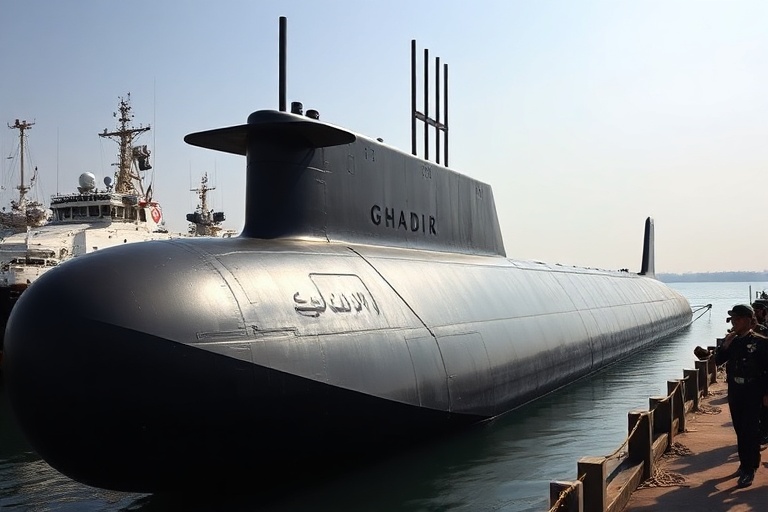
ghadir-class submarine
“`html
Iran’s Ghadir-Class Submarines: Stealth, Strategy, and Geopolitical Signals
The Ghadir-class submarine represents a significant milestone in Iran’s naval modernization program, blending indigenous engineering with strategic intent. These diesel-electric submarines, named after the Battle of Ghadir Khumm—a pivotal event in Shia Islam—are more than just military assets; they symbolize Iran’s commitment to self-reliance in defense technology. As tensions in the Persian Gulf and Strait of Hormuz persist, the Ghadir-class has emerged as a key player in Tehran’s deterrence strategy.
Designed for shallow waters and coastal defense, the Ghadir-class submarines are optimized for operations in the confined and contested waters of the Gulf. Their compact size—just 29 meters in length—allows them to navigate the region’s narrow straits and shallow depths with relative ease. This adaptability is crucial in an area where geography often dictates military strategy. The submarines’ primary role includes surveillance, mine-laying, and limited anti-ship operations, making them a versatile tool for Iran’s naval forces.
The development of the Ghadir-class reflects broader trends in asymmetric naval warfare. Unlike larger, blue-water submarines designed for open-ocean operations, the Ghadir-class is tailored for the unique challenges of the Gulf. Its design prioritizes stealth, endurance, and the ability to operate undetected in waters patrolled by regional rivals and international navies. This focus on asymmetric capabilities aligns with Iran’s military doctrine, which emphasizes flexibility and resilience in the face of superior conventional forces.
The Technical Evolution of the Ghadir-Class
The Ghadir-class submarines trace their origins to Iran’s long-standing efforts to develop indigenous naval technology. The first vessel, IRIS Ghadir, was launched in 2007, marking a breakthrough in Iran’s submarine production. Since then, the class has undergone several iterations, with improvements in stealth, automation, and weaponry. The submarines are believed to displace around 120 tons when submerged, making them among the smallest operational diesel-electric submarines in the world.
Key features of the Ghadir-class include:
- Stealth Technology: The submarines are equipped with anechoic tiles to reduce sonar detection, a critical advantage in the noisy waters of the Gulf.
- Advanced Propulsion: Diesel-electric engines provide a balance of speed and endurance, though the exact specifications remain classified.
- Weaponry: The class is equipped with torpedoes and the capability to deploy naval mines, enhancing its role in coastal defense.
- Automation: Reports suggest that the submarines incorporate automated systems to reduce crew requirements, improving operational efficiency.
The Ghadir-class submarines are also notable for their modular design, which allows for relatively quick upgrades and modifications. This adaptability ensures that the vessels can keep pace with evolving threats and technological advancements. While exact details about the submarines’ electronics and sensors are scarce, their operational history suggests a high degree of reliability and effectiveness in real-world conditions.
Regional Implications and Strategic Context
The introduction of the Ghadir-class submarines has not gone unnoticed by Iran’s neighbors or global powers operating in the region. The Persian Gulf, a critical chokepoint for global oil shipments, has long been a flashpoint for geopolitical tensions. The presence of Iranian submarines in these waters adds a layer of complexity to the already volatile security environment. For countries like Saudi Arabia, the UAE, and the United States, the Ghadir-class represents a potential threat to their naval dominance and freedom of movement.
Iran has consistently framed its submarine program as a defensive measure, citing the need to protect its maritime borders and deter aggression. However, the Ghadir-class also serves as a tool for power projection. The submarines’ ability to operate covertly in the Gulf allows Iran to assert its presence without triggering large-scale military confrontations. This strategy aligns with Iran’s broader approach to asymmetric warfare, which prioritizes resilience and the ability to inflict damage despite numerical inferiority.
The deployment of the Ghadir-class has also sparked debates about the future of naval warfare in the Gulf. Traditional navies, such as those of the U.S. and U.K., rely on advanced submarines and surface combatants to maintain dominance. However, the Ghadir-class demonstrates that smaller, technologically adept submarines can pose significant challenges to larger fleets. This shift toward asymmetric capabilities could reshape naval doctrines in the region, forcing traditional powers to rethink their strategies.
Cultural Symbolism and National Pride
Beyond their military utility, the Ghadir-class submarines carry deep cultural and symbolic significance for Iran. The name “Ghadir” is derived from the Islamic event of Ghadir Khumm, where Shia Muslims believe the Prophet Muhammad designated Ali ibn Abi Talib as his successor. This historical reference underscores the role of the submarines as both defensive assets and symbols of national pride and religious identity.
The launch of the first Ghadir-class submarine was accompanied by significant media coverage in Iran, with state-run outlets highlighting the achievement as a testament to the country’s technological prowess. For a nation often isolated by international sanctions, the development of indigenous military technology is a point of pride and a demonstration of self-sufficiency. The submarines’ production and deployment are frequently cited in Iranian propaganda as evidence of the country’s resilience and ingenuity.
This cultural dimension adds another layer to the Ghadir-class’s strategic value. While the submarines are undeniably military assets, their symbolic importance enhances their deterrent effect. By framing the submarines as both technological marvels and patriotic symbols, Iran strengthens its domestic legitimacy and sends a clear message to both allies and adversaries about its capabilities and resolve.
The Broader Picture: Submarines in 21st-Century Naval Warfare
The Ghadir-class is part of a global trend toward smaller, more agile submarines designed for littoral operations. Countries like North Korea, Vietnam, and even some NATO members have invested in similar platforms to address the challenges of coastal defense and asymmetric threats. This shift reflects a growing recognition that traditional submarine designs may not be as effective in the increasingly contested waters of the 21st century.
For Iran, the Ghadir-class represents a pragmatic solution to a complex set of challenges. The submarines’ small size and stealth capabilities make them difficult to detect and neutralize, while their modular design allows for rapid adaptation to new threats. In a region where naval power is often about influence as much as it is about brute force, the Ghadir-class submarines provide Iran with a tool to assert its presence without escalating tensions to the point of open conflict.
Looking ahead, the role of the Ghadir-class in Iran’s naval strategy will likely continue to evolve. As regional tensions persist and new technologies emerge, the submarines may undergo further upgrades or be complemented by even more advanced platforms. For now, however, the Ghadir-class stands as a testament to Iran’s ability to develop sophisticated military technology despite limited resources and international isolation.
Conclusion
The Ghadir-class submarine is more than just a military asset; it is a symbol of Iran’s technological ambition, strategic ingenuity, and cultural identity. In the waters of the Persian Gulf, these submarines serve as a reminder that naval power is not solely the domain of large, advanced fleets. Instead, smaller, stealthier platforms can play a decisive role in shaping the balance of power. As regional dynamics continue to shift, the Ghadir-class will remain a key piece of Iran’s naval strategy—and a point of fascination for military analysts worldwide.
For those interested in the intersection of technology and geopolitics, the Ghadir-class offers a compelling case study. It demonstrates how even the most advanced naval powers must adapt to the rise of asymmetric threats, and how smaller nations can leverage innovation to challenge conventional wisdom. As the world watches, the Ghadir-class submarines will continue to navigate the complex waters of the Gulf, both literally and metaphorically.
—
METADATA
{
“title”: “Ghadir-Class Submarines: Iran’s Stealthy Deterrent in the Gulf”,
“metaDescription”: “Explore Iran’s Ghadir-class submarines, their tech, and geopolitical role in the Gulf amid rising regional tensions.”,
“categories”: [“Technology”, “Defense”],
“tags”: [“Ghadir-class submarine”, “Iranian navy”, “Persian Gulf submarines”, “asymmetric warfare”, “naval technology”],
“imageDescription”: “An overhead view of an Iranian Ghadir-class submarine surfacing in the Persian Gulf, with modern naval vessels in the background and the silhouette of an oil tanker visible on the horizon. The scene captures the submarine’s stealth design and the strategic importance of the region.”
}
—END METADATA—
“`