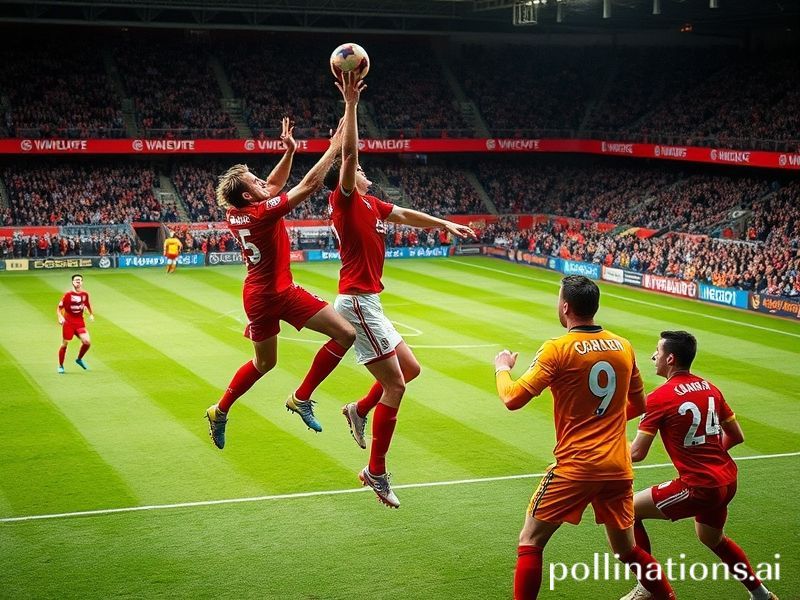
The clash between Hermannstadt and FCSB is no longer just another match in the Romanian Liga I—it’s a reflection of how Romanian football is evolving. Once overlooked, clubs like Hermannstadt have risen to challenge traditional powerhouses, injecting fresh energy into a league hungry for competition.
FCSB, the self-proclaimed heir to the legacy of Steaua București, remains one of Romania’s most decorated clubs. But in recent years, the Bucharest-based giants have faced stiffer opposition from provincial clubs that are no longer content with being mere participants. Hermannstadt, based in Sibiu, has emerged as a symbol of this shift—a club built on community support, smart recruitment, and tactical discipline.
The Origins of a Modern Rivalry
Hermannstadt’s rise has been meteoric. Founded in 2007, the club spent its early years in the lower divisions before securing promotion to Liga I in 2018. Their rapid ascent coincided with FCSB’s struggles to maintain dominance, both on the pitch and in financial stability. The two clubs first met in the 2018–19 season, and what began as a competitive fixture soon grew into a rivalry defined by contrasting identities.
FCSB represents the old guard—glory, infrastructure, and expectations. Hermannstadt embodies the new wave—ambition, local pride, and a rejection of the status quo. Their meetings are more than football; they’re a cultural statement about what Romanian football should become.
Key Moments in the Rivalry So Far
- First Meeting (2018–19 Liga I): FCSB won 2–1, but Hermannstadt’s performance signaled their arrival. They held their own against the capital giants, frustrating FCSB with organized defending.
- 2019–20 Cup Run: Hermannstadt stunned FCSB 3–2 in the Romanian Cup quarterfinals, ending the Bucharest club’s title hopes and announcing themselves as a force to be reckoned with.
- 2022–23 Liga I Clash: A 1–1 draw in Sibiu showcased Hermannstadt’s resilience. FCSB dominated possession but struggled to break down a disciplined home side.
- Recent Form Shift: Hermannstadt now often matches or outperforms FCSB in head-to-head metrics, including possession and shots on target, a sign of their tactical maturity.
Tactical and Financial Contrasts
One of the most fascinating aspects of this rivalry is the stark contrast in how the two clubs operate. FCSB, despite its financial troubles, still commands the highest wages and most expensive signings in Romanian football. Their approach often relies on individual brilliance and the weight of history.
Hermannstadt, by contrast, operates on a lean budget. They prioritize youth development, loan signings from bigger clubs, and a collective style of play that emphasizes pressing and quick transitions. This philosophy has made them a tough opponent for any team, FCSB included.
Analysts point to Hermannstadt’s use of pressing triggers and high defensive lines as key tactical advantages. While FCSB often struggles against teams that force them wide or into turnovers, Hermannstadt’s structure neutralizes their attacking threats before they can develop.
Broader Implications for Romanian Football
The Hermannstadt vs. FCSB rivalry is more than a local derby—it’s a microcosm of Romanian football’s broader transformation. For decades, the league was dominated by a handful of clubs from Bucharest, Cluj, and Târgu Mureș. But financial instability, poor governance, and the rise of provincial clubs have shifted the balance.
Clubs like Hermannstadt, Farul Constanța, and U Craiova have shown that success doesn’t require massive budgets—it requires vision, smart recruitment, and fan engagement. This shift has injected new life into Liga I, attracting younger fans and improving the league’s competitive depth.
However, the challenges remain significant. Financial disparities persist, and many clubs still rely on the generosity of owners rather than sustainable models. The Romanian Football Federation (FRF) has struggled to implement long-term reforms, leaving clubs vulnerable to crises.
What’s Next for the Rivalry?
As the 2024–25 season approaches, both clubs face pivotal moments. FCSB is under pressure to regain its title ambitions while dealing with off-field distractions. Hermannstadt, meanwhile, is pushing for European competition, with a potential Europa Conference League spot within reach.
If Hermannstadt continues its upward trajectory, we could see a new dynamic emerge—one where the title race isn’t just between Bucharest and Cluj, but between tradition and innovation. For Romanian football, that would be a welcome change.
Conclusion: A Rivalry Worth Watching
The Hermannstadt vs. FCSB rivalry is still in its relative infancy, but it has already become one of the most compelling narratives in Romanian football. It represents a clash of generations, philosophies, and ambitions. For fans, it offers excitement. For the league, it offers hope.
As Hermannstadt continues to challenge the old guard, FCSB must adapt or risk irrelevance. The rest of Romanian football watches closely—not just as spectators, but as participants in a league that is finally beginning to reflect the diversity and dynamism of the country itself.
One thing is certain: this rivalry is far from over. And that’s good for everyone involved.
For more on Romanian football’s evolving landscape, explore our Sports and Analysis sections.