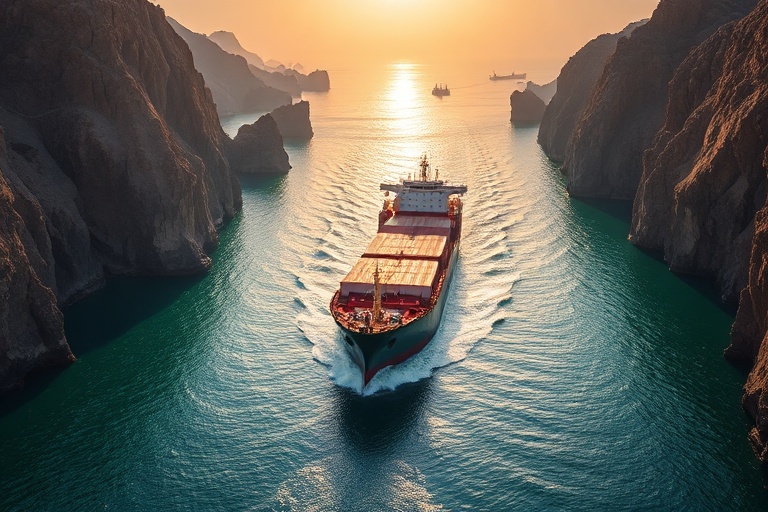
The Hormuz Strait, a narrow waterway between Iran and Oman, remains one of the most strategically significant maritime passages in the world. Connecting the Persian Gulf to the Gulf of Oman and the Arabian Sea, it serves as a vital artery for global oil and gas shipments. Any disruption in this 34-mile-wide channel could send shockwaves through international energy markets, affecting fuel prices and supply chains worldwide.
Recent developments have kept the strait in the global spotlight. Geopolitical tensions, military posturing, and occasional skirmishes have raised concerns about the stability of this critical waterway. Understanding its role in global trade, the interests of key players, and the potential consequences of instability is essential for grasping broader economic and security dynamics.
Geopolitical Importance of the Hormuz Strait
The Hormuz Strait is more than just a geographic feature—it is a focal point of international power struggles. Approximately 20% of the world’s oil passes through this narrow passage daily, making it indispensable to energy-dependent economies. The strait’s significance is magnified by the fact that several of the world’s largest oil producers, including Saudi Arabia, Iraq, and the United Arab Emirates, rely on it to export their crude.
This dependence creates a delicate balance of power. Iran, which controls the northern shore of the strait, has repeatedly threatened to disrupt shipping lanes in response to sanctions or perceived threats. Such actions could trigger a regional crisis, drawing in global powers like the United States, which maintains a military presence in the area to ensure free navigation.
- Oil Transit Volumes: Roughly 17 million barrels of oil per day transit the strait, equivalent to about 20% of global oil consumption.
- Gas Shipments: The strait also handles significant liquefied natural gas (LNG) exports, particularly from Qatar, the world’s largest LNG producer.
- Alternative Routes: While pipelines exist to bypass the strait, none can fully replace its capacity, making it irreplaceable in the short term.
Recent Tensions and Military Posturing
Over the past decade, the Hormuz Strait has been a flashpoint for military confrontations. In 2019, attacks on oil tankers near the strait were widely attributed to Iran, escalating tensions with the U.S. and its allies. The incident highlighted the vulnerability of maritime traffic and the ease with which conflicts could spiral out of control.
Iran has also conducted naval exercises in the region, showcasing its ability to block the strait if necessary. Such demonstrations serve as both a deterrent and a reminder of the strait’s strategic value. Meanwhile, Western nations have increased their naval patrols to deter aggression and protect shipping lanes.
The situation remains precarious. Diplomatic efforts to de-escalate tensions have yielded mixed results, and the possibility of accidental conflict looms large. Analysts warn that even a minor incident could trigger a broader confrontation, with far-reaching consequences for global energy markets.
Key Players in the Hormuz Strait
The stability of the Hormuz Strait depends on the actions of several key actors:
- Iran: As the dominant regional power controlling the northern shore, Iran holds significant leverage. Its military capabilities, including ballistic missiles and naval forces, make it a formidable player.
- United States: The U.S. Fifth Fleet, based in Bahrain, patrols the region to ensure freedom of navigation. Its presence is a stabilizing force but also a target for Iranian aggression.
- Saudi Arabia and UAE: These Gulf states depend heavily on the strait for oil exports. Their security concerns often align with U.S. interests, but they also pursue independent diplomatic strategies.
- China and Russia: Both countries have expanded their influence in the region, investing in ports and energy projects. Their growing presence adds another layer of complexity to the geopolitical landscape.
Economic Impact of a Potential Closure
A prolonged closure of the Hormuz Strait would have devastating economic consequences. Oil prices would likely skyrocket, disrupting industries and increasing costs for consumers. Countries heavily reliant on Middle Eastern oil, such as China, India, and Japan, would face severe shortages and economic slowdowns.
The global LNG market would also suffer. Qatar, which exports most of its LNG through the strait, would struggle to deliver shipments, exacerbating energy crises in Europe and Asia. The ripple effects would extend to stock markets, currencies, and trade balances, creating instability worldwide.
While alternative routes exist, none can fully compensate for the loss of the Hormuz Strait. Pipelines such as the Abu Dhabi Crude Oil Pipeline can carry limited volumes, but they are insufficient to meet global demand. The economic fallout would be swift and severe.
Diplomatic Efforts and Future Outlook
International efforts to stabilize the Hormuz Strait have yielded limited success. The Joint Comprehensive Plan of Action (JCPOA), or Iran nuclear deal, was one such initiative, but its collapse in 2018 left the region more volatile. Since then, backchannel negotiations and confidence-building measures have struggled to gain traction.
Looking ahead, the outlook remains uncertain. Iran’s nuclear ambitions, regional proxy conflicts, and the shifting alliances of global powers all contribute to the complexity of the situation. However, the economic interdependence of nations may ultimately serve as a deterrent to outright conflict.
For now, the Hormuz Strait remains a powder keg, its stability dependent on the delicate balance of power and diplomacy. The world watches closely, aware that any misstep could trigger a crisis with global repercussions.
For more insights on global energy dynamics and geopolitical risks, visit our News and Analysis sections.