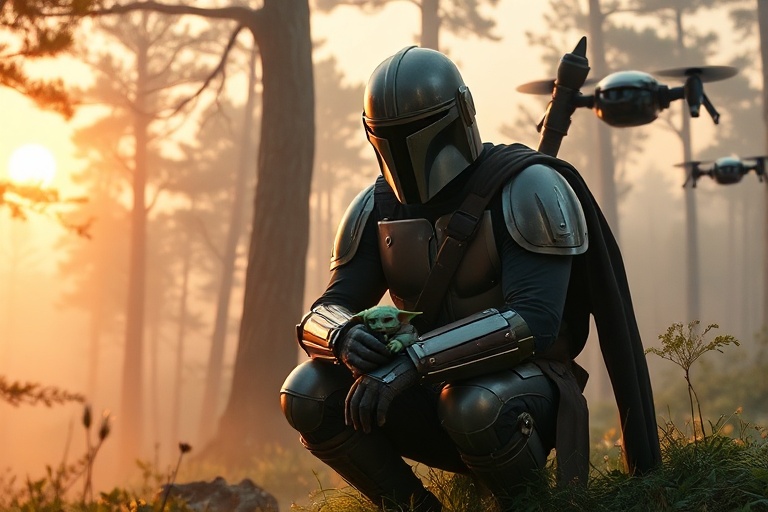
The bond between Din Djarin, the stoic Mandalorian bounty hunter, and Grogu, the Force-sensitive child, became one of the most compelling narratives in modern entertainment. Their journey across the galaxy redefined what it meant to tell a Star Wars story in the 21st century. From the quiet moments of connection to the high-stakes action, their relationship provided depth, heart, and a fresh perspective on the franchise’s central themes.
The Origins of Their Unlikely Partnership
Their story began in the first season of The Mandalorian, when Din Djarin was hired to retrieve Grogu—a task that quickly evolved into something far more personal. Captured by Imperial forces, Grogu was vulnerable, his survival dependent on the intervention of a bounty hunter who had spent his life detached from emotional attachments. The irony was not lost on viewers: a warrior bound by a creed that forbade personal connections found himself responsible for the most fragile life in the galaxy.
Their early interactions set the tone for their dynamic. Grogu, though physically small, exuded wisdom beyond his years, often guiding Din Djarin through Force-assisted nudges and telekinetic interventions. The Mandalorian, in turn, provided protection, eventually adopting Grogu under the Mandalorian creed. This decision was not without consequence—Din Djarin risked his reputation among his people, who viewed Grogu as a liability to their code of secrecy and isolation.
The Mandalorian’s Transformation
Din Djarin’s evolution from a lone hunter to a guardian is central to the series’ emotional core. His initial motivation was purely transactional: deliver Grogu and collect the reward. Yet, as the seasons progressed, his priorities shifted. The moment Grogu called him “Dada” in The Mandalorian Season 2 marked a turning point. It was a rare instance of vulnerability, a crack in the armor of a man who had spent decades hiding behind a beskar helmet.
This transformation was not just about Din Djarin’s personal growth. It reflected the broader themes of culture and family that the franchise has explored since its inception. Grogu, in many ways, became the catalyst for Din Djarin to rediscover his own humanity—a humanity he had buried beneath layers of metal and myth.
Thematic Depth: Family, Legacy, and the Force
The relationship between Din Djarin and Grogu transcended the typical mentor-student or guardian-protector dynamic. It was, at its heart, a story about found family. Grogu’s need for belonging mirrored Din Djarin’s own isolation, creating a symbiotic bond that benefited both characters. Their journey was less about Grogu learning the ways of the Force and more about Din Djarin learning the value of connection.
The Force played a subtle but significant role in their relationship. Grogu’s abilities often saved Din Djarin in critical moments, from deflecting blaster bolts to healing wounds. These moments were not just plot devices; they underscored the idea that the Force was not merely a tool for power but a conduit for care and protection. Din Djarin, despite his initial reluctance to embrace the Force, became its unwitting guardian—a protector of a child who represented the future of the Jedi Order.
Cultural Impact and Fan Reception
Grogu, affectionately dubbed “Baby Yoda” by fans, became an instant icon. His wide eyes, pointed ears, and expressive gestures made him a merchandising juggernaut, but his appeal ran deeper than cuteness. He represented hope in a galaxy often defined by conflict and cynicism. The character’s design, a masterclass in visual storytelling, conveyed emotion without dialogue, a rarity in modern media.
Their relationship also sparked discussions about adoption, guardianship, and the ethics of protecting a child in a dangerous galaxy. Fans debated whether Din Djarin was the right caretaker for Grogu, given his violent profession and adherence to a rigid code. Yet, these debates only strengthened the narrative, proving that the story resonated on multiple levels.
Key Moments That Defined Their Journey
Their relationship was shaped by several pivotal moments, each adding layers to their bond. Below are some of the most significant scenes from their journey:
- Season 1, Episode 3 – “The Sin”: Din Djarin betrays his employer, the Client, to protect Grogu, marking his first major step away from his bounty-hunting roots.
- Season 2, Episode 1 – “The Marshal”: Grogu’s playful interaction with Din Djarin’s ship, the Razor Crest, humanizes both characters and foreshadows their deeper connection.
- Season 2, Episode 8 – “The Siege”: Grogu uses the Force to heal Din Djarin’s injuries, solidifying their bond as more than just protector and ward.
- Season 3, Episode 5 – “The Apostate”: Din Djarin removes his helmet in front of Grogu, a moment of trust that signifies their relationship has evolved beyond mere duty.
The Role of Side Characters in Their Story
While Din Djarin and Grogu’s relationship was the emotional centerpiece, their interactions with other characters added depth to their journey. Characters like Cara Dune, Greef Karga, and Bo-Katan Kryze provided contrasting perspectives on family and loyalty. For instance, Greef Karga’s initial skepticism about Grogu forced Din Djarin to justify his choices, while Bo-Katan’s own struggles with leadership and legacy mirrored his internal conflict.
The arrival of Ahsoka Tano in Season 2 introduced another layer to Grogu’s story. Her guidance helped Din Djarin understand the importance of training Grogu in the ways of the Force, but it also raised questions about Grogu’s future. Would he become a Jedi, or would he forge his own path? These questions kept viewers invested in their story long after the credits rolled.
The Legacy of Din Djarin and Grogu
Their story concluded in The Mandalorian Season 3, but their impact on the Star Wars universe is far from over. Grogu’s growth into a young Force-wielder set the stage for future adventures, while Din Djarin’s journey from isolation to community provided a template for redemption arcs in the franchise. Their relationship also influenced other Star Wars stories, from The Book of Boba Fett to Ahsoka, where Grogu’s presence continued to shape narratives.
Beyond the screen, their legacy lives on in the way fans discuss adoption, found family, and the power of unlikely bonds. Grogu’s character proved that even in a galaxy filled with heroes and villains, the most compelling stories are often the quietest ones—the ones about love, trust, and the courage to change.
As the Star Wars universe expands, the lessons learned from Din Djarin and Grogu will continue to resonate. Their story was not just about a bounty hunter and a child; it was about the families we choose and the legacies we leave behind. In a franchise built on epic battles and grand destinies, their quiet moments of connection became the heart of the saga.
Conclusion: Why Their Story Matters
The relationship between Din Djarin and Grogu stands as a testament to the power of storytelling. In a genre often dominated by spectacle, their bond offered something rare: emotional authenticity. It reminded viewers that even in a galaxy far, far away, the most important stories are the ones that speak to the human (or alien) experience.
As new generations discover The Mandalorian and Grogu, their story will continue to inspire. It will remind them that family is not always about blood—it’s about the choices we make and the lives we choose to protect. And in a universe filled with chaos, that message is as powerful as any lightsaber or starship.