Islamic Center of San Diego: Faith, Community, and Cultural Impact
“`html
Islamic Center of San Diego: A Bridge of Faith and Community
The Islamic Center of San Diego (ICSD) stands as a testament to the growing diversity and spiritual richness of Southern California. Established in 1978, this institution has evolved from a modest gathering place into a cornerstone of Muslim life in the region, serving thousands of worshippers and families each week. Its influence extends beyond religious observance, fostering interfaith dialogue, community service, and cultural exchange in a city known for its progressive values and global connections.
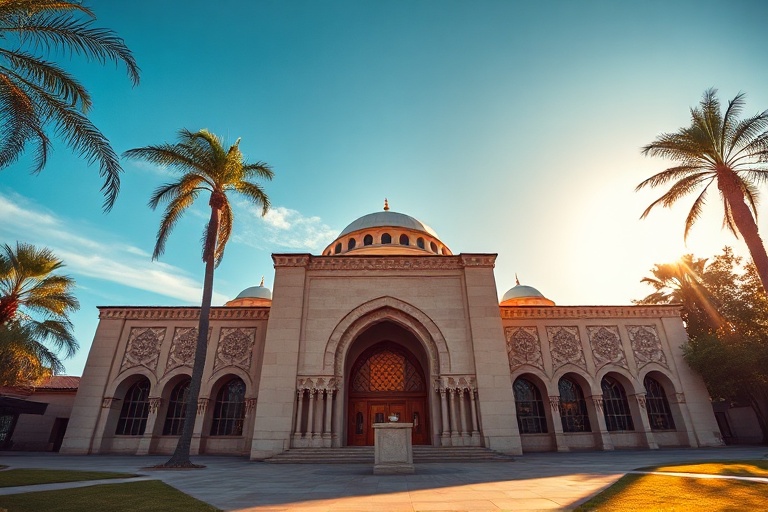
San Diego’s landscape is dotted with places of worship, but the ICSD occupies a unique space. Unlike many mosques built in the 20th century, which often reflected the modest means of early immigrant communities, the ICSD’s current facility—completed in 2017—is a modern architectural marvel. Its design blends traditional Islamic motifs with contemporary aesthetics, featuring a soaring dome, intricate geometric patterns, and expansive prayer halls that can accommodate over 2,000 worshippers. The center’s location on Friars Road, near the bustling 805 freeway, makes it a visible landmark in a city where cultural institutions often compete for attention.
The Role of the Islamic Center in Community Building
The ICSD is more than a place of worship; it is a hub for social, educational, and charitable activities. Every Friday, the center’s main prayer hall fills with worshippers for Jumu’ah, the weekly congregational prayer. The sermon, delivered in both Arabic and English, addresses contemporary issues faced by Muslims in America, from identity struggles to political engagement. This dual-language approach reflects the center’s commitment to serving a multilingual congregation, including immigrants from the Middle East, South Asia, and Africa, as well as American-born Muslims.
Beyond religious obligations, the ICSD organizes programs that cater to all age groups. The Sunday school, for instance, teaches Quranic studies and Arabic to children, while youth groups focus on leadership development and civic engagement. Women’s circles provide a space for discussion on Islamic feminism, family roles, and professional development. During Ramadan, the center hosts iftars (breaking fast meals) that attract hundreds of attendees, including non-Muslim neighbors and colleagues eager to experience the community’s hospitality.
One of the center’s most impactful initiatives is its interfaith outreach. The ICSD collaborates with local churches, synagogues, and temples through organizations like the San Diego Interfaith Coalition. These partnerships have led to joint events such as peace vigils, charity drives, and educational forums on Islamophobia. In a region where religious tensions occasionally flare up, the ICSD’s willingness to engage with other faith communities has helped foster mutual understanding.
A Global Institution with Local Roots
The story of the Islamic Center of San Diego is intertwined with the broader narrative of Muslim immigration to the United States. In the 1960s and 1970s, waves of Muslims arrived in San Diego, drawn by opportunities in academia, defense contracting, and healthcare. Many hailed from countries like Egypt, Iraq, Pakistan, and Somalia, bringing with them diverse cultural practices and interpretations of Islam. The early years of the ICSD were marked by fundraising dinners in church basements and rented storefronts, where worshippers gathered for prayer and community meetings.
Today, the ICSD reflects the demographic shifts of the Muslim world. The congregation includes not only immigrants but also converts to Islam, reflecting the religion’s growing appeal among non-Muslim Americans. The center’s leadership has adapted to these changes, ensuring that its programs remain relevant. For example, its English-language khutbahs (sermons) often address topics like Islam in the West, mental health, and social justice—issues that resonate with younger, American-born Muslims.
Global events also shape the ICSD’s priorities. After the September 11 attacks, the center became a target of suspicion and surveillance, a common experience for many Muslim institutions in the post-9/11 era. In response, the ICSD doubled down on community outreach, inviting law enforcement to engage in dialogue and hosting open houses to dispel myths about Islam. More recently, the COVID-19 pandemic forced the center to adapt by livestreaming prayers and hosting virtual iftars, a shift that expanded its reach to Muslims across the country.
Challenges and the Path Forward
Despite its successes, the Islamic Center of San Diego faces challenges. One persistent issue is the generational divide within the Muslim community. Older immigrants may prioritize traditional religious practices, while younger members often seek a more liberal interpretation of Islam. The ICSD has sought to bridge this gap through inclusive programming, such as youth-led discussions on feminism and LGBTQ+ inclusion in Islam.
Another challenge is the center’s financial sustainability. While the ICSD receives donations from its congregation, maintaining its expansive facilities and diverse programs requires constant fundraising. The COVID-19 pandemic further strained its resources, as in-person events were canceled and donations dwindled. To address this, the center launched a zakat (charity) distribution system, ensuring that its wealth is used to support those in need within the community.
Looking ahead, the ICSD is exploring partnerships with local universities to offer Islamic studies courses. It is also expanding its mental health initiatives, recognizing the growing need for counseling services among young Muslims facing identity crises. These efforts underscore the center’s role not just as a religious institution, but as a vital part of San Diego’s social fabric.
Why the Islamic Center of San Diego Matters
The Islamic Center of San Diego is a microcosm of the Muslim American experience—balancing tradition with modernity, faith with activism, and isolation with integration. In a city as diverse as San Diego, where cultures from around the world coexist, the ICSD serves as a reminder of the importance of religious institutions in fostering belonging. Its story is one of resilience, adaptation, and community-building in the face of adversity.
For non-Muslims, the ICSD offers a window into a faith that is often misunderstood. Through its open-door policy and interfaith initiatives, the center invites dialogue and dispels stereotypes. For Muslims, it provides a sanctuary where they can practice their faith freely while engaging with the broader society. In an era of rising Islamophobia and political polarization, institutions like the ICSD play a crucial role in promoting understanding and unity.
As San Diego continues to grow and diversify, the Islamic Center of San Diego will undoubtedly remain a key player in shaping the city’s cultural and spiritual landscape. Its ability to adapt to changing times while staying rooted in its values is a testament to the enduring strength of its community.
Visiting the Islamic Center of San Diego
The ICSD welcomes visitors for tours, interfaith events, and community programs. Located at 7050 Convoy Court, San Diego, CA 92111, the center is easily accessible via public transportation and major highways. For those interested in learning more about Islam or engaging in dialogue, the ICSD’s website provides a calendar of events and contact information.
For those interested in exploring other religious and cultural institutions in San Diego, consider visiting the San Diego Cultural Arts Museum or the Balboa Park, which houses a variety of museums and gardens reflecting the city’s diversity.