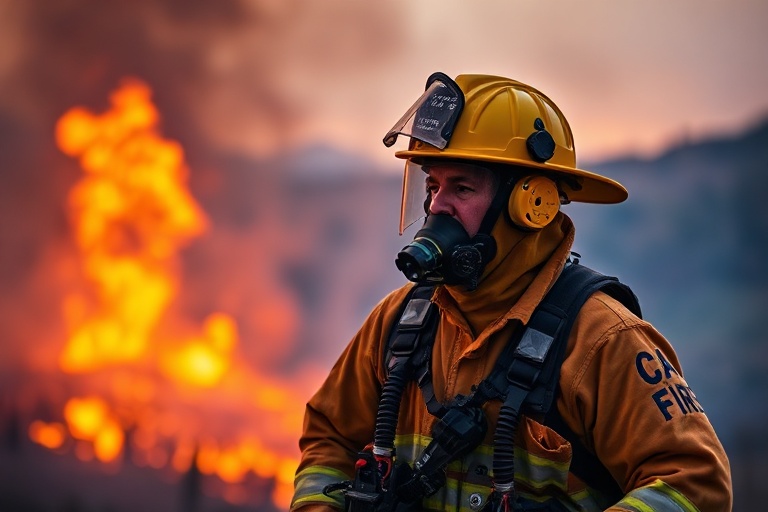
California’s relationship with wildfires is complex and deeply ingrained in the state’s ecological and cultural landscape. The California Department of Forestry and Fire Protection, universally known as CAL FIRE, stands at the forefront of managing this challenge. With a mission that extends beyond mere firefighting, CAL FIRE plays a multifaceted role in prevention, response, and recovery across the state’s diverse terrain.
The Origins and Evolution of CAL FIRE
Established in 1885 as the Office of State Forester, CAL FIRE has grown from humble beginnings into one of the largest fire protection agencies in the United States. The agency’s evolution reflects California’s growing need for wildfire management, shaped by devastating fires like the 1904 Yosemite fire and the 1910 Great Idaho Fire, which spurred federal forest management initiatives.
By the 1920s, California began consolidating its forest protection efforts, culminating in the 1927 creation of the California Division of Forestry. The modern iteration, CAL FIRE, emerged in 1943 when the division merged with the California Fire Service. Today, the agency operates under the California Natural Resources Agency and employs over 7,000 personnel, including firefighters, paramedics, and prevention specialists.
CAL FIRE’s expansion mirrors California’s population growth and urban-wildland interface expansion. The agency now manages over 31 million acres of state responsibility areas and provides fire protection to over 8 million acres of private land. This vast jurisdiction requires constant adaptation to new challenges, from climate change to evolving firefighting technologies.
CAL FIRE’s Core Responsibilities
CAL FIRE’s duties can be divided into three primary categories: emergency response, hazard reduction, and community protection. Each area requires specialized resources and approaches to address California’s unique wildfire challenges.
- Emergency Response: CAL FIRE operates 21 air attack bases and maintains one of the largest firefighting air fleets in the world, including S-2T air tankers and helicopters. During peak fire season, the agency can deploy over 6,000 firefighters across the state. In 2023 alone, CAL FIRE responded to 5,827 fires that burned 325,795 acres.
- Hazard Reduction: The agency conducts prescribed burns, vegetation management, and defensible space inspections to reduce fuel loads before fires start. Through its Fire Prevention Grants Program, CAL FIRE has funded over 1,200 projects since 2018, treating more than 200,000 acres.
- Community Protection: CAL FIRE works with local governments to develop countywide hazard mitigation plans and emergency evacuation procedures. The agency also provides public education through programs like Ready for Wildfire, which offers resources for homeowners to create defensible space around their properties.
One of CAL FIRE’s most visible responsibilities is its role in mutual aid agreements. The agency coordinates with federal, state, and local partners through the California Mutual Aid System, allowing for rapid resource sharing during large-scale incidents. This system proved crucial during the 2017 Wine Country fires and the 2020 August Complex fire, the largest in California’s recorded history.
The Technology Behind CAL FIRE’s Operations
Modern firefighting demands cutting-edge technology, and CAL FIRE has invested heavily in tools to enhance its capabilities. The agency’s use of technology spans from predictive modeling to real-time data analysis, fundamentally changing how wildfires are fought and managed.
At the heart of CAL FIRE’s technological infrastructure is the Wildland Fire Decision Support System (WFDSS). This platform integrates weather data, fire behavior models, and resource tracking to help incident commanders make informed decisions. The system’s predictive capabilities allow CAL FIRE to anticipate fire spread and allocate resources more effectively.
CAL FIRE also utilizes advanced aerial assets, including the S-2T air tankers and the new Firehawk helicopters. These aircraft are equipped with infrared sensors and GPS mapping systems that provide real-time fire intelligence to ground crews. The agency’s partnership with NASA has also led to the implementation of satellite-based fire detection systems, enabling earlier detection of wildfires in remote areas.
On the ground, CAL FIRE employs unmanned aerial vehicles (UAVs) for situational awareness and damage assessment. These drones can access areas too dangerous for human crews, providing critical data during active incidents. The agency’s use of mobile apps allows firefighters to access real-time information from their smartphones, improving coordination and response times.
The Human Element: CAL FIRE’s Workforce
Behind every firefighting operation is a dedicated workforce that forms the backbone of CAL FIRE’s mission. The agency’s personnel represent a diverse range of skills and backgrounds, from seasonal firefighters to specialized prevention experts. Understanding this workforce reveals the human stories behind California’s wildfire resilience.
CAL FIRE employs approximately 3,100 permanent and 4,000 seasonal firefighters, many of whom work in remote fire stations across the state. These professionals often face grueling conditions, including 24-hour shifts during peak fire season. The physical and mental demands of the job have led CAL FIRE to prioritize mental health resources and wellness programs for its personnel.
The agency’s diversity initiatives have expanded opportunities for women and minority groups in firefighting. CAL FIRE’s Women in Fire program and partnerships with organizations like the National Association of Black Professional Firefighters aim to create more inclusive pathways into the profession. These efforts reflect broader trends in emergency services toward greater representation and equity.
Volunteerism also plays a crucial role in CAL FIRE’s operations. The California Conservation Corps (CCC) and local volunteer fire departments provide essential support, particularly in rural communities. These volunteers often serve as the first line of defense against wildfires, highlighting the importance of community-based fire prevention efforts.
The Future of CAL FIRE: Challenges and Innovations
As California faces increasingly severe wildfire seasons, CAL FIRE must adapt to new realities. Climate change, urban sprawl, and fuel accumulation present unprecedented challenges that require innovative solutions and forward-thinking strategies.
One of the most pressing challenges is the growing wildland-urban interface (WUI). As more Californians build homes in fire-prone areas, CAL FIRE’s workload expands beyond traditional forest management. The agency has responded by increasing its focus on home hardening and community education, but the scale of the problem demands systemic solutions.
Climate change exacerbates these challenges by extending fire seasons and intensifying fire behavior. CAL FIRE’s climate adaptation strategies include expanding fuel breaks, increasing prescribed burns, and investing in fire-resistant building materials. These efforts require long-term planning and sustained funding, as the impacts of climate change will continue to evolve.
Innovation remains key to CAL FIRE’s future. The agency is exploring the use of artificial intelligence for early fire detection and predictive modeling. Partnerships with tech companies and academic institutions are driving new approaches to wildfire management, from drone swarms to autonomous firefighting vehicles. These technologies promise to enhance CAL FIRE’s capabilities while addressing the growing scale of the wildfire crisis.
Public engagement will also shape CAL FIRE’s future. The agency’s “Ready for Wildfire” campaign encourages homeowners to take proactive steps, such as creating defensible space and using fire-resistant landscaping. By empowering communities to reduce their wildfire risk, CAL FIRE can extend its reach beyond traditional firefighting roles.
Conclusion: CAL FIRE’s Enduring Mission
CAL FIRE stands as both a guardian and a steward of California’s landscapes. Its work extends far beyond battling flames, encompassing prevention, education, and ecosystem management. As California continues to confront the wildfire crisis, the agency’s role will only grow more critical.
The challenges ahead are daunting, but CAL FIRE’s history of adaptation and innovation offers reason for optimism. From its earliest days protecting California’s forests to its current role as a global leader in wildfire management, the agency has consistently risen to meet new challenges. With continued investment in technology, workforce development, and community engagement, CAL FIRE will remain indispensable in protecting California’s communities and natural resources.
For those seeking to understand California’s wildfire landscape, CAL FIRE offers a model of resilience and adaptation. Its work reminds us that wildfire management is not just about fighting fires—it’s about building a sustainable future for generations to come.