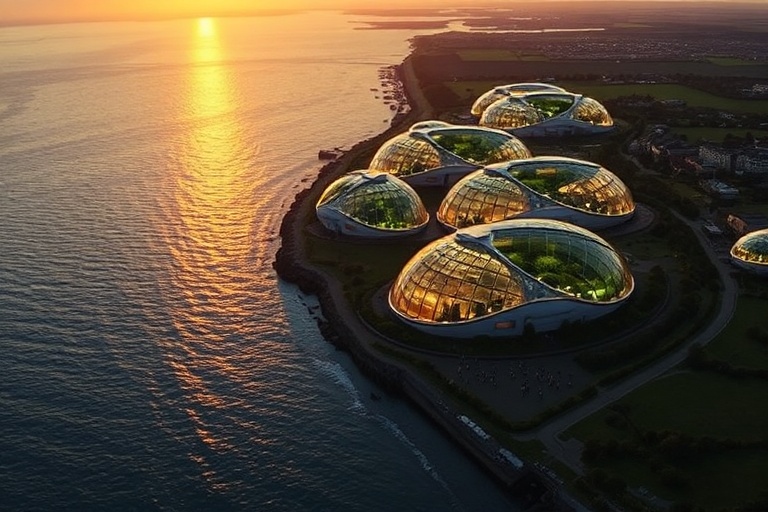
The Eden Project Morecambe represents one of the most ambitious environmental and economic regeneration projects in the UK. Located on the Lancashire coast, this £50 million initiative aims to transform a former industrial site into a world-class visitor attraction and ecological hub. The project builds on the legacy of the original Eden Project in Cornwall, adapting its biophilic design principles to a coastal setting.
Morecambe Bay’s rich biodiversity and industrial heritage provide a compelling backdrop for the scheme. The project’s planners envision a space that merges education, conservation, and tourism, while addressing social and economic challenges in the region. With construction underway and an expected opening in 2025, the Eden Project Morecambe is poised to become a model for sustainable coastal development.
From Industrial Past to Green Future
The site chosen for the Eden Project Morecambe was once home to the Morecambe gasworks and later served as a storage facility for Shell. Decades of industrial use left the land contaminated and underutilized. Transforming this brownfield site into a thriving ecological attraction required extensive remediation efforts and innovative design.
Local authorities and environmental experts have collaborated closely to ensure the project meets rigorous sustainability standards. The site will feature rainwater harvesting systems, renewable energy sources, and low-carbon construction materials. These measures align with the Eden Project’s commitment to environmental stewardship and circular economy principles.
Community engagement has been central to the planning process. Residents have been consulted through public forums and workshops, ensuring the project reflects local aspirations. This inclusive approach aims to foster a sense of ownership and pride among the people of Morecambe and beyond.
Design and Attractions: A Coastal Eden
The architectural concept for Eden Project Morecambe draws inspiration from the region’s maritime landscape. The design team, led by Grimshaw Architects, has created a series of interconnected domes and outdoor gardens that evoke the shape of waves and dunes. These structures will house a variety of climate zones, from temperate to tropical, showcasing diverse plant species.
Visitors can expect to explore themed gardens, interactive exhibits, and immersive experiences that highlight the importance of biodiversity. One of the standout features will be the “Biomes by the Bay,” which will include plant collections from coastal habitats around the world. These biomes will not only serve as educational tools but also as spaces for relaxation and inspiration.
The project will also feature an outdoor amphitheater, a learning center, and a marketplace celebrating local crafts and produce. These elements are designed to create a vibrant social hub where visitors can learn, shop, and dine. The inclusion of a restaurant serving locally sourced food underscores the project’s commitment to supporting the regional economy.
Key Features of Eden Project Morecambe
- Coastal Biomes: Climate-controlled domes showcasing plants from around the world, adapted to coastal environments.
- Learning Center: Educational programs and workshops focused on sustainability, biodiversity, and climate change.
- Outdoor Gardens: Native plant collections and themed gardens inspired by the Lancashire coastline.
- Community Space: An amphitheater and marketplace designed for local events, markets, and performances.
- Renewable Energy: Solar panels, wind turbines, and geothermal systems to power the site sustainably.
Economic and Social Impact
The Eden Project Morecambe is expected to deliver significant economic benefits to the region. According to projections, the project could attract up to 500,000 visitors annually, generating £25 million in economic activity. This influx of tourism is anticipated to create around 300 new jobs, both directly within the project and indirectly in hospitality, retail, and transport sectors.
Local businesses stand to benefit from increased foot traffic and partnerships with the Eden Project. The marketplace, in particular, will provide a platform for small producers and artisans to reach a wider audience. This aligns with broader efforts to revitalize Morecambe’s high street and reduce economic inequality in the area.
Beyond economic gains, the project aims to address social challenges such as youth unemployment and mental health. The learning center will offer vocational training programs in horticulture, hospitality, and sustainability. Additionally, the green spaces and wellness programs are designed to promote physical and mental well-being among visitors and the local community.
Challenges and Criticisms
Despite its promise, the Eden Project Morecambe has faced scrutiny from some quarters. Critics argue that the project’s high cost could be better spent on pressing local issues, such as healthcare and education. Others question whether the initiative will truly benefit the wider community or primarily serve as a tourist attraction for wealthier visitors.
Environmental campaigners have also raised concerns about the project’s ecological footprint. While the project emphasizes sustainability, transporting materials and plants to the site could contribute to carbon emissions. Proponents counter that the long-term environmental benefits, such as habitat restoration and carbon sequestration, outweigh these initial costs.
To address these concerns, the Eden Project Morecambe team has committed to transparency and ongoing dialogue with stakeholders. Regular progress reports and community forums will allow for feedback and adjustments as the project develops. This approach aims to build trust and ensure the project remains accountable to its goals.
A Model for Coastal Regeneration
The Eden Project Morecambe could serve as a blueprint for similar initiatives in other coastal towns. Its blend of environmental, economic, and social objectives offers a holistic approach to regeneration. By leveraging the region’s natural assets and cultural heritage, the project demonstrates how sustainable tourism can drive broader revitalization efforts.
For Morecambe, the Eden Project represents more than just a new attraction—it is a catalyst for change. The project’s success could inspire further investment in the area, from infrastructure improvements to cultural programming. It also sets a precedent for how post-industrial sites can be reimagined as green, inclusive spaces.
As the project nears completion, all eyes will be on Morecambe. The Eden Project Morecambe is not just a destination; it is a statement about the future we want to build—one that balances human needs with environmental responsibility. Whether it fulfills this vision remains to be seen, but the ambition alone marks it as a project worth watching.
For those interested in sustainable tourism and coastal regeneration, the Eden Project Morecambe offers lessons that extend far beyond Lancashire’s shores. Explore more travel and sustainability stories on Dave’s Locker to see how similar initiatives are reshaping communities around the world.
The journey of Eden Project Morecambe is a reminder that regeneration is not just about bricks and mortar—it’s about people, nature, and the stories we choose to tell. As the project takes shape, it invites us to rethink what coastal towns can become and how they can lead the way in building a greener, more inclusive future.