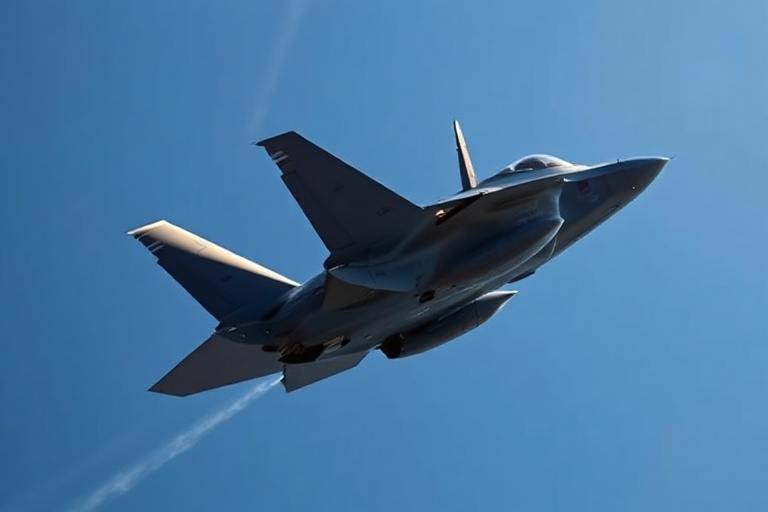
F-35 Lightning II: The Future of Global Air Superiority
“`html
The F-35 Lightning II: A Global Defense Revolution
The Lockheed Martin F-35 Lightning II represents more than just a fighter jet—it embodies the future of aerial warfare and global defense partnerships. Designed to replace aging fleets of fourth-generation aircraft, the F-35 has become the most advanced multirole stealth fighter in service today. Its development reflects decades of technological progress, international collaboration, and shifting military priorities across nations.
With variants tailored for the U.S. Air Force, Marine Corps, and Navy, as well as allied forces worldwide, the F-35 is not merely a weapon system—it’s a strategic asset. Its stealth capabilities, sensor fusion, and networked warfare integration are reshaping how modern militaries project power and maintain air superiority.
The Evolution of a Fifth-Generation Fighter
The F-35’s origins trace back to the late 1990s, when the U.S. Department of Defense sought a next-generation fighter to replace the F-16, F/A-18, and AV-8B Harrier. The Joint Strike Fighter (JSF) program aimed to create a cost-effective, versatile aircraft capable of meeting the needs of multiple branches of the armed forces.
Lockheed Martin won the contract in 2001, beating competitors like Boeing’s X-32. The program, however, faced significant delays, cost overruns, and technical challenges. Early prototypes struggled with weight issues, software glitches, and engine reliability. Despite these setbacks, the F-35 program persisted, driven by its promise of unmatched combat capabilities.
Three primary variants emerged from the program:
- F-35A: Conventional takeoff and landing (CTOL) variant for the U.S. Air Force and allied air forces.
- F-35B: Short takeoff/vertical landing (STOVL) variant for the U.S. Marine Corps and the Royal Navy.
- F-35C: Carrier-based variant for the U.S. Navy, designed for catapult launches and arrested landings.
Each variant shares over 80% of its airframe, avionics, and mission systems, ensuring interoperability across different branches and nations. This commonality reduces training costs and logistical complexity—a key selling point for international buyers.
A Stealth Platform with Unmatched Capabilities
The F-35’s most defining feature is its stealth design. The aircraft’s angular, radar-absorbent materials and internal weapons bays reduce its radar cross-section to a fraction of that of fourth-generation fighters like the F-16 or F/A-18. This low observability allows the F-35 to penetrate advanced air defense systems undetected, a critical advantage in modern conflicts.
Beyond stealth, the F-35 boasts a sophisticated sensor suite. Its AN/APG-81 active electronically scanned array (AESA) radar provides unparalleled situational awareness, while the Distributed Aperture System (DAS) projects a 360-degree view of the surrounding airspace onto the pilot’s helmet-mounted display. This system enables the pilot to “see through” the aircraft and track enemy aircraft or missiles from any angle.
The F-35’s Autonomic Logistics Information System (ALIS) revolutionizes maintenance by predicting component failures before they occur. This predictive analytics approach minimizes downtime and ensures mission readiness—a stark contrast to the reactive maintenance models of older aircraft.
Global Adoption and Strategic Partnerships
The F-35’s international appeal lies in its ability to strengthen alliances and modernize aging fleets. The U.S. has aggressively marketed the jet to NATO allies, Japan, South Korea, Israel, and Australia. As of 2024, more than a dozen nations have ordered or deployed the F-35, making it one of the most widely exported fighter jets in history.
For many of these countries, the F-35 is more than a combat aircraft—it’s a symbol of technological prowess and military interdependence. European allies like the United Kingdom, Italy, and the Netherlands have integrated the F-35 into their air forces, while Japan and South Korea view it as a cornerstone of their defense strategies against regional threats.
However, the F-35 program has not been without controversy. Critics argue that its high operational costs—estimated at over $40,000 per flight hour—are unsustainable for smaller air forces. Additionally, concerns about the jet’s vulnerability to cyber threats and electronic warfare have sparked debates about its long-term viability.
Despite these challenges, the F-35 remains a cornerstone of modern defense policy. Its ability to operate in contested environments, share data seamlessly with allied forces, and adapt to emerging threats ensures its continued relevance in an era of great-power competition.
Cultural and Economic Impact
The F-35’s influence extends beyond the battlefield. Its development has driven advancements in aerospace manufacturing, software engineering, and cybersecurity. The program has also created thousands of jobs across the U.S. and allied nations, from Lockheed Martin’s factories in Fort Worth, Texas, to BAE Systems’ production lines in the United Kingdom.
Culturally, the F-35 has captured the imagination of aviation enthusiasts and military strategists alike. Its sleek design and cutting-edge technology have made it a frequent subject in documentaries, video games, and even pop culture. The jet’s presence at airshows, such as the Paris Air Show and Farnborough International Airshow, draws massive crowds, underscoring its status as a marvel of engineering.
Yet, the F-35’s global reach also reflects broader geopolitical trends. The jet’s adoption by nations like Poland and Finland—both of which are strengthening their defenses amid tensions with Russia—highlights how military technology is increasingly intertwined with diplomacy and deterrence. The F-35, in many ways, has become a tool of soft power, binding allies together through shared security commitments.
For defense analysts, the F-35 is a case study in the complexities of modern military procurement. Its development has been fraught with delays and cost overruns, yet its operational record in exercises like Red Flag and Northern Edge demonstrates its unmatched capabilities. The question now is whether the F-35 will remain the dominant fifth-generation fighter for decades to come or if emerging technologies, such as sixth-generation platforms like the Next Generation Air Dominance (NGAD) program, will render it obsolete.
Conclusion: The F-35’s Legacy and Future
The Lockheed Martin F-35 Lightning II stands as a testament to human ingenuity and the relentless pursuit of technological superiority. Its stealth, sensor fusion, and networked capabilities have redefined modern aerial warfare, while its global adoption underscores its strategic importance. Yet, the F-35 is not without its flaws. High costs, maintenance challenges, and evolving threats pose ongoing challenges for policymakers and defense planners.
As nations continue to invest in the F-35, its legacy will be shaped by how well it adapts to future conflicts. Will it remain the backbone of allied air forces, or will it be surpassed by next-generation platforms? One thing is certain: the F-35 has already left an indelible mark on the world of military aviation, and its influence will be felt for generations to come.