How Estonia Became Europe’s Drone Innovation Hub
“`html
Estonia’s Drone Revolution: From Baltic Backwaters to Global Skies
In the quiet forests of Estonia, where Soviet-era bunkers rust under mossy canopies, a quieter revolution is taking flight. The country, often overshadowed by its Nordic neighbors, has quietly positioned itself as a European leader in drone technology. From agricultural monitoring to emergency response, Estonia’s embrace of unmanned aerial systems reflects a broader shift in how small nations leverage innovation to punch above their weight on the global stage.
This transformation didn’t happen overnight. Estonia’s journey began in the early 2010s, when tech-savvy entrepreneurs and forward-thinking policymakers recognized the potential of drones beyond military applications. Today, the Baltic nation is home to over 100 drone-related companies, a thriving testing ecosystem, and regulatory frameworks that are the envy of the continent.
The Rise of Estonia’s Drone Ecosystem
Estonia’s drone industry owes much of its success to a combination of government support, geographic advantages, and a culture of digital innovation. Unlike larger nations bogged down by bureaucratic inertia, Estonia moved swiftly to create one of Europe’s most permissive regulatory environments for drone operations. The Estonian Transport Administration’s Drone Regulation Portal streamlines licensing, while the country’s compact size allows for efficient testing across diverse landscapes—from urban centers to remote islands.
Key players in this ecosystem include:
- Milrem Robotics: A pioneer in unmanned ground and aerial systems, known for its THeMIS unmanned vehicle and drone integration.
- Threod Systems: Specializes in long-endurance drones for surveillance, mapping, and environmental monitoring.
- Eliko Tech: Focuses on drone-based IoT solutions, enabling real-time data collection for agriculture and infrastructure.
- AirNav Technologies: Develops air traffic management software tailored for drone operations in low-altitude airspace.
These companies aren’t just catering to local demand. Estonia’s drones are now deployed in projects across Europe, from monitoring wildlife in Sweden’s forests to inspecting wind turbines in Germany. The country’s participation in the EU’s Drone Strategy 2.0 has further solidified its role as a testing ground for next-generation aerial mobility.
Regulation and Innovation: A Nordic Model in the Baltics
Estonia’s regulatory approach is often compared to that of its Nordic neighbors, but with a uniquely Baltic twist: pragmatism. While countries like France and Germany impose strict geo-fencing and pilot certification requirements, Estonia adopted a risk-based framework that prioritizes operational flexibility. Drones weighing under 25 kg can fly without prior approval in most areas, provided they stay below 120 meters and maintain visual line of sight.
This streamlined system has attracted international attention. In 2022, Estonia became the first European country to issue a license for beyond visual line of sight (BVLOS) drone flights in urban environments. Companies like Milrem Robotics have since used this license to test autonomous drone deliveries in Tallinn, a project that could redefine last-mile logistics in congested cities.
The government’s commitment to innovation extends beyond rules. Estonia’s Digital Sky initiative, part of the broader e-Estonia digital society project, integrates drones into the national data infrastructure. This means drones can share airspace data in real time with air traffic control, emergency services, and even smart city networks. It’s a level of integration that remains aspirational in many larger economies.
Cultural and Economic Impact: More Than Just Drones
For a country with a population of just 1.3 million, Estonia’s drone sector punches far above its weight. The industry employs over 2,000 people directly and indirectly, contributing an estimated €100 million annually to the economy. But its impact goes deeper than GDP figures. Drones have become a symbol of Estonia’s broader tech-driven identity—a nation that skipped the industrial revolution and leapt straight into the digital one.
In rural areas, drones are revolutionizing traditional livelihoods. Farmers in Põlva County use drone-mounted multispectral cameras to monitor crop health, reducing water and pesticide use by up to 30%. In the fishing villages of Hiiumaa, drones track ice thickness in winter, helping communities avoid dangerous cracks in the Baltic Sea ice. These applications resonate in a country where agriculture and fishing remain vital, even as urbanization accelerates.
The cultural shift is palpable. Estonia’s younger generation, raised in a society where Skype was invented and e-residency is a reality, sees drones as just another tool in an ever-expanding digital toolkit. Universities like Tallinn University of Technology and the University of Tartu now offer specialized drone engineering programs, ensuring a steady pipeline of talent. Even Estonia’s famously stoic farmers have warmed to the technology, with local cooperatives pooling resources to purchase drones for shared use.
Global Lessons from Estonia’s Drone Playbook
Estonia’s drone success story offers several lessons for other nations, particularly small or mid-sized countries looking to carve out a niche in high-tech industries. First, agility matters. Estonia’s ability to iterate on regulations and policies without getting bogged down in political gridlock has been critical. Second, integration is key. By embedding drones into existing digital infrastructure—rather than treating them as isolated gadgets—Estonia has avoided the siloed approaches that plague larger economies.
Yet challenges remain. Skeptics argue that Estonia’s small size and low population density make it an ideal testing ground but not necessarily a scalable market. Critics also point to the environmental impact of drone batteries and the visual pollution of frequent drone traffic in scenic areas. For all its progress, Estonia’s drone sector is still grappling with public perception. In a country where nature is sacrosanct, the sight of drones buzzing over national parks has sparked debates about whether technology is enhancing or encroaching on Estonia’s pristine landscapes.
The path forward may lie in sustainability. Companies like Threod Systems are already experimenting with solar-powered drones for long-endurance missions, while Eliko Tech is developing biodegradable drone components. Estonia’s next frontier could well be green drones—machines that not only serve human needs but do so with minimal environmental footprint.
A Glimpse into the Future
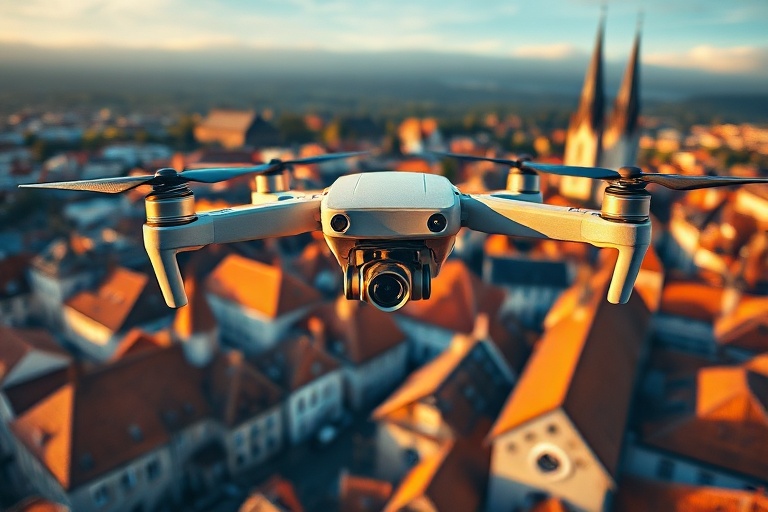
As the sun sets over the Baltic Sea, casting long shadows over Tallinn’s medieval spires, the hum of a drone might drift across the sky. It could be delivering a package to a suburban home, monitoring a forest fire in the distance, or simply capturing data for a farmer’s next harvest. In Estonia, these moments are no longer futuristic—they’re routine.
Estonia’s drone revolution is far from over. With the EU’s U-space regulations coming into full force and the rise of urban air mobility on the horizon, the country is poised to play a leading role in shaping the skies of tomorrow. For a nation that has repeatedly defied expectations—from regaining independence in 1991 to becoming a digital society—this is just another chapter in an ongoing story of reinvention.
The rest of the world would do well to watch closely. In the drone sector, as in so many others, Estonia has shown that size doesn’t dictate success. What matters is vision, adaptability, and the courage to take flight.