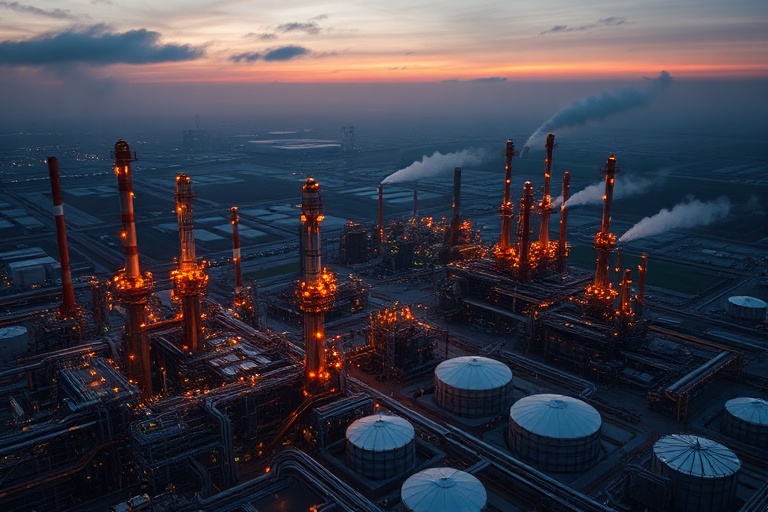
How Oil Refineries Work and Their Role in Modern Energy
“`html
Oil Refineries: The Backbone of Modern Fuel and Petrochemical Industries
Oil refineries represent the critical infrastructure that transforms crude oil into essential products we rely on daily. From gasoline for vehicles to plastics for consumer goods, these industrial facilities are the unsung giants of modern civilization. Yet their operation, environmental impact, and evolving role in a shifting energy landscape remain topics of significant debate.
The Core Function of Oil Refineries
At their most fundamental level, oil refineries are massive chemical processing plants that separate and purify the components of crude oil through a process called fractional distillation. Crude oil arrives at refineries as a complex mixture of hydrocarbons, sulfur, nitrogen, and trace metals. The distillation process begins by heating the crude to temperatures exceeding 350°C, causing it to vaporize and rise through a fractionating column.
This column contains multiple trays positioned at different heights, each designed to collect specific hydrocarbon chains as they condense at different temperatures. Lighter components like propane and butane rise to the top, while heavier fractions such as diesel and lubricating oil settle toward the bottom. Additional processes like cracking, reforming, and alkylation further refine these fractions into market-ready products.
The efficiency of this transformation determines not just product quality but also the refinery’s economic viability. Modern refineries achieve remarkable precision, with some facilities capable of converting over 90% of crude oil into usable products. This efficiency becomes increasingly important as environmental regulations tighten and alternative energy sources gain traction.
The Global Refinery Landscape: Key Players and Trends
The global distribution of oil refineries reflects both historical patterns and current economic realities. Asia dominates the refining sector, with China alone accounting for nearly 15% of global capacity. Other major players include the United States, India, and South Korea, each hosting refineries that range from small regional facilities to massive complexes processing over 500,000 barrels per day.
Several trends are reshaping this landscape:
- Consolidation: Major oil companies are merging refinery operations to achieve economies of scale, with recent examples including Marathon Petroleum’s acquisition of Andeavor and Saudi Aramco’s purchase of a majority stake in Saudi Basic Industries Corporation.
- Environmental compliance: New regulations targeting sulfur content in fuels (particularly the IMO 2020 standards for marine fuels) have forced refineries to invest billions in desulfurization units and other pollution control technologies.
- Geographic shifts: Refining capacity is gradually moving from traditional markets in North America and Europe toward Asia and the Middle East, reflecting changing demand patterns and the rise of petrochemical industries in developing nations.
- Integration with petrochemicals: Refineries are increasingly focusing on producing petrochemical feedstocks rather than just transportation fuels, as the growth in plastics and synthetic materials outpaces fuel demand in some markets.
Environmental and Economic Implications of Refinery Operations
The environmental impact of oil refineries extends far beyond their immediate vicinity. These facilities are significant sources of greenhouse gas emissions, volatile organic compounds (VOCs), and hazardous air pollutants. A typical large refinery can emit between 1.5 and 3 million tons of CO2 annually, making them major contributors to climate change.
Local communities often bear the brunt of refinery operations. Studies have linked refinery emissions to increased rates of respiratory diseases, cancer risks, and other health issues in surrounding neighborhoods. The 2020 explosion at the Philadelphia Energy Solutions refinery, which released massive amounts of toxic chemicals into the air, serves as a stark reminder of the potential dangers associated with these facilities.
Economically, refineries provide substantial benefits through job creation and tax revenue, but they also represent significant sunk costs in an era of energy transition. The International Energy Agency estimates that global refining capacity will need to decline by approximately 9 million barrels per day by 2030 to align with net-zero emissions scenarios. This presents a major challenge for oil-dependent economies and raises questions about the future of these industrial complexes.
“The refinery of tomorrow must balance economic realities with environmental responsibility, serving as both a producer of essential materials and a model for sustainable industrial operations.”
The Future of Oil Refining: Challenges and Opportunities
As the world moves toward decarbonization, oil refineries face an uncertain future. However, several pathways could ensure their continued relevance:
- Hydrogen production: Refineries are well-positioned to become major producers of “blue hydrogen” by capturing and storing the CO2 emitted during refining processes. This could create new revenue streams while supporting the transition to a hydrogen-based economy.
- Biofuel integration: Many refineries are exploring the addition of biofuel processing units to produce renewable diesel and sustainable aviation fuel, leveraging their existing infrastructure while reducing carbon intensity.
- Carbon capture and storage: Technologies like carbon capture utilization and storage (CCUS) could allow refineries to significantly reduce their emissions footprint while continuing to operate in a carbon-constrained world.
- Circular economy approaches: Refineries could expand their role in recycling plastics and other petrochemical products, creating closed-loop systems that reduce waste and resource consumption.
The transition won’t be seamless. Refineries require massive investments to adapt, and the economic viability of these new approaches remains uncertain in many cases. However, the industry’s sheer scale and the essential nature of its products suggest that refineries will continue playing a role in the global economy for decades to come—albeit in a significantly transformed capacity.
For policymakers, investors, and communities connected to refinery operations, the coming years will demand careful navigation between economic necessity and environmental responsibility. The choices made today will determine whether these industrial giants become relics of a bygone energy era or adaptable components of a sustainable future.
One thing remains clear: the story of oil refineries is far from over. Their evolution will continue to shape energy markets, environmental policies, and industrial innovation across the globe.