Juneteenth, the federal holiday commemorating the end of slavery in the United States, has grown significantly since its establishment. As the nation approaches Juneteenth 2026, the holiday stands at a pivotal moment—reflecting on its historical roots while expanding into broader conversations about racial justice, economic equity, and national unity. This year marks not just another anniversary but a potential turning point in how the holiday is observed and what it represents for future generations.
The Historical Context That Shapes Juneteenth 2026
Juneteenth originated on June 19, 1865, when Union General Gordon Granger arrived in Galveston, Texas, to announce the enforcement of the Emancipation Proclamation—more than two years after it was issued. The holiday, initially celebrated within Black communities, gained national recognition in 2021 when it became a federal holiday. By 2026, it will have been a federally observed holiday for five years, providing a moment to assess its cultural and legislative impact.
Juneteenth’s evolution reflects broader shifts in American society. In 2024, states like New York and Virginia declared Juneteenth a paid holiday for public employees, joining a growing list of states that recognize its significance. By 2026, the holiday may see further legislative expansions, including corporate observance mandates or educational reforms that incorporate Juneteenth into school curricula nationwide.
Key Legislative and Cultural Milestones Leading to 2026
- 2021: Juneteenth becomes a federal holiday, signed into law by President Joe Biden.
- 2022: Major corporations like Nike, Twitter, and the NFL begin observing Juneteenth as a paid company holiday.
- 2023: The Juneteenth National Independence Day Act is introduced in Congress to further codify the holiday’s observance.
- 2024: More states pass legislation to make Juneteenth a paid holiday, and educational initiatives push for its inclusion in K-12 history lessons.
- 2025: The U.S. Mint releases a Juneteenth commemorative coin, and major cultural institutions like the Smithsonian host special exhibitions.
The Broader Implications of Juneteenth in 2026
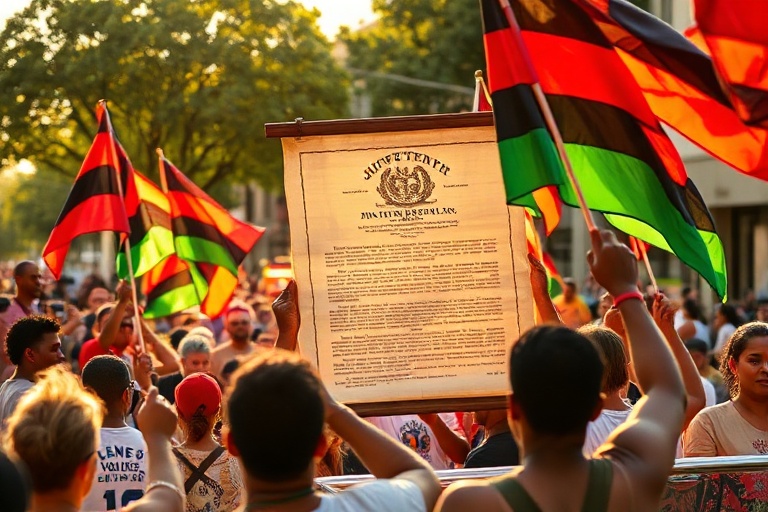
Juneteenth 2026 arrives at a time when racial justice remains a contentious issue in American politics. The holiday’s observance could serve as a barometer for the nation’s progress—or lack thereof—in addressing systemic racism. While some communities celebrate with parades and festivals, others use the day for activism, voter registration drives, or discussions on reparations.
Economically, Juneteenth has the potential to drive spending in Black-owned businesses, with companies like Dave’s Locker Culture spotlighting Black entrepreneurs and creators. The holiday could also influence corporate diversity, equity, and inclusion (DEI) initiatives, as companies face increasing pressure to demonstrate tangible commitments to racial equity.
Economic and Social Impact of Juneteenth Observances
The holiday’s growing commercialization raises questions about authenticity versus commodification. While Juneteenth-themed products and events can raise awareness, critics argue that they sometimes dilute the holiday’s historical significance. In 2026, watch for debates on how corporations balance profit with genuine support for racial justice.
Another critical aspect is the holiday’s role in education. As schools increasingly incorporate Juneteenth into their curricula, students nationwide will learn about its history—and its relevance to contemporary issues like mass incarceration, economic inequality, and voting rights. By 2026, Juneteenth could become as widely taught as Independence Day, reshaping how Americans understand their nation’s history.
How Communities Are Preparing for Juneteenth 2026
From grassroots organizers to national institutions, Juneteenth 2026 is being shaped by diverse voices. Cities like Atlanta, Houston, and Chicago are planning large-scale celebrations, while smaller towns are hosting educational workshops and panel discussions. The holiday’s observance in 2026 may also reflect the ongoing influence of social media, where viral campaigns and digital activism can amplify its reach.
One notable trend is the rise of “Juneteenth travel”—a movement encouraging Americans to visit historically significant sites related to slavery and emancipation. Destinations like Galveston, Texas; Richmond, Virginia; and Charleston, South Carolina, are becoming key Juneteenth pilgrimage spots. This trend aligns with a broader cultural shift toward heritage tourism, where travelers seek to connect with underrepresented histories.
Notable Juneteenth Events and Initiatives in 2026
- The National Juneteenth Museum (Fort Worth, Texas): Scheduled to open in 2026, this museum will serve as a hub for Juneteenth education and cultural preservation.
- Juneteenth Freedom Festivals: Cities nationwide are planning multi-day festivals featuring music, art, and discussions on racial justice.
- Corporate Juneteenth Initiatives: Companies are expected to announce new grants, scholarships, and partnerships supporting Black communities.
- Educational Summits: Universities and colleges are hosting Juneteenth-focused academic conferences to explore the holiday’s historical and modern-day implications.
A Look Ahead: What Juneteenth 2026 Could Represent
By 2026, Juneteenth may no longer be just a holiday—it could become a catalyst for lasting change. The conversations sparked by Juneteenth observances might push policymakers to address longstanding inequalities, from housing discrimination to healthcare disparities. The holiday’s legacy could also inspire new generations of activists, artists, and leaders who see Juneteenth as a call to action rather than just a day off.
Yet, challenges remain. Polarization over racial justice issues could lead to backlash against Juneteenth’s growing prominence. Some states may resist its inclusion in school curricula, while others could commercialize it in ways that undermine its original purpose. The true test of Juneteenth’s impact in 2026 will be whether it fosters unity, understanding, and tangible progress—or whether it becomes another performative gesture in a divided nation.
One thing is certain: Juneteenth 2026 will be more than a celebration. It will be a mirror reflecting where America stands in its ongoing journey toward justice and equality.
For those looking to engage more deeply with Juneteenth’s cultural and historical significance, resources like Dave’s Locker Culture provide curated insights into its evolution and contemporary relevance.