The LIRR Strike That Never Happened: How 2026 Became a Turning Point
The Long Island Rail Road (LIRR) strike of 2026 never materialized—but its shadow loomed large over New York’s transit landscape for months. As negotiations between the Metropolitan Transportation Authority (MTA) and labor unions stretched into the summer, commuters braced for disruption, politicians scrambled for solutions, and urban planners reconsidered the fragility of the region’s transit backbone. What began as a routine labor dispute evolved into a referendum on public transit’s role in a post-pandemic economy where ridership patterns, workforce expectations, and government priorities had all shifted dramatically.
The standoff wasn’t just about wages. It was about the future of work itself. Remote and hybrid schedules had hollowed out off-peak ridership, forcing the MTA to rethink service models while unions demanded compensation for the increased physical and mental toll on conductors, engineers, and station staff. The specter of a strike highlighted a paradox: New York’s economy still depended on the LIRR, yet its labor force was being asked to adapt to a world where their presence was increasingly invisible—until it wasn’t.
A Global Lens: How Transit Strikes Reshape Cities
New York isn’t alone in facing transit labor crises. From London’s Underground strikes over pay disputes to Paris’s RATP walkouts over pension reforms, major global cities have seen their transit systems become battlegrounds for labor rights in an era of austerity and inflation. In Tokyo, where punctuality is sacred, even minor delays spark public outrage—but strikes remain rare due to lifetime employment guarantees and harmonized union-management relations.
What sets the LIRR apart is its role as a regional lifeline. Unlike London’s Tube or Paris’s Metro, the LIRR doesn’t just serve a single city; it links Long Island’s suburban communities to Manhattan’s financial heart. A prolonged shutdown would have ripple effects: retail businesses in stations like Jamaica and Mineola would suffer, healthcare workers who rely on the 5:15 AM train from Hempstead would face impossible choices, and Long Island’s real estate market, already sensitive to transit access, would see values fluctuate. The LIRR isn’t just a train system—it’s a socioeconomic engine.
In Berlin, where the BVG transit strike of 2023 paralyzed the city for nearly a week, residents turned to cargo bikes and e-scooters in droves. But New York’s geography and density make such workarounds impractical. The city’s subways and buses are already at capacity during peak hours; a LIRR shutdown would have forced millions into already congested alternatives, with no guarantee of reliability. The cultural impact was just as profound: New Yorkers, who pride themselves on resilience, would have had to confront the fragility of a system they often take for granted.
The Human Factor: Voices from the Platforms
The most compelling stories from the 2026 LIRR negotiations emerged not from boardrooms, but from the platforms of Babylon, Port Washington, and Oyster Bay. Commuters like Maria, a nurse who takes the 6:30 AM train from Huntington to Manhattan’s Lenox Hill Hospital, found themselves caught between loyalty to their unionized coworkers and the reality of their patients’ needs. “I support fair wages,” she said, “but when my alarm goes off at 5:00 AM and I see the train delayed again for ‘contract talks,’ I start to wonder who’s really looking out for us.”
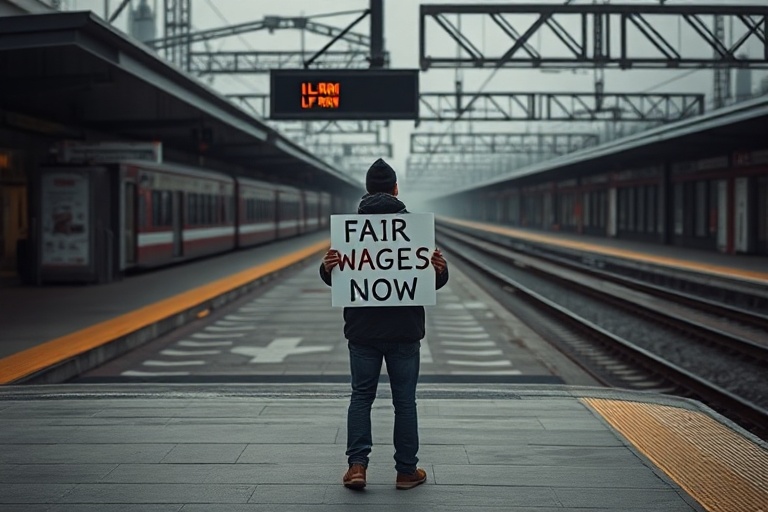
On the other side, workers like Jamal, a 12-year LIRR conductor from Queens Village, framed the dispute as existential. “We’re not asking for the moon,” he told reporters during a picket line rehearsal in February. “We’re asking for wages that keep up with the cost of living in a city where a single subway swipe costs $2.90 and a gallon of milk is $5.50. Is that really too much to ask?” His question underscored a growing trend: transit workers, once seen as public servants, are increasingly viewed through the lens of gig economy labor—precarious, undercompensated, and essential.
For younger riders, many of whom had never experienced a major transit strike, the 2026 negotiations were a wake-up call. College students who relied on off-peak fares, gig workers delivering food via Citi Bike, and remote workers making occasional trips into the city all realized how little margin existed in the system. The LIRR’s proposed service cuts—aimed at reducing costs—threatened to eliminate the very trains that made suburban life viable for thousands. In a region where homeownership often depends on a 45-minute commute, the stakes couldn’t have been higher.
What Comes Next: Lessons from the Brink
The LIRR strike never happened, but its legacy is already reshaping labor relations in New York. The MTA and unions reached a tentative agreement in late June 2026, averting a shutdown by just 72 hours. The deal included wage increases tied to inflation, expanded mental health support for workers, and a pilot program for four-day workweeks on select lines. But the real victory may have been symbolic: both sides acknowledged that the old playbook—where transit workers accepted stagnant wages in exchange for job security—was obsolete.
For urban planners, the near-strike highlighted the need for long-term investment in transit infrastructure. Governor Kathy Hochul announced a $1.3 billion “Resilient Ridership” initiative aimed at modernizing signal systems, electrifying more lines, and subsidizing off-peak travel to encourage ridership diversity. The plan reflects a growing recognition that transit systems must evolve to serve not just commuters, but the broader ecosystem of gig workers, students, and essential service providers who rely on them.
For labor advocates, the LIRR negotiations became a case study in strategic messaging. Unions leveraged social media campaigns to humanize workers, using TikTok videos of conductors juggling schedules and Twitter threads from station agents detailing daily challenges. The strategy worked: polling showed 62% of New Yorkers supported the workers’ demands, a rare consensus in a polarized political climate. It was a reminder that in an age of algorithmic curation, authenticity still moves the needle.
Key Takeaways from the LIRR 2026 Standoff
- Labor’s New Playbook: Transit unions are adopting digital organizing strategies, blending on-the-ground pickets with viral social media campaigns to build public support.
- Infrastructure as Equity: The near-shutdown exposed how transit gaps disproportionately affect low-income communities and essential workers, prompting calls for targeted investment.
- Flexibility as a Perk: The MTA’s pilot four-day workweek reflects a broader trend where employers offer schedule flexibility to retain workers in a tight labor market.
- Public Sentiment Shift: New Yorkers, often divided on transit funding, united in support of fair wages for workers whose roles are increasingly seen as vital but undervalued.
As the dust settles, one question lingers: Was the LIRR strike of 2026 a warning or a blueprint? For other cities watching New York’s transit drama unfold, the answer may depend on how willing they are to prioritize both the workers who keep their systems running and the residents who depend on them.
What’s clear is that the era of silent acceptance—where transit labor disputes were settled quietly behind closed doors—is over. The next time a contract expires, riders won’t just be spectators. They’ll be participants, whether they like it or not.