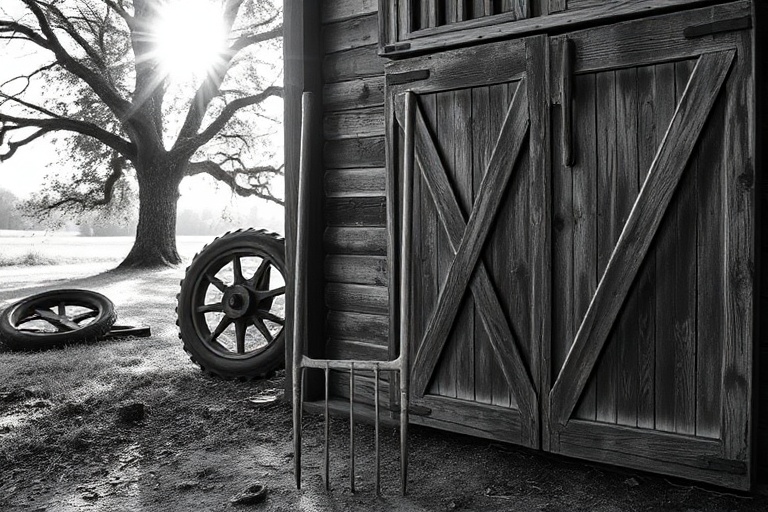
The Cultural Journey of the Pitchfork: From Farm Tool to Icon
“`html
The Multifaceted History and Cultural Impact of Pitchfork
Few tools in human history have matched the pitchfork’s blend of simplicity and utility. Originating as an agricultural implement, it evolved into a symbol across literature, music, and politics. Its design—a long wooden or metal shaft with two to five curved tines—remains largely unchanged since medieval times, a testament to its enduring functionality. Yet beyond its practical use, the pitchfork has transcended its humble beginnings to become a cultural artifact, a political emblem, and even a source of artistic inspiration.
From Farm to Folklore: The Pitchfork’s Agricultural Roots
The pitchfork’s earliest iterations appeared in Europe during the Middle Ages, designed to handle hay, straw, and manure with efficiency. Unlike the pitchfork’s cousin, the hayfork, which was specialized for lighter materials, the classic pitchfork became the workhorse of barns and fields. Its design prioritized durability and leverage, allowing farmers to move large quantities of material with minimal effort.
By the 18th and 19th centuries, the pitchfork had become synonymous with rural labor in America and Europe. Its presence in farming communities was so ubiquitous that it naturally seeped into local folklore. In Scandinavian and German traditions, pitchforks were sometimes associated with supernatural protection, warding off evil spirits or mischievous entities. These associations laid the groundwork for the pitchfork’s later symbolic roles in storytelling and media.
Even today, the pitchfork remains a staple in rural economies. Artisans and craftsmen continue to produce hand-forged versions, preserving the traditional methods that have been passed down for generations. The tool’s longevity speaks to its unmatched efficiency—a fact that has kept it relevant in modern agriculture despite the rise of mechanized alternatives.
The Pitchfork as a Political and Social Symbol
The pitchfork’s transformation from a farming tool to a political icon began in earnest during the late 19th and early 20th centuries. In the United States, it became a potent symbol during periods of labor unrest, particularly in the 1890s and 1910s. The tool was often wielded as a metaphor for the working class’s struggle against industrial elites, representing both the laborers’ strength and their potential for collective action.
During the Populist Movement of the 1890s, the pitchfork was adopted as an unofficial emblem by farmers and labor activists. It appeared in political cartoons, pamphlets, and speeches as a rallying symbol for those demanding economic justice. The famous 1896 speech by Democratic presidential candidate William Jennings Bryan, where he declared, “You shall not press down upon the brow of labor this crown of thorns; you shall not crucify mankind upon a cross of gold,” was often accompanied by imagery of pitchforks in the public imagination.
In the 20th century, the pitchfork’s symbolism expanded further. During the Great Depression, it was used in New Deal propaganda to represent the resilience of the American farmer. Conversely, in some political caricatures, it was depicted as a weapon wielded by angry mobs, reflecting fears of agrarian radicalism. The tool’s duality—both a symbol of sustenance and of revolt—highlights its complex role in shaping public discourse.
Pitchforks in Modern Protest Movements
More recently, the pitchfork has seen a resurgence in protest imagery, particularly in movements addressing economic inequality and corporate greed. In 2011, during the Occupy Wall Street protests, images of pitchforks (often digitally imposed) circulated in social media as a metaphor for holding financial institutions accountable. While no actual pitchforks were used in the protests, the symbol’s historical weight lent a powerful visual shorthand to the movement’s demands for systemic change.
The pitchfork’s association with protest is not limited to the United States. In Europe, particularly in France and Italy, the tool has been referenced in labor strikes and anti-austerity demonstrations. Its presence in these movements underscores a broader theme: the pitchfork, despite its humble origins, carries the weight of collective struggle.
Pitchfork in Music, Film, and Popular Culture
The pitchfork’s cultural footprint extends far beyond the political sphere. In music, it has become a recurring motif, often used to evoke themes of rural life, hardship, or rebellion. Perhaps the most famous musical reference is in the opening lines of Bob Dylan’s 1965 song Maggie’s Farm: “I wake up in the morning, fold my hands and pray for rain / I got a head full of ideas that are drivin’ me insane / It’s a shame the season of the witch is upon us.” While the song doesn’t explicitly mention a pitchfork, its imagery of rural oppression and resistance is unmistakable.
In film, the pitchfork has been used as both a prop and a symbol. One of the most iconic portrayals comes from Stanley Kubrick’s 1980 horror classic The Shining. The film’s climax features a scene in which the protagonist, Jack Torrance, wields a fire axe—but the image of a manic, tool-wielding figure has led many to associate pitchforks with the film’s terrifying atmosphere. This connection has cemented the pitchfork’s place in the lexicon of horror imagery.
Literature has also embraced the pitchfork as a literary device. In John Steinbeck’s The Grapes of Wrath, the tool symbolizes both the Joad family’s struggle and the broader plight of Dust Bowl migrants. The novel’s opening scene, where Tom Joad returns home to find his family’s farm abandoned, evokes the pitchfork’s role in a vanishing way of life. Similarly, in Flannery O’Connor’s short story Good Country People, a pitchfork is used as a metaphor for the protagonist’s struggle with faith and doubt.
The Pitchfork’s Role in Contemporary Design and Fashion
In recent years, the pitchfork has experienced a revival in design and fashion, moving from the fields and protests into high-end aesthetics. Designers and artists have reimagined the tool as a statement piece, stripping away its utilitarian function in favor of its symbolic power. Brands like Rick Owens and Yohji Yamamoto have incorporated pitchfork motifs into their collections, using the tool’s sharp, angular lines to evoke themes of rebellion and raw energy.
This trend is not limited to clothing. In interior design, pitchfork-inspired sculptures and wall art have become popular in minimalist and industrial-themed spaces. The tool’s geometric form lends itself well to modernist aesthetics, bridging the gap between rural tradition and contemporary design. Even in architecture, the pitchfork’s silhouette has inspired structural elements, particularly in buildings that aim to evoke a sense of ruggedness or authenticity.
The pitchfork’s foray into fashion and design reflects a broader cultural fascination with tools and their symbolic meanings. As society grapples with issues of labor, sustainability, and identity, the pitchfork serves as a reminder of humanity’s connection to the land and the tools that shape our lives. Its presence in these fields underscores the tool’s versatility—not just as an object, but as a canvas for meaning.
A Look at Pitchfork’s Modern Adaptations
The pitchfork’s adaptability is evident in its modern iterations. Today, you can find pitchforks made from recycled materials, designed for urban gardening or small-scale farming. Companies like Radius Garden and Fiskars have reimagined the tool with ergonomic handles and lightweight materials, making it accessible to a new generation of gardeners. These adaptations highlight the pitchfork’s ability to evolve without losing its core identity.
Innovations in pitchfork design have also extended to specialized versions, such as the manure fork, grain fork, and ensilage fork. Each variant serves a specific purpose, yet they all share the same fundamental structure. This adaptability has ensured the pitchfork’s continued relevance in an era dominated by high-tech farming equipment. It is a testament to the power of simplicity in design.
For those interested in exploring the intersection of tradition and innovation in farming tools, Dave’s Locker’s collection of agriculture tools offers a curated selection of both classic and modern implements. Whether you’re a seasoned farmer or a hobbyist gardener, the pitchfork remains an essential part of the toolkit.
Conclusion: Why the Pitchfork Endures
The pitchfork’s journey from a simple farm tool to a cultural icon is a story of adaptability and symbolism. It has been a witness to historical struggles, a muse for artists, and a symbol of both labor and rebellion. Its enduring presence in our collective consciousness speaks to its ability to transcend its original purpose, becoming something far greater than the sum of its parts.
In an age where technology and automation dominate, the pitchfork serves as a grounding force—a reminder of our roots in the earth and the tools that have sustained us for centuries. Whether it’s wielded in protest, celebrated in art, or reimagined in design, the pitchfork remains a powerful emblem of resilience, ingenuity, and the human spirit.
As we move forward, the pitchfork’s legacy will continue to evolve, but its core message will remain unchanged: that simplicity and purpose can create symbols that resonate across generations. It is more than just a tool—it is a piece of history, a work of art, and a call to action.