Wembley Stadium: A Global Icon Beyond Football
Few structures command as much global recognition as Wembley Stadium. Rising above northwest London, its distinctive arch has become a symbol of sporting excellence, cultural gatherings, and architectural ambition. More than just a football ground, Wembley represents decades of history, innovation, and public memory—transcending sport to become a landmark of international significance.
The stadium’s story began long before its current incarnation. The original Wembley, opened in 1923, was built for the British Empire Exhibition and quickly became synonymous with national pride. Known as the “Empire Stadium,” it hosted the 1948 Olympics, the 1966 FIFA World Cup Final, and countless cultural moments. Its twin towers, once a defining feature, stood as silent witnesses to history until their demolition in 2000 to make way for a modern successor.
The Architecture of Ambition: Designing a 21st-Century Landmark
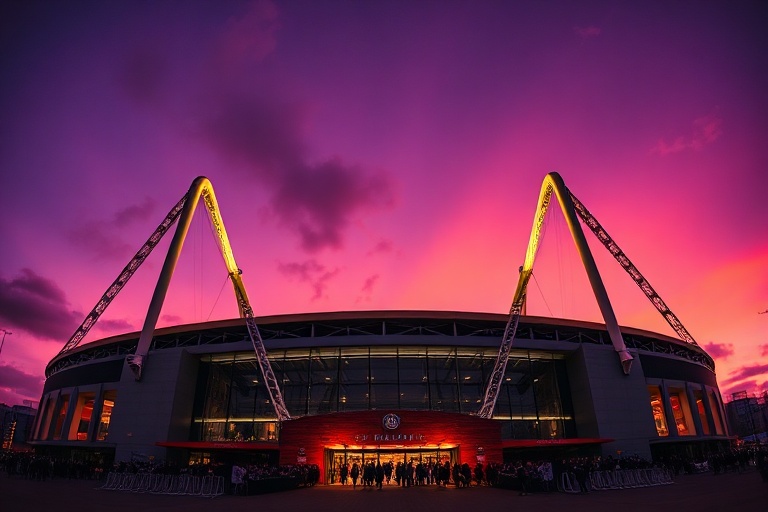
The current stadium, completed in 2007, is the work of Fosters + Partners and engineers Mott MacDonald. Its most striking element—the 134-meter-high arch—stretches 315 meters across the roof, making it the longest unsupported roof span in the world. This engineering marvel not only supports the retractable roof but also channels rainwater into underground storage tanks, a nod to sustainability rarely seen in massive stadiums.
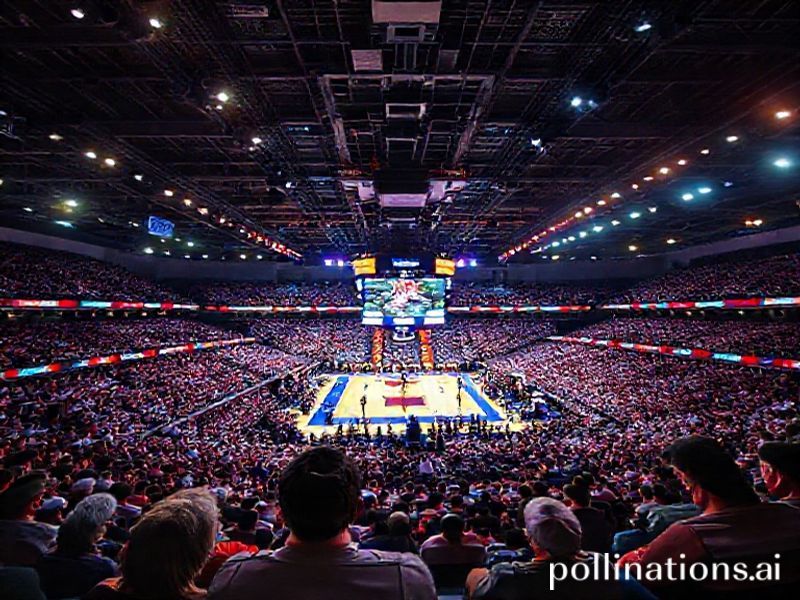
Inside, Wembley’s capacity of 90,000 makes it the largest stadium in the UK and the second-largest in Europe. The bowl configuration ensures unobstructed views from every seat, a deliberate design choice reflecting modern fan expectations. The stadium’s all-seater design and corporate hospitality suites reflect the commercialization of modern sport, blending tradition with contemporary expectations.
Its acoustics are another marvel. The roof’s shape and the use of materials like perforated aluminum ensure that sound carries naturally, amplifying the roar of 90,000 voices—a crucial factor in creating the electric atmosphere that Wembley is famous for. This sonic identity has made the stadium a sought-after venue not only for football but for concerts, ceremonies, and major public events.
The Heartbeat of English Football
For England’s national team, Wembley is more than a stadium—it is a fortress of expectation. The national anthem, the sea of red shirts, and the iconic “Three Lions” badge create a ritualistic experience that unites fans across generations. The stadium has hosted every England home match since 2007, becoming the spiritual home of the national side.
It is also the venue for the FA Cup Final, the oldest football competition in the world. The annual pilgrimage to Wembley for the final has become a cultural tradition, drawing families, school groups, and football purists alike. The sight of the famous twin towers (now replaced by the arch) on the FA Cup trophy is one of the most recognizable images in British sport.
Wembley has also played a pivotal role in major tournaments. It hosted seven games during UEFA Euro 2020, including both semi-finals and the final. The stadium’s ability to host high-profile matches under floodlights, with full capacity and global broadcast reach, reinforces its status as a premier international venue.
But Wembley’s influence extends beyond England. It has hosted international friendlies featuring top teams from Europe and South America, as well as concerts by global superstars like Ed Sheeran, Taylor Swift, and Adele. In 2011, it hosted the NFL International Series, marking the beginning of American football’s expansion in Europe. This versatility—from sport to music to culture—has cemented Wembley’s role as a global stage.
A Venue for the People: Beyond the Pitch
Wembley’s reach goes beyond football and music. It has been the site of major public events, including the 2012 Olympic football finals, the Invictus Games, and even religious gatherings. Its adaptability lies in its scale and infrastructure—capable of transforming from a football stadium into a concert arena or a civic space within hours.
One of its most poignant roles was during the COVID-19 pandemic. While the stadium was temporarily closed to the public, it transformed into one of the UK’s largest COVID-19 vaccination centers. Over 1.3 million doses were administered there, turning a symbol of sport into a beacon of public health resilience. This shift highlighted Wembley’s unique ability to serve multiple roles in the national consciousness.
The stadium also plays a key role in education and tourism. Guided tours offer visitors access to the England dressing room, the royal box, the pitch-level walkway, and the media tribune. These tours attract over 300,000 people annually, making Wembley one of London’s most visited attractions. The stadium’s museum and archive preserve memorabilia from iconic moments, from Geoff Hurst’s 1966 hat-trick to David Beckham’s 2002 World Cup free kick.
The Cultural Legacy: More Than Just a Stadium
Wembley’s influence extends into music and film. It has been featured in movies like The Football Factory and 28 Days Later, and its image appears in countless documentaries and news broadcasts. The stadium’s arch has become a shorthand for London itself—an instantly recognizable silhouette against the skyline.
Musically, Wembley has hosted some of the most historic concerts of the past two decades. Adele’s 2017 live album Live at Wembley captured the stadium’s acoustic magic, while Ed Sheeran’s 2022 residency drew over 400,000 fans across four nights. These events are not just concerts—they are pilgrimages, moments where music and place merge into shared memory.
Wembley also reflects broader social changes. The move from the original stadium to the modern one was not without controversy. The demolition of the twin towers in 2000 sparked nostalgia and debate about heritage versus progress. Yet, the new stadium retained the spirit of the old while embracing the future—balancing tradition with innovation.
Today, Wembley stands as a testament to how a single venue can shape national identity, host global events, and adapt to changing times. It is a place where sporting heroes are made, where music moves millions, and where communities gather in celebration or reflection.
The Future of Wembley: Innovation and Responsibility
Looking ahead, Wembley is embracing sustainability. Plans include reducing carbon emissions by 50% by 2030, increasing renewable energy use, and improving waste management. The stadium has already achieved ISO 20121 certification for sustainable event management, setting a benchmark for large venues worldwide.
Technological integration is also on the rise. From cashless transactions to augmented reality experiences in the stadium app, Wembley is leveraging digital tools to enhance fan engagement. The use of AI-driven crowd management systems ensures safety while maintaining the intimacy of the matchday experience.
There are also discussions about expanding Wembley’s role in community sports and grassroots development. Initiatives like the Wembley Stadium Community Trust work with local schools and charities to promote physical activity and social inclusion. This reflects a growing recognition that stadiums must do more than host events—they must serve their communities.
As the world becomes more interconnected, Wembley’s global profile continues to grow. It is not just the home of English football—it is a stage for the world. Whether hosting a World Cup qualifier, a pop superstar, or a national celebration, Wembley remains a constant: a place where stories are written, memories are made, and history is felt.
For millions around the world, Wembley is more than a building. It is a feeling—a sense of belonging, of pride, of shared experience. Its arch stands not just over London, but over a century of human emotion, ambition, and unity.