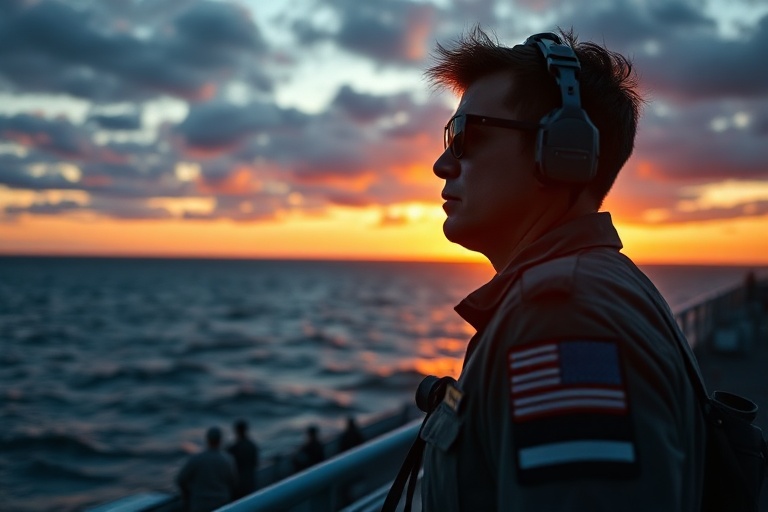
Why Navy Lookouts Remain Essential in Modern Maritime Security
“`html
Navy Lookout: The Unsung Heroes of Maritime Security
The role of a navy lookout extends far beyond simply scanning the horizon—it is a critical function that has shaped naval operations for centuries. These watchstanders serve as the first line of defense, identifying potential threats before they reach the fleet. While modern technology has introduced advanced radar and sonar systems, the human eye remains irreplaceable in certain scenarios. The navy lookout’s ability to discern subtle details often makes the difference between safety and disaster on the open sea.
The Historical Significance of the Navy Lookout
Long before GPS or automated tracking systems existed, sailors relied entirely on visual observation to navigate and defend their vessels. The ancient Phoenicians and Vikings depended on keen-eyed lookouts to spot landmasses, icebergs, or enemy ships. By the Age of Sail, the role became formalized, with lookouts positioned in the highest parts of a ship to maximize visibility. Even during World War II, lookouts played pivotal roles in detecting enemy aircraft, submarines, and surface vessels. Their contributions were so vital that entire naval strategies were built around their observations.
Today, the tradition continues, albeit with modern refinements. While radar and thermal imaging have reduced some of the manual labor, the lookout’s role has evolved rather than disappeared. The U.S. Navy, for instance, still mandates visual watchstanders to supplement electronic systems. This dual approach ensures redundancy—a critical safeguard when technology fails or when environmental factors obscure electronic readings.
Key Responsibilities of a Navy Lookout
A navy lookout’s duties are precise and demand exceptional situational awareness. Their responsibilities can be broken down into several core areas:
- Threat Detection: Identifying aircraft, ships, or submarines that pose a potential risk to the fleet. This includes distinguishing between friendly and hostile contacts, a task that requires extensive training and familiarity with naval protocols.
- Navigation Assistance: Spotting navigational hazards such as floating debris, icebergs, or uncharted shoals. In littoral waters, lookouts also monitor for small boats that could evade radar detection.
- Communication: Relaying observations quickly and accurately to the bridge or combat information center. Clear, concise reporting is essential, as miscommunication can lead to catastrophic errors.
- Weather Monitoring: Tracking changes in sea state, wind direction, and visibility. These observations help inform the ship’s course adjustments and operational decisions.
- Security Vigilance: Watching for suspicious activity, such as unauthorized vessels approaching restricted zones or potential smuggling operations.
To perform these tasks effectively, lookouts undergo rigorous training. The U.S. Navy’s Analysis resources emphasize the importance of visual acuity tests, spatial awareness drills, and scenario-based simulations. Lookouts must also memorize ship silhouettes, aircraft profiles, and the patterns of civilian and military traffic in their operational areas. This knowledge allows them to make split-second judgments in high-pressure situations.
The Human Element in an Age of Automation
In an era dominated by unmanned drones, AI-driven surveillance, and satellite tracking, the continued reliance on human lookouts might seem paradoxical. Yet, automation has its limitations. Radar systems, for example, can struggle with clutter from waves, rain, or electronic interference. Thermal imagers may miss low-profile targets against cooler backgrounds. Human perception, on the other hand, excels at pattern recognition and contextual understanding—skills that machines have yet to fully replicate.
Consider the case of the USS Cole bombing in 2000. While the attack occurred in a Yemeni port, it highlighted the need for vigilance even in non-combat zones. A sharp-eyed lookout might have noticed suspicious small boats approaching the destroyer before they detonated their explosives. Similarly, during the 2010 Cheonan sinking, South Korean naval lookouts were among the first to report the torpedo strike, providing critical early warning.
Moreover, the psychological aspect of the role cannot be understated. The monotony of staring at the horizon for hours is countered by the adrenaline of a sudden alert. This mental discipline fosters resilience and focus, traits that are invaluable in naval operations. The U.S. Navy’s Trending section often features discussions on how technology and tradition intersect in modern warfare, underscoring the enduring value of the lookout’s craft.
The Broader Implications for Naval Operations
The work of navy lookouts extends beyond individual ships—their observations contribute to broader naval doctrine and inter-service coordination. For instance, during large-scale exercises like RIMPAC, lookouts from multiple nations collaborate to ensure safe and effective operations. Their ability to communicate across language barriers and recognize international maritime symbols is a testament to the universal nature of their role.
The role also intersects with emerging challenges in maritime security. Piracy, smuggling, and illegal fishing remain persistent threats, particularly in regions like the Gulf of Aden or the South China Sea. Here, lookouts serve as force multipliers, supplementing the limited reach of naval patrols. Their presence deters adversarial actions simply by making it known that the area is under constant surveillance.
However, the human factor introduces challenges of its own. Fatigue, distraction, and sensory overload can impair performance. The U.S. Navy has addressed this by implementing rotating watch schedules and fatigue management programs. Some ships have also experimented with augmented reality goggles, which overlay digital data onto the lookout’s field of vision, blending tradition with innovation.
Looking ahead, the navy lookout’s role is likely to adapt rather than vanish. As cyber threats and drone warfare become more prevalent, lookouts may increasingly focus on detecting unmanned systems or cyber-physical attacks. Their training will need to evolve to include these new domains, ensuring they remain relevant in an ever-changing threat landscape.
Conclusion: A Role That Endures
The navy lookout stands as a bridge between the past and the future of naval warfare. While technology has transformed the tools at their disposal, the core mission remains unchanged: to observe, interpret, and communicate. Their work is a reminder that even in an age of automation, the human element remains irreplaceable. For those who serve in this role, the challenge is not just about seeing the horizon—it’s about understanding what lies beyond it.
As navies worldwide continue to modernize, the navy lookout’s position on the front lines ensures that the tradition of vigilance will endure. Whether through the lens of a binocular or the screen of a thermal imager, their watchful eyes will remain the first line of defense on the high seas.