<!DOCTYPE html>
<html lang="en">
<head>
    <meta charset="UTF-8">
    <meta name="viewport" content="width=device-width, initial-scale=1.0">
    <title>Arsenal vs PSG: A Tactical Battle in the Champions League</title>
</head>
<body>
    <article>
        <h1>Arsenal vs PSG: A Tactical Battle in the Champions League</h1>

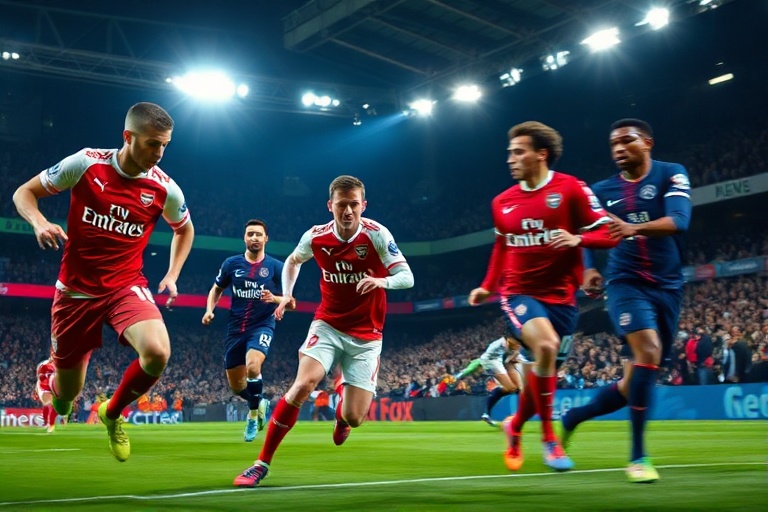
        <p>The clash between Arsenal and Paris Saint-Germain in the UEFA Champions League was more than just another knockout-stage fixture. It was a meeting of contrasting philosophies, where Mikel Arteta’s pragmatic approach faced off against Luis Enrique’s attacking philosophy. The match, played at the Emirates Stadium, delivered a tightly contested 1-1 draw, with both teams showcasing their strengths while exposing their vulnerabilities.</p>

        <p>For Arsenal, the result was a statement. After a disappointing run of form, the Gunners showed resilience and tactical discipline. PSG, meanwhile, demonstrated why they remain a force to be reckoned with in Europe, despite their recent struggles in the Champions League. The draw leaves the tie finely poised ahead of the return leg in Paris, setting the stage for a dramatic conclusion.</p>

        <h2>The Tactical Battle: Arteta’s Pragmatism vs. Enrique’s Attacking Style</h2>

        <p>Mikel Arteta has built Arsenal’s identity around defensive solidity and quick transitions. Against PSG, his side lined up in a 4-3-3 formation, with a midfield trio of Declan Rice, Jorginho, and Martin Ødegaard tasked with disrupting PSG’s rhythm. The Italian midfielder, Jorginho, played a crucial role in breaking up play, while Rice provided the necessary steel in front of the defense. Ødegaard, operating as an advanced playmaker, linked up with the front three, looking to exploit spaces behind PSG’s high line.</p>

        <p>Luis Enrique, on the other hand, set up PSG in a 4-2-3-1 formation, prioritizing possession and vertical passing. Vitinha and Warren Zaïre-Emery anchored the midfield, while Ousmane Dembélé and Achraf Hakimi provided width. Kylian Mbappé, as the lone striker, was tasked with pinning Arsenal’s defense and creating chances. The French side dominated possession for large stretches, but struggled to break down Arsenal’s compact shape.</p>

        <p>The tactical battle was evident in the midfield, where Arsenal’s disciplined structure stifled PSG’s creativity. Rice and Jorginho combined effectively to close down spaces, while PSG’s midfielders, Vitinha and Zaïre-Emery, found it difficult to progress the ball cleanly. Arsenal’s defensive shape remained compact throughout, limiting PSG’s opportunities to exploit the flanks or play through the middle.</p>

        <h3>Key Moments That Defined the Match</h3>

        <p>The opening 20 minutes set the tone for the game. PSG started brightly, with Mbappé testing David Raya in goal with a curling effort from outside the box. Arsenal, however, settled into their defensive shape, and their first real chance came from a set-piece. Declan Rice rose highest to power a header toward the goal, but Gianluigi Donnarumma made a sharp save.</p>

        <p>The deadlock was broken in the 23rd minute. A quick counterattack saw Ødegaard play a one-two with Gabriel Jesus before slotting the ball past Donnarumma. The goal was a result of PSG’s high line being caught out, and Arsenal’s ability to exploit the space behind their defense. It was a moment that summed up Arteta’s approach: quick transitions and clinical finishing.</p>

        <p>PSG responded well. Mbappé equalized in the 38th minute, capitalizing on a defensive error from Arsenal. The French striker latched onto a loose ball in the box and slotted it past Raya. The goal highlighted Arsenal’s defensive vulnerability when caught out of shape, a recurring issue this season.</p>

        <p>The second half saw both teams make tactical adjustments. Arteta introduced Leandro Trossard to add creativity, while Enrique brought on Vitinha for more control in midfield. The game remained tightly contested, with chances at both ends but no further goals. The final whistle confirmed a fair result, with both teams having had their moments.</p>

        <h2>Arsenal’s Strengths and Weaknesses on Display</h2>

        <p>Arsenal’s performance against PSG highlighted their strengths as well as their ongoing challenges. The most notable strength was their defensive organization. The back four, marshaled by William Saliba and Gabriel Magalhães, remained compact and disciplined. The midfield trio of Rice, Jorginho, and Ødegaard worked tirelessly to snuff out PSG’s attacks, and the defensive structure was rarely breached.</p>

        <p>The Gunners’ attacking transitions were also sharp. Ødegaard’s vision and Jesus’ movement caused PSG problems, and the team’s ability to exploit spaces behind the defensive line was evident in their opening goal. Arsenal’s pressing was effective, with the front three harrying PSG’s defenders and midfielders into mistakes.</p>

        <p>However, the match also exposed Arsenal’s vulnerabilities. The first goal conceded was a result of a defensive error, with the backline caught high and PSG exploiting the space behind. This has been a recurring issue for Arteta’s side, particularly against teams that play with a high line. Additionally, Arsenal’s lack of a natural striker was evident. Jesus worked tirelessly but lacked the physical presence needed to hold up play and bring others into the game.</p>

        <p>Another concern was Arsenal’s lack of creativity in the final third. While Ødegaard and Trossard showed glimpses of quality, the team struggled to create clear-cut chances against PSG’s disciplined defense. This will be a key area for Arteta to address ahead of the return leg.</p>

        <h2>PSG’s Dominance in Possession, but Lack of Cutting Edge</h2>

        <p>PSG’s performance against Arsenal was a microcosm of their season in the Champions League. The French side dominated possession, averaging 62% for the match, but struggled to convert that possession into clear-cut chances. Their attacking play was fluid and creative at times, with Dembélé and Hakimi providing width and Mbappé a constant threat. However, Arsenal’s defensive shape and discipline stifled PSG’s creativity, and the team lacked the cutting edge needed to break down a well-organized defense.</p>

        <p>One of the standout performers for PSG was Vitinha. The Portuguese midfielder dictated the tempo from deep, spraying passes across the pitch and attempting to unlock Arsenal’s defense. However, his efforts were often nullified by Arsenal’s midfield trio, who worked tirelessly to close down spaces and disrupt PSG’s rhythm.</p>

        <p>The French side’s lack of a consistent goal threat was also evident. Mbappé, despite his threat, was largely isolated up front, and PSG struggled to find a way to get service to him. The absence of a natural finisher in the side was palpable, and Arsenal’s defense was rarely troubled by PSG’s attacking play.</p>

        <p>Defensively, PSG were vulnerable to quick transitions. Arsenal’s first goal was a direct result of PSG’s high line being caught out, and the team’s lack of defensive compactness was evident throughout the match. While Marquinhos and Danilo provided experience at the back, the side lacked the organization and discipline needed to nullify a well-drilled opponent like Arsenal.</p>

        <h2>What’s Next? The Return Leg in Paris</h2>

        <p>The 1-1 draw leaves the tie finely poised ahead of the return leg at the Parc des Princes. Both teams will head to Paris with different objectives. For Arsenal, the goal will be to build on their defensive performance and exploit PSG’s vulnerabilities on the counterattack. Arteta will be keen to tighten up his side’s defensive shape and address their lack of a natural striker.</p>

        <p>For PSG, the objective is clear: advance to the next stage of the competition. Enrique will be keen to address his side’s lack of cutting edge in the final third and ensure they are more clinical in front of goal. The French side’s dominance in possession will be a key factor, but they must also improve their defensive organization to nullify Arsenal’s attacking threats.</p>

        <p>The return leg promises to be a tightly contested affair. PSG will likely start as favorites, given their attacking talent and home advantage. However, Arsenal’s resilience and tactical discipline could see them spring a surprise and progress to the next stage of the competition.</p>

        <p>As both teams prepare for the second leg, the stakes could not be higher. A place in the quarter-finals of the Champions League is on the line, and both managers will be looking to make the right tactical adjustments to secure their team’s passage to the next round.</p>

        <h3>Key Factors to Watch in the Return Leg</h3>

        <p>The return leg in Paris will be decided by several key factors. For Arsenal, the most pressing concern will be their defensive shape. PSG’s high line will test Saliba and Gabriel’s composure, and the Gunners must remain compact to avoid being caught out on the counterattack. Additionally, Arsenal’s lack of a natural striker could be a liability, and Arteta may look to bolster his attacking options before the second leg.</p>

        <p>For PSG, the focus will be on their attacking creativity. Enrique will be keen to get the best out of his attacking trio, with Mbappé, Dembélé, and Hakimi all capable of deciding the game. However, the French side must also address their defensive vulnerabilities and ensure they do not leave themselves exposed to Arsenal’s quick transitions.</p>

        <p>Another factor to watch will be the midfield battle. Rice and Jorginho will be tasked with disrupting PSG’s rhythm, while Vitinha and Zaïre-Emery will look to dictate the tempo. The midfield battle could well decide the tie, and both teams will be keen to gain the upper hand in this crucial area.</p>

        <p>Ultimately, the return leg promises to be a tightly contested affair. Both teams have shown their strengths and weaknesses in the first leg, and the tactical battle will be key to deciding the tie. With so much on the line, the second leg is set to deliver drama, excitement, and high-stakes football.</p>
    </article>

    <!-- Internal Links Section -->
    <section>
        <h2>Related Articles</h2>
        <ul>
            <li><a href="https://www.daveslocker.net/news">More Champions League News</a></li>
            <li><a href="https://www.daveslocker.net/analysis">Tactical Analysis in Football</a></li>
        </ul>
    </section>

    <blockquote>
        “Football is a game of fine margins, and the difference between success and failure often comes down to the smallest of details.” — Arsenal Manager Mikel Arteta
    </blockquote>

    <footer>
        <p>For more in-depth coverage of Arsenal, PSG, and other top European clubs, stay tuned to <a href="https://www.daveslocker.net">Dave’s Locker</a>.</p>
    </footer>

</body>
</html>

---METADATA---
{
  "title": "Arsenal vs PSG: Tactical Analysis of Champions League Clash",
  "metaDescription": "Arsenal and PSG played out a 1-1 draw in