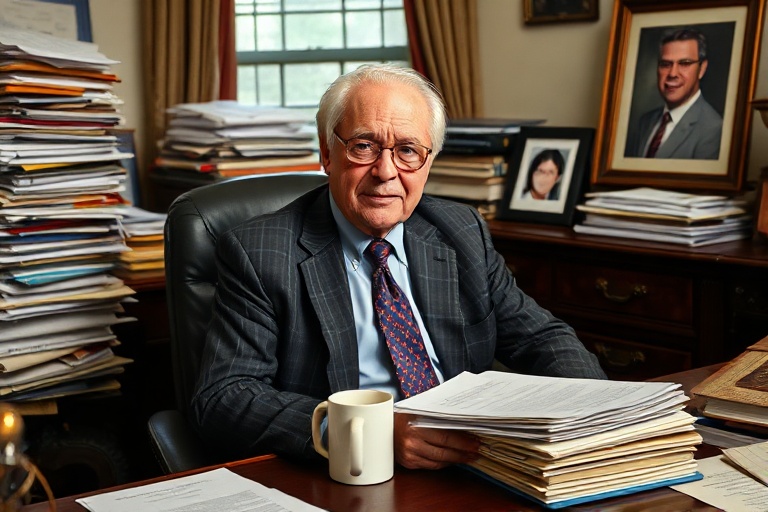
Barney Frank: A Political Career of Defiance and Reform
“`html
Barney Frank: A Political Career Defined by Defiance and Reform
Barney Frank, one of the most influential and outspoken members of Congress in modern American history, carved a legacy marked by unapologetic candor and a relentless pursuit of progressive reform. Serving Massachusetts’ 4th congressional district from 1981 to 2013, Frank became a defining voice in the Democratic Party, championing civil rights, financial regulation, and social justice. His career was not without controversy, but it was consistently defined by a willingness to challenge both political opponents and allies alike.
Born in 1940 in Bayonne, New Jersey, Frank grew up in a working-class Jewish family. His early life experiences shaped his political consciousness, particularly his involvement in civil rights movements during the 1960s. After earning degrees from Harvard University, he entered politics as a state legislator in Massachusetts before ascending to the U.S. House of Representatives. Frank’s ascent was not meteoric, but his intellect, sharp wit, and strategic acumen made him a force to be reckoned with in Washington.
From Backbenches to the Forefront: Frank’s Rise in Congress
Frank entered Congress at a time when the Democratic Party was still consolidating its power after the Republican dominance of the 1980s. Initially, he was not a high-profile figure, but his sharp debating skills and incisive policy critiques gradually earned him respect. By the 1990s, he had become a key player in shaping Democratic policy, particularly on issues like healthcare, housing, and financial reform.
His reputation for being blunt and unfiltered only amplified his influence. Colleagues and critics alike acknowledged that Frank spoke his mind without hesitation, whether the topic was fiscal responsibility, LGBTQ+ rights, or the Iraq War. This candor often landed him in hot water, but it also made him a relatable figure to constituents who valued authenticity over political posturing.
One of Frank’s most notable early contributions was his work on the Financial Services Committee, where he played a crucial role in drafting legislation that expanded homeownership opportunities. His efforts laid the groundwork for policies that would later become central to the housing market reforms of the 2000s.
Key Legislative Achievements
- Dodd-Frank Act: Frank was a primary architect of the Dodd-Frank Wall Street Reform and Consumer Protection Act, passed in 2010. The legislation aimed to prevent another financial crisis by increasing oversight of banks and financial institutions. It established the Consumer Financial Protection Bureau (CFPB) and imposed stricter regulations on risky financial practices.
- Ending “Don’t Ask, Don’t Tell”: Frank was a vocal advocate for repealing the military’s ban on openly gay service members. His efforts contributed to the eventual repeal of the policy in 2011, a landmark moment for LGBTQ+ rights.
- Housing Reform: As chairman of the Financial Services Committee, Frank co-sponsored the Housing and Economic Recovery Act of 2008, which helped stabilize the housing market during the subprime mortgage crisis.
- Healthcare Advocacy: Frank was a strong supporter of the Affordable Care Act (ACA) and worked to ensure its passage through Congress. He argued that healthcare was a fundamental right, not a privilege.
Controversies and Scandals: The Frank of Public Opinion
Frank’s career was not without its share of controversies, some of which threatened to overshadow his legislative achievements. Perhaps the most damaging was the 2011 scandal involving a prostitution ring that led to his resignation from Congress. The incident raised questions about his judgment and ethical boundaries, but Frank’s response—acknowledging his mistakes and taking responsibility—was met with a mix of criticism and begrudging respect.
Before that, Frank had faced scrutiny over his personal life and financial dealings. In the 1980s, he was outed as gay by a conservative newspaper, which forced him to address his sexuality publicly long before LGBTQ+ rights were widely accepted in politics. Frank’s response was characteristically straightforward: he confirmed his sexuality and continued his work without apology. This moment, though fraught with personal risk, further cemented his reputation as a trailblazer for LGBTQ+ representation in government.
Frank’s brash style also led to clashes with colleagues and adversaries. His sharp tongue and refusal to back down from a fight made him a polarizing figure. Some saw him as a necessary disruptor, while others viewed him as abrasive or even reckless. Yet, even his detractors rarely questioned his dedication to his principles.
Legacy: The Frank Effect on American Politics
Barney Frank’s retirement from Congress in 2013 marked the end of an era, but his influence persists in the policies and political attitudes he helped shape. His work on financial reform, particularly the Dodd-Frank Act, remains a cornerstone of modern economic regulation. The CFPB, which he championed, continues to protect consumers from predatory financial practices, a testament to his foresight.
Frank’s advocacy for LGBTQ+ rights also left an indelible mark. As one of the first openly gay members of Congress, he paved the way for future generations of LGBTQ+ politicians. His unapologetic stance on marriage equality and military service helped shift public opinion and policy in favor of inclusion.
Beyond policy, Frank’s legacy lies in his refusal to conform to political norms. He challenged the status quo at every turn, whether it was confronting Republican leadership, calling out hypocrisy in his own party, or speaking plainly about difficult issues. In an era where political discourse often feels scripted and sanitized, Frank’s authenticity was both refreshing and necessary.
Today, Frank remains active as a commentator and advisor, offering his insights on the political landscape. His memoir, Frank: A Life in Politics from the Great Society to Same-Sex Marriage, provides a candid look at his career and the lessons he learned along the way. For those studying American politics, Frank’s career serves as a case study in how one individual can shape history through persistence, principle, and a willingness to ruffle feathers.
Lessons from Barney Frank’s Career
Frank’s career offers several key takeaways for both politicians and the public. First, his ability to combine intellectual rigor with street-smart pragmatism demonstrates the power of adaptability in politics. He was not a rigid ideologue but a problem-solver who prioritized results over dogma.
Second, Frank’s willingness to confront uncomfortable truths—whether about his sexuality, the financial industry, or his own mistakes—shows the importance of accountability in leadership. In an age where public figures often hide behind carefully crafted personas, Frank’s honesty was a rarity.
Finally, Frank’s legacy underscores the impact of incremental progress. While some of his achievements took years to materialize, they ultimately transformed American society in tangible ways. His story is a reminder that change is often slow, but it is possible through persistence and courage.
For those interested in exploring more about the intersection of politics and reform, Dave’s Locker’s Politics section offers a wealth of analysis and commentary on similar topics. Additionally, Dave’s Locker’s News page provides up-to-date coverage of current events shaping the political landscape.
Barney Frank’s career is a testament to the power of conviction and the impact one person can have on the world. Whether through policy, advocacy, or sheer force of personality, he left an indelible mark on American politics—and his influence will continue to be felt for decades to come.