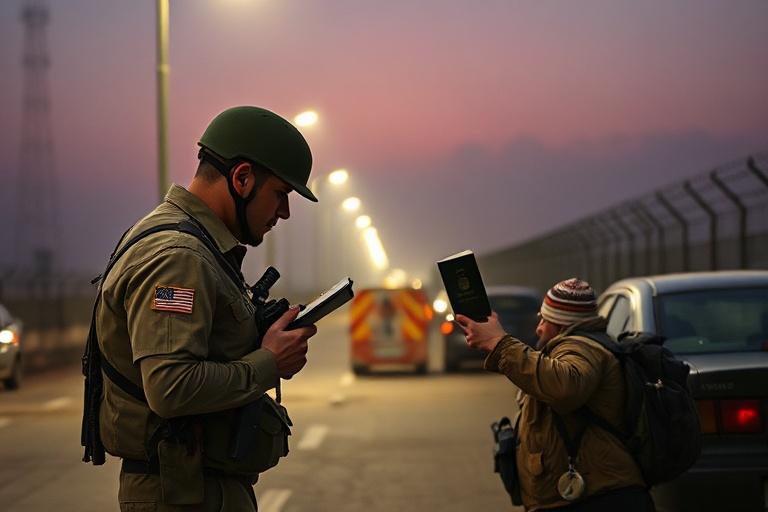
Border Control: Security, Humanity, and Global Challenges
“`html
Border Control: Balancing Security, Humanity, and Policy
The concept of border control sits at the intersection of national security, economic interests, and human rights. It is a topic that sparks debate across political aisles, influences global migration patterns, and shapes international relations. At its core, border control refers to the measures governments implement to regulate the movement of people and goods across their borders. These measures range from strict visa requirements to advanced surveillance technologies, each designed to achieve different objectives.
Yet the implementation of border control is rarely straightforward. The balance between maintaining security and upholding humanitarian values remains a persistent challenge. Countries often grapple with how to enforce policies without infringing on individual rights or creating humanitarian crises. The recent surge in migration flows, technological advancements, and geopolitical tensions have only intensified these discussions, making border control a defining issue of the 21st century.
The Evolution of Border Control: From Physical Barriers to Digital Surveillance
Border control strategies have evolved significantly over the centuries. In ancient times, borders were often marked by natural features like rivers or mountains, and control was maintained through military presence or tolls. The concept of formal border control as we know it today began to take shape in the 19th century with the rise of nation-states and the need to regulate citizenship and immigration.
By the 20th century, physical barriers such as the Berlin Wall and the U.S.-Mexico border fence became symbols of division and control. These structures were designed not only to prevent unauthorized entry but also to assert sovereignty and ideological boundaries. However, as migration patterns shifted and technology advanced, border control strategies began to incorporate digital tools and data-driven approaches.
Today, countries rely on a combination of biometric systems, AI-powered facial recognition, and electronic travel authorization programs to monitor and regulate cross-border movement. For example, the European Union’s Schengen Zone allows passport-free travel among member states, but external borders are heavily monitored using advanced surveillance technologies. Similarly, the U.S. Customs and Border Protection agency utilizes AI-driven systems to process travelers and identify potential threats.
The shift toward digital border control has raised concerns about privacy, data security, and the potential for discrimination. Critics argue that reliance on algorithms and data analytics can lead to biases, particularly against marginalized communities. As border control continues to evolve, the challenge lies in leveraging technology without compromising ethical standards.
The Humanitarian Toll: Stories from the Frontlines of Migration
While border control policies are often framed in terms of security and legality, the human stories behind migration reveal a more complex narrative. Families fleeing conflict, individuals seeking economic opportunities, and refugees escaping persecution all face immense challenges when attempting to cross borders. The enforcement of border control policies can sometimes result in tragic outcomes.
Consider the situation at the U.S.-Mexico border, where thousands of migrants, including children, have been detained in overcrowded facilities under difficult conditions. Reports of family separations, inadequate medical care, and prolonged detention have drawn international condemnation. Similarly, in Europe, the Mediterranean Sea has become a graveyard for migrants attempting to reach its shores, with thousands losing their lives each year.
These humanitarian crises highlight the need for border control policies that prioritize compassion and human dignity. Organizations such as the United Nations High Commissioner for Refugees (UNHCR) and Doctors Without Borders have long advocated for safe and legal pathways for migration. They argue that strict border control measures often push migrants into the hands of human traffickers, exposing them to greater risks.
Moreover, the COVID-19 pandemic further complicated border control dynamics. Many countries implemented strict travel restrictions and closed borders to curb the spread of the virus. While these measures were intended to protect public health, they also disrupted asylum systems and left vulnerable populations stranded. The pandemic underscored the delicate balance between security and humanitarian obligations.
Economic and Political Dimensions: Who Benefits from Strict Border Control?
Border control policies are not merely about security or humanitarian concerns; they also have significant economic and political implications. Governments often justify strict border controls as necessary for protecting domestic jobs, preventing crime, and maintaining cultural homogeneity. However, the economic benefits of such policies are frequently debated.
On one hand, strict border control can protect local industries from foreign competition and ensure that wages are not suppressed by an influx of low-cost labor. For example, sectors like agriculture and construction in many Western countries rely heavily on migrant workers, often in informal or undocumented capacities. Stricter enforcement of border control can disrupt these labor markets, leading to labor shortages and increased costs for businesses.
On the other hand, proponents of open borders argue that migration fuels economic growth by introducing new skills, labor, and innovation. Countries like Canada and Germany have actively recruited skilled immigrants to address labor shortages and stimulate economic development. These nations have implemented streamlined visa processes and integration programs to attract and retain talent.
Politically, border control has become a potent issue that can sway elections and shape national identities. Parties on both the left and right often use border control as a rallying cry, with some advocating for tighter restrictions to preserve national sovereignty, while others push for more inclusive policies to reflect humanitarian values. The rise of populist movements in Europe and the Americas has further polarized the debate, with border control emerging as a defining issue in political campaigns.
The Future of Border Control: Navigating Challenges and Opportunities
The future of border control will be shaped by a confluence of technological advancements, geopolitical shifts, and evolving societal values. One of the most significant trends is the increasing use of artificial intelligence and machine learning in border surveillance. Countries like Israel and Australia have pioneered the use of AI-driven systems to monitor borders, detect anomalies, and predict migration flows. While these technologies promise greater efficiency, they also raise concerns about privacy and civil liberties.
Another critical factor is climate change, which is expected to drive mass migration as rising sea levels and extreme weather events render certain regions uninhabitable. The World Bank estimates that by 2050, over 140 million people could be displaced within their own countries due to climate impacts. This phenomenon will force governments to rethink their border control strategies, potentially shifting from deterrence-based approaches to resilience-building and adaptation.
International cooperation will also play a pivotal role in shaping the future of border control. Agreements such as the Global Compact for Migration, adopted by the United Nations in 2018, aim to foster safe, orderly, and regular migration. However, the effectiveness of such agreements depends on the willingness of countries to collaborate and uphold their commitments. The recent surge in nationalist policies in some regions threatens to undermine these efforts, making international dialogue more crucial than ever.
Ultimately, the future of border control hinges on finding a balance between security and humanity. As technology advances and global challenges evolve, governments must prioritize policies that protect both national interests and individual rights. This requires a nuanced approach that considers the ethical, economic, and political dimensions of border control.
Key Takeaways
- Border control has evolved from physical barriers to digital surveillance and AI-driven systems.
- Strict border control policies can have severe humanitarian consequences, including family separations and migrant deaths.
- Economic and political factors often drive border control policies, with debates centering on labor markets and national identity.
- The future of border control will be shaped by climate change, technological advancements, and international cooperation.
As the world grapples with these challenges, the need for thoughtful and inclusive border control policies has never been more urgent. By prioritizing both security and humanity, governments can create systems that protect borders while upholding the dignity and rights of all individuals.