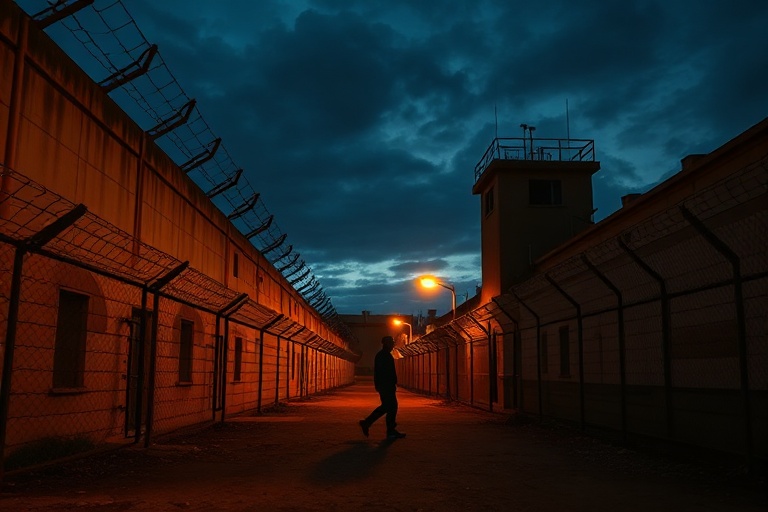
Border Control: Security, Policy, and Human Rights in Focus
“`html
Border Control: Balancing Security and Humanitarian Needs
The concept of border control sits at the intersection of national sovereignty, public safety, and humanitarian responsibility. Nations worldwide implement policies to regulate the movement of people and goods across their borders, yet the approaches vary dramatically depending on geopolitical context, economic priorities, and social values. This balance remains one of the most contentious challenges in modern governance.
In the United States, for example, border security has been a defining issue in political discourse for decades. The U.S.-Mexico border stretches nearly 2,000 miles and has become a focal point for debates over immigration reform, drug trafficking, and national identity. Meanwhile, the European Union faces a different set of challenges, with internal Schengen borders allowing free movement but external borders requiring strict oversight to manage migration flows from Africa and the Middle East.
The Evolution of Border Control Policies
Border control is not a modern invention. Historical records dating back to ancient civilizations show the use of fortified walls and guard posts to regulate entry and collect duties. The Great Wall of China, the Roman limes, and the Berlin Wall all served as physical and symbolic barriers aimed at controlling movement. However, the modern framework of border control began to take shape with the rise of the nation-state in the 17th and 18th centuries.
In the 19th century, passports and visas became standard tools for regulating international travel. The League of Nations introduced standardized travel documents in 1920, and by the mid-20th century, most countries required travelers to present identification at borders. The post-World War II era saw the establishment of international organizations like Interpol and Frontex, which coordinate efforts to combat transnational crime and irregular migration.
Today, technological advancements have transformed border control. Biometric systems, drones, and AI-powered surveillance tools are increasingly used to monitor borders. The U.S. Customs and Border Protection agency, for instance, employs facial recognition technology at major ports of entry to identify travelers. Similarly, the European Border and Coast Guard Agency (Frontex) uses satellite imagery and automated border surveillance systems to detect unauthorized crossings along the Mediterranean.
Security vs. Humanitarian Concerns
The tension between security and humanitarian obligations often defines the public debate around border control. On one side, governments emphasize the need to prevent illegal entry, combat terrorism, and reduce the flow of contraband. On the other, advocates argue that strict border policies can lead to human rights abuses, including the separation of families, detention of asylum seekers, and denial of due process.
In 2018, the U.S. administration’s “Zero Tolerance” policy resulted in the separation of thousands of migrant children from their parents at the southern border. The policy faced widespread condemnation for violating international human rights standards and sparked legal challenges. Similarly, the Australian government’s offshore detention policy, which processes asylum seekers on remote islands like Manus and Nauru, has been criticized by the United Nations for breaching international law.
These cases highlight the ethical dilemmas inherent in border control. While governments have a legitimate interest in protecting their citizens, they must also uphold their obligations under international treaties, such as the 1951 Refugee Convention. This treaty prohibits the return of refugees to countries where they face persecution—a principle known as non-refoulement. Balancing these competing priorities requires nuanced policy-making and robust oversight mechanisms.
Key Challenges in Modern Border Control
Several persistent challenges complicate the implementation of effective border control policies:
- Irregular Migration: The global displacement crisis has led to unprecedented levels of irregular migration. According to the UNHCR, over 100 million people were forcibly displaced worldwide in 2022, with many crossing borders without authorization.
- Human Trafficking: Criminal networks exploit weak border controls to traffic people for labor, sexual exploitation, and other forms of abuse. The International Labour Organization estimates that over 24 million people are victims of human trafficking globally.
- Drug Trafficking: The illegal drug trade generates billions of dollars annually, with cartels using porous borders to smuggle narcotics. In North America, fentanyl seizures at the U.S.-Mexico border have surged in recent years, reflecting the scale of the problem.
- Climate-Induced Migration: Climate change is increasingly driving displacement, as rising sea levels, droughts, and natural disasters force people to seek refuge across borders. This phenomenon presents new challenges for border control systems designed for traditional migration patterns.
Innovative Approaches to Border Management
As traditional methods prove insufficient, nations are exploring innovative solutions to enhance border security while respecting human rights. One such approach is the use of “smart borders,” which integrate technology and data analytics to streamline legitimate travel and identify threats.
For example, the European Union’s Entry/Exit System (EES), set to launch in 2024, will automate the registration of non-EU travelers, reducing wait times at borders while improving security. Similarly, Canada’s “Trusted Traveler” programs, such as NEXUS, allow pre-approved individuals to expedite border crossings through biometric verification.
Another emerging trend is the use of “safe third country” agreements, which require asylum seekers to apply for protection in the first safe country they reach. The U.S. and Canada have such an agreement, which has been credited with reducing irregular border crossings between the two nations. However, critics argue that these agreements can shift responsibility to countries with weaker asylum systems, potentially violating international law.
Community-based approaches are also gaining traction. In some regions, local organizations work with border communities to monitor and report irregular activities, fostering collaboration between authorities and residents. This model not only enhances security but also builds trust and reduces tensions in border areas.
The Future of Border Control
The future of border control will likely be shaped by technological advancements, geopolitical shifts, and evolving migration patterns. One of the most promising developments is the use of blockchain technology to secure travel documents and streamline border processing. Estonia, for instance, has piloted a digital nomad visa system that leverages blockchain for identity verification.
However, technology alone cannot resolve the ethical and political challenges of border control. As climate change accelerates and global inequality persists, the pressure on borders will only intensify. Policymakers must adopt a balanced approach that prioritizes both security and compassion, ensuring that border control systems are fair, transparent, and aligned with international law.
Public opinion will continue to play a critical role in shaping border policies. Surveys indicate that while a majority of citizens in many countries support controlled immigration, there is growing concern about the humanitarian consequences of strict border enforcement. This dichotomy underscores the need for inclusive dialogue and evidence-based policymaking.
For those interested in exploring related topics, visit our News and Politics sections for in-depth coverage of global events and policy debates.
Border control remains one of the most complex challenges of our time. As nations grapple with the competing demands of security and humanity, the solutions they adopt will define not only their own futures but the global order. The path forward requires innovation, empathy, and a commitment to upholding the dignity of every individual, regardless of where they come from.
—