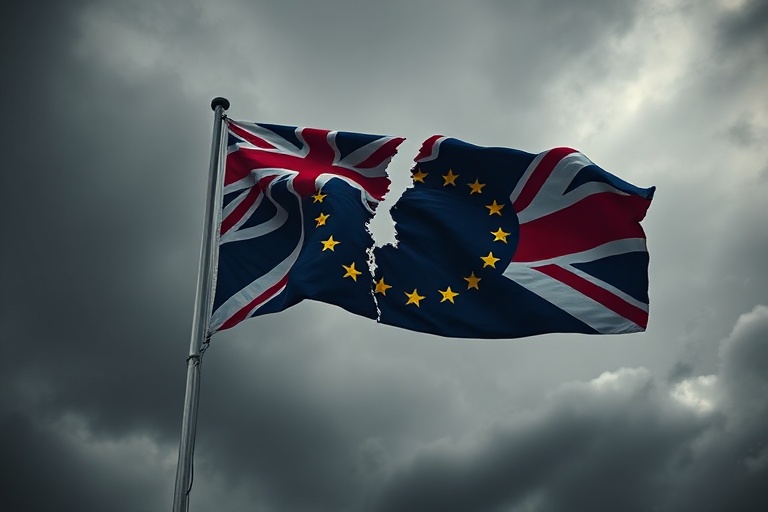
Brexit’s Lasting Impact: A Decade of Division and Change in the UK
“`html
Brexit: A Decade of Division and Its Lasting Impact on the UK
The United Kingdom’s withdrawal from the European Union, commonly known as Brexit, remains one of the most consequential political and economic events of the 21st century. After years of heated debate, a narrow referendum vote in June 2016 set the nation on a course toward separation—a decision that continues to reverberate through politics, trade, and society. Nearly a decade later, the full implications of Brexit are still unfolding, revealing both intended consequences and unintended disruptions.
The Origins of a Controversial Decision
Brexit did not emerge overnight. Its roots trace back to decades of European skepticism within the UK, fueled by concerns over sovereignty, immigration, and bureaucratic control. The issue gained momentum in the early 2010s as the UK Independence Party (UKIP) pressed for a referendum, arguing that EU membership stifled national autonomy. When Prime Minister David Cameron called for a vote in 2016, the campaign split the country in two: Leave and Remain.
The referendum exposed deep divisions. Urban centers like London and Manchester largely favored staying in the EU, while rural and post-industrial regions, particularly in England and Wales, leaned toward leaving. The Leave campaign’s slogan—“Take Back Control”—resonated with voters frustrated by perceived neglect from distant EU institutions. On June 23, 2016, 51.9% of voters chose to leave, triggering a political earthquake that would reshape the UK’s future.
Key Moments in the Brexit Timeline
- June 2016: UK votes to leave the EU with 51.9% support.
- March 2017: Theresa May triggers Article 50, starting the two-year withdrawal process.
- June 2017: Snap general election weakens May’s government, complicating negotiations.
- November 2018: Draft withdrawal agreement is rejected by Parliament three times.
- October 2019: Boris Johnson secures a revised deal and calls a snap election.
- January 2020: UK formally leaves the EU, entering an 11-month transition period.
- December 2020: UK and EU agree on a post-Brexit trade deal, avoiding a no-deal scenario.
Economic Consequences: Winners and Losers
The economic impact of Brexit has been uneven, with some sectors adapting while others struggle. The UK’s financial services industry, long a global powerhouse, faced significant hurdles as passporting rights—allowing firms to operate across the EU—were revoked. While London retained its dominance as Europe’s financial center, many banks relocated operations to Frankfurt, Paris, and Dublin to maintain EU market access.
Agriculture and fishing industries also felt the strain. British farmers lost access to EU subsidies, which had long supported rural economies. Meanwhile, the fishing sector, promised a “sea of opportunities” by Brexit supporters, found itself grappling with reduced quotas and bureaucratic barriers to exporting to the EU.
On the positive side, the UK government pursued independent trade deals with nations like Australia and Japan. However, these agreements have yet to offset the losses from reduced trade with the EU, the UK’s largest trading partner. The Office for Budget Responsibility estimates that Brexit has reduced UK productivity by around 4%, a figure that underscores the long-term economic drag.
Political Fallout and the Future of the Union
Brexit did not just alter the UK’s relationship with the EU—it reshaped the country’s political landscape. The Conservative Party, traditionally the party of business and stability, became deeply divided over Europe. David Cameron resigned after the referendum, and Theresa May’s premiership collapsed under the weight of Brexit negotiations. Boris Johnson’s subsequent rise marked a shift toward populist, hardline Brexit policies.
Yet the most profound political consequence may be the strain on the United Kingdom itself. Scotland, where 62% voted to remain in the EU, saw Brexit as a betrayal. First Minister Nicola Sturgeon has repeatedly called for a second independence referendum, arguing that Scotland should not be dragged out of the EU against its will. Northern Ireland, too, faces unique challenges due to the Irish border question, which remains a contentious issue in post-Brexit relations.
In Wales, where Brexit was narrowly supported, the long-term economic impact remains uncertain. The devolved government has struggled to mitigate the effects of lost EU funding, leaving rural communities particularly vulnerable. Meanwhile, in England, Brexit has deepened divides between metropolitan areas and post-industrial towns, fueling debates over regional inequality and the role of government in addressing it.
Brexit’s Global Implications
Brexit’s ripple effects extend far beyond the UK’s borders. It has emboldened populist movements across Europe, with far-right parties in France, Italy, and the Netherlands citing the UK’s experience as a model for their own anti-EU agendas. The EU, meanwhile, has sought to present a united front, offering the UK a deal that discourages other members from following suit.
Globally, Brexit has raised questions about the future of multilateralism. The US, once a strong advocate for UK membership in the EU, has adopted a more transactional approach to transatlantic relations. Meanwhile, China and other global powers have capitalized on the UK’s weakened position to expand their influence, particularly in trade and technology.
For the US, Brexit has complicated the already fraught relationship between London and Brussels. While the UK has sought a closer alliance with Washington, the Biden administration has emphasized the importance of maintaining strong EU ties. This tension highlights the broader challenge of navigating a multipolar world where alliances are increasingly fluid.
Looking Ahead: Can the UK Recover?
The path forward for the UK remains uncertain. While the immediate chaos of no-deal Brexit has been avoided, the long-term challenges are daunting. The government has pledged to “level up” the country, focusing on economic regeneration and reducing regional inequality. Yet the success of this agenda depends on overcoming deep-seated structural issues that predate Brexit.
One potential avenue for recovery lies in technology and innovation. The UK has strengths in fintech, AI, and green energy, sectors that could drive future growth. However, access to skilled labor and research funding—both historically bolstered by EU membership—now requires new strategies. The government’s commitment to increased R&D spending is a step in the right direction, but execution will be key.
Another critical factor is the UK’s relationship with the EU. While political tensions persist, there are signs of pragmatic cooperation. The Windsor Framework, agreed in 2023, eased trade barriers in Northern Ireland, demonstrating that compromise is possible. Continued dialogue could help stabilize relations, though full reintegration into the EU single market or customs union remains unlikely in the near term.
Ultimately, Brexit’s legacy will be defined by how well the UK adapts to its new reality. The country has always been resilient, capable of reinventing itself in the face of adversity. Whether it can harness that resilience to thrive outside the EU remains the defining question of the next decade.
For now, the UK stands at a crossroads. The decisions made today will shape not just its economic future, but its place in the world for generations to come.
To explore more on how Brexit has influenced political trends, visit our News section. For deeper analysis on economic shifts, check out our Analysis category.