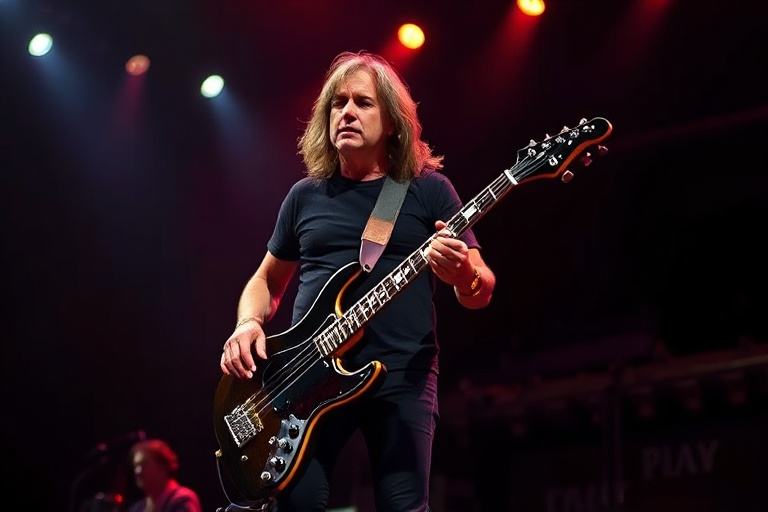
For over five decades, Geddy Lee has stood as a towering figure in rock music, shaping the sound of an entire genre through his virtuosic bass playing, distinctive vocals, and unmistakable stage presence. As the frontman and bassist of Rush, Lee didn’t just perform—he redefined what it meant to be a multi-instrumentalist in progressive rock. His technical precision, melodic inventiveness, and larger-than-life persona have left an indelible mark on musicians and fans alike.
Early Life and Musical Beginnings
Geddy Lee Weinrib was born on July 29, 1953, in Toronto, Canada, to Jewish immigrant parents who had fled Poland during World War II. Music was a constant in his household, and his mother’s love for opera and classical music seeped into his early sensibilities. By age 10, Lee had already begun studying piano, though his true passion lay in rock and roll. The Beatles’ Sgt. Pepper’s Lonely Hearts Club Band, released in 1967, proved to be a turning point. Lee was captivated by the album’s complexity and ambition, which would later influence his own approach to music.
In his mid-teens, Lee formed his first band, The Rush, with drummer John Rutsey. The name was later shortened to Rush when bassist and lyricist Neil Peart joined in 1974. This lineup—Lee, Peart, and guitarist Alex Lifeson—would become legendary. Lee’s early influences included Jack Bruce of Cream, John Entwistle of The Who, and Chris Squire of Yes. He quickly developed a style that blended blues, jazz, and classical elements, setting the stage for his future innovations.
Lee’s early struggles were not just musical but personal. He faced antisemitism growing up and later recalled feeling like an outsider, a theme that would subtly permeate his lyrics. His dedication to his craft, however, never wavered. By the time Rush released their self-titled debut album in 1974, Lee’s playing had already begun to evolve into something entirely his own—technical yet groovy, melodic yet powerful.
Rush: A Career of Innovation and Influence
Rush’s rise to prominence was not immediate, but by the late 1970s, the band had cultivated a devoted following. Albums like 2112 (1976) and A Farewell to Kings (1977) showcased Lee’s growing confidence as a bassist and vocalist. His playing on tracks like “The Trees” and “Closer to the Heart” demonstrated an ability to blend intricate bass lines with singable melodies—a hallmark of his style.
Lee’s vocal range became another defining feature of Rush’s sound. While not a classically trained singer, his high-pitched, operatic tenor stood out in a genre dominated by gritty, bluesy voices. His ability to convey emotion and narrative through his singing added depth to songs like “Tom Sawyer” and “Limelight.” Critics often noted that Lee’s voice was as distinctive as his bass playing, making Rush’s music instantly recognizable.
The band’s 1978 album Hemispheres is often cited as a pinnacle of progressive rock, and Lee’s contributions were central to its success. Tracks like “The Trees” and the sprawling title suite demonstrated his ability to weave complex musical ideas into cohesive, emotionally resonant compositions. By the 1980s, Rush had evolved from a progressive rock act into a more streamlined, synth-driven power trio, as heard on albums like Moving Pictures (1981). This album, featuring the iconic “Tom Sawyer,” became Rush’s commercial breakthrough and cemented Lee’s reputation as a bassist who could transcend the role of a mere accompanist.
Lee’s playing on Moving Pictures is particularly noteworthy. His bass lines on “Limelight” and “YYZ” are textbook examples of how to drive a song forward while maintaining melodic integrity. The latter track, named after the Toronto Pearson International Airport’s radio call sign, is a bass-driven instrumental tour de force that highlights Lee’s technical prowess and rhythmic precision.
Bass Playing: A Legacy of Technique and Creativity
Geddy Lee’s approach to bass playing is often celebrated for its technical brilliance and creative daring. Unlike many bassists of his era, Lee didn’t merely provide harmonic support; he played lead lines, countermelodies, and solos that could stand on their own. His use of the Minimoog synthesizer, particularly in the 1980s, expanded the possibilities of the bass guitar, blending synthesized textures with traditional playing.
Lee’s signature sound is a result of several key factors:
- Tone and Gear: Lee is synonymous with his Rickenbacker 4001 bass, a model known for its punchy midrange and articulate tone. His use of the instrument’s natural growl, combined with effects like chorus and flanger, created a sound that was both warm and otherworldly.
- Fingerstyle Technique: Unlike many bassists who rely heavily on picks, Lee’s fingerstyle approach allowed for greater dynamic control and nuance. His right-hand technique, honed through years of practice, enabled him to deliver everything from delicate arpeggios to aggressive, palm-muted riffs.
- Melodic Innovation: Lee’s bass lines often functioned as melodic counterpoints to Lifeson’s guitar work. Tracks like “The Spirit of Radio” and “Freewill” showcase his ability to craft bass parts that are as memorable as the vocals themselves.
- Synthesizer Integration: In the 1980s, Lee incorporated synthesizers into his rig, using them to add atmospheric textures and harmonic depth. His work on albums like Grace Under Pressure (1984) demonstrated how the bass could evolve beyond traditional roles.
Lee’s influence on subsequent generations of bassists is immeasurable. Artists like Les Claypool of Primus, Cliff Burton of Metallica, and John Deacon of Queen have cited him as a major inspiration. His playing on Rush’s live albums, particularly Exit…Stage Left (1981) and A Show of Hands (1989), remains a benchmark for live bass performance, showcasing his stamina, precision, and stage presence.
Beyond Rush: Solo Work and Personal Endeavors
While Rush dominated his career for decades, Geddy Lee has also explored solo projects and other musical ventures. His 2000 solo album, My Favourite Headache, marked his first official solo release and featured a more stripped-down, song-oriented approach. The album was a departure from Rush’s progressive sound, focusing on concise, hook-driven tracks. Critics praised Lee’s songwriting and vocal performances, though the album didn’t achieve the commercial success of his work with Rush.
In addition to his solo work, Lee has collaborated with other musicians and participated in tribute albums. His 2013 cover of the song “I’ve Seen All Good People” with The Roots on Late Night with Jimmy Fallon showcased his adaptability and sense of humor. Lee has also been involved in charity work, particularly through his support of music education programs and organizations like the Canadian Music Centre.
Lee’s personal life has equally commanded attention. He is an avid collector of vintage guitars and basses, with one of the most extensive collections in the world. His passion for collecting extends to wine, and he has been known to source rare bottles for his cellar. Despite his fame, Lee has maintained a relatively private personal life, focusing on his family and his craft.
The Enduring Impact of Geddy Lee
Geddy Lee’s legacy is one of innovation, perseverance, and reinvention. He has not only shaped the sound of progressive rock but has also redefined the role of the bassist in modern music. His technical mastery, combined with his expressive vocals and charismatic stage presence, has earned him a place among the greatest musicians of his generation.
Rush’s induction into the Rock & Roll Hall of Fame in 2013 was a long-overdue recognition of Lee’s contributions to music. While the band’s progressive roots have sometimes been overshadowed by the more mainstream success of their 1980s work, their influence on bands like Dream Theater, Tool, and Coheed and Cambria is undeniable. Lee’s playing has inspired countless musicians to push the boundaries of their instruments, proving that the bass guitar could be as versatile and expressive as any other.
In recent years, Lee has remained active, both through archival releases and occasional live performances. His reunion with Rush for their Clockwork Angels Tour in 2012-2013 and the subsequent release of the live album Clockwork Angels Tour (2013) reminded fans of the magic that defined the band’s later years. Though Rush officially retired in 2018 following Peart’s passing, Lee’s influence continues to resonate.
For new generations of musicians and fans, Geddy Lee represents the pinnacle of what it means to be a multi-instrumentalist in rock music. His ability to balance technical skill with emotional depth, innovation with accessibility, and tradition with experimentation sets him apart. As he once said, “I don’t think we ever set out to be pioneers, but we always felt we had to push ourselves to the next level.” That ethos is what makes his legacy enduring.
Explore more about progressive rock and iconic musicians on Dave’s Locker Music.
For deeper analysis of rock legends, visit Dave’s Locker Analysis.