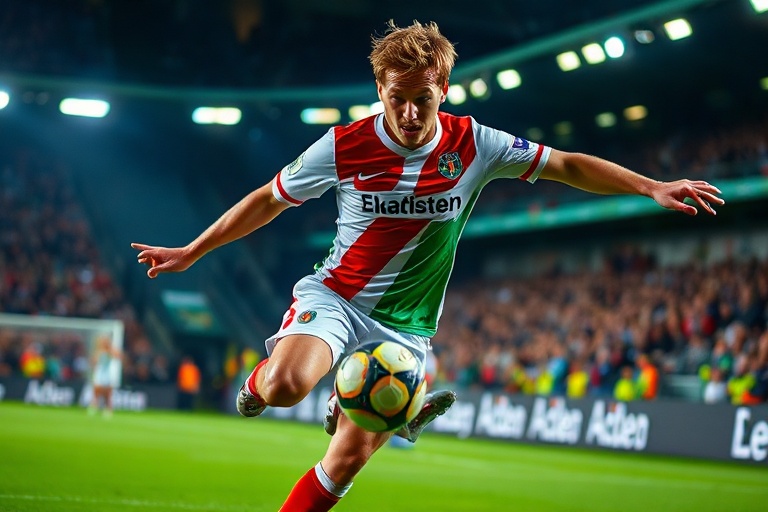
Maximilian Eggestein: The German Midfielder Redefining Modern Football
Maximilian Eggestein has quietly emerged as one of Europe’s most promising midfielders, blending technical precision with tactical intelligence to carve out a distinctive path in modern football. Born on August 8, 1996, in Hanover, Germany, Eggestein’s journey from local youth academies to the upper echelons of the Bundesliga and beyond reflects both personal determination and the evolving demands of contemporary football.
Standing at 1.88 meters, Eggestein’s physical presence often belies his nimble footwork and visionary passing. His ability to dictate tempo and contribute both defensively and offensively has drawn comparisons to German midfield maestros of past generations. Yet, his career trajectory—marked by resilience and adaptability—sets him apart in an era where versatility is prized above all.
The Early Years: From Hanover to Werder Bremen
Eggestein’s footballing roots run deep in Lower Saxony. He began his career at TSV Havelse, a modest club near Hanover, before joining Werder Bremen’s youth system at age 12. The transition from local football to professional development was not without challenges. Bremen’s academy, renowned for producing talents such as Claudio Pizarro and Niclas Füllkrug, instilled in Eggestein a disciplined approach to the game.
His senior debut came in 2014 during a 2. Bundesliga match, but consistent first-team football remained elusive. It wasn’t until the 2016–17 season—after a loan spell at Holstein Kiel—that Eggestein began to assert himself. His performances in central midfield, characterized by composed ball progression and pressing triggers, caught the eye of new manager Alexander Nouri.
Breakthrough and Leadership at Werder Bremen
By the 2018–19 campaign, Eggestein had become a linchpin in Bremen’s midfield. His composure under pressure, combined with an ability to read the game, allowed him to anchor a side transitioning between divisions. That season, he scored seven goals and provided four assists, helping the club secure promotion back to the Bundesliga.
His leadership qualities were further recognized when he was named vice-captain at just 23 years old—a testament to his maturity and influence within the squad. Eggestein’s style mirrored the archetype of the “box-to-box” midfielder: energetic in duels, precise in distribution, and capable of delivering decisive moments. This blend of attributes made him a fan favorite at the Wohninvest Weserstadion, where supporters chanted his name in recognition of his tireless work ethic.
International Recognition and the German National Team
Eggestein’s club performances did not go unnoticed by the German Football Association (DFB). He received his first call-up to the senior national team in March 2019 under Joachim Löw, making his debut in a friendly against Serbia. Though opportunities remained sporadic—competing with established names like Toni Kroos and İlkay Gündoğan—his inclusion signaled recognition of a new generation of German midfield talent.
Eggestein’s international career reflects the broader challenges faced by technically gifted but physically robust midfielders in a system often favoring dynamism over pure positional play. While he has not yet established himself as a regular starter, his inclusion in squads for UEFA Nations League and Euro 2024 qualifying campaigns underscores his standing within the German footballing ecosystem.
The Move to SC Freiburg: A New Chapter
In January 2022, Eggestein made a significant career move, joining SC Freiburg from Werder Bremen. The transfer, valued at around €5 million, represented a step up in competitive environment and tactical complexity. Freiburg, under Christian Streich, has developed a reputation for nurturing intelligent, pressing-based football—an ideal platform for a midfielder of Eggestein’s profile.
His integration into the team was seamless. Eggestein’s ability to play in multiple midfield roles—including as a single pivot or in a double pivot—added tactical flexibility. His chemistry with teammates such as Vincenzo Grifo and Roland Sallai became evident as Freiburg challenged for European spots.
In the 2022–23 season, Eggestein contributed five goals and six assists, playing a key role in Freiburg’s historic run to the UEFA Champions League. His performances were particularly notable in high-pressing situations, where his anticipation and first touch allowed Freiburg to transition quickly from defense to attack.
Cultural Context: The Modern German Midfielder
Eggestein’s rise occurs against the backdrop of a broader transformation in German football. The post-Mesut Özil, post-Toni Kroos era has seen a shift toward younger, more physically dynamic midfielders who combine athleticism with technical skill. Players like Jamal Musiala and Florian Wirtz represent this new wave, but Eggestein occupies a slightly different niche—one that values reliability and tactical awareness over flair.
In a footballing culture that historically prioritized work rate and discipline, Eggestein embodies continuity. His playing style reflects the German coaching philosophy: structured pressing, positional play, and collective responsibility. Yet, his ability to adapt to different systems—whether in a deep-lying role or as an advanced midfielder—demonstrates a nuanced understanding of modern tactical demands.
Off the Pitch: Personal Life and Public Persona
Off the field, Eggestein maintains a relatively low profile. He is known for his professionalism, often citing his family—particularly his father, a former amateur footballer—as a major influence. He is fluent in English and has expressed admiration for the Premier League, a league that increasingly attracts German talent.
Eggestein’s social media presence is modest, focusing on football-related content rather than personal branding. This restraint aligns with a generation of German athletes who prioritize performance over persona, a trend that contrasts with the more commercially driven profiles seen in other European leagues.
The Future: Aspirations and Ambitions
At 28 years old, Eggestein stands at a pivotal moment in his career. With Freiburg now a regular in the Champions League, his performances will be scrutinized on a broader stage. There is speculation about a potential move to a top European club, though his contract runs until 2026, providing stability.
Looking ahead, Eggestein’s trajectory could mirror that of players like Leon Goretzka or İlkay Gündoğan—midfielders who evolved from promising talents into consistent performers at the highest level. His long-term potential may depend on his ability to elevate his game in high-pressure situations and deliver in knockout football.
Conclusion: A Midfielder for the Modern Era
Maximilian Eggestein represents more than just a talented footballer; he embodies the evolution of the German midfield in the 21st century. His career reflects the balance between tradition and innovation, discipline and creativity, and individual talent and collective effort.
While he may never achieve the global fame of a Thomas Müller or Joshua Kimmich, Eggestein’s value lies in his reliability, intelligence, and adaptability. In an era where football increasingly demands multifunctional players, his ability to thrive in various roles makes him a vital asset to any team.
As German football continues to evolve, players like Eggestein will shape its future. His journey—from the youth academies of Lower Saxony to the grand stages of European football—serves as a reminder that success in the modern game is built on consistency, adaptability, and quiet determination.